
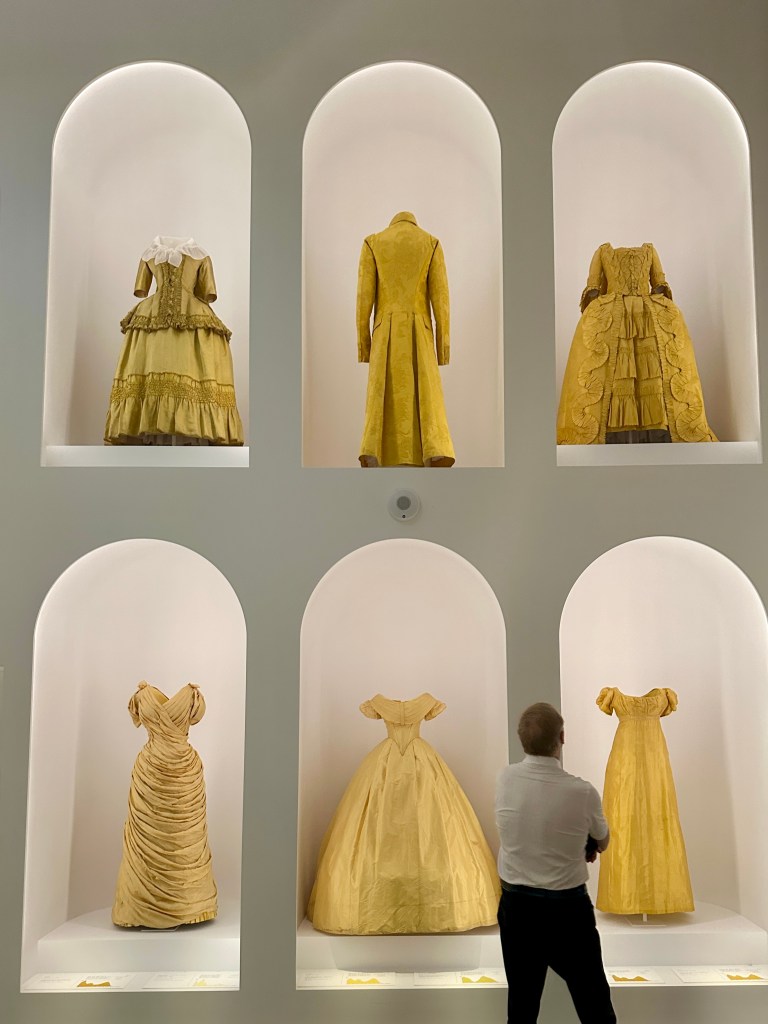
To quote the Met: “This exhibition features approximately 220 garments and accessories spanning four centuries, all visually connected through themes of nature, which also serves as a metaphor for the transience of fashion.” It is worth a visit!
These are works of art intended to be worn—maybe only once—but they are built for a human body. They are relatable in a way that flat canvases are not.
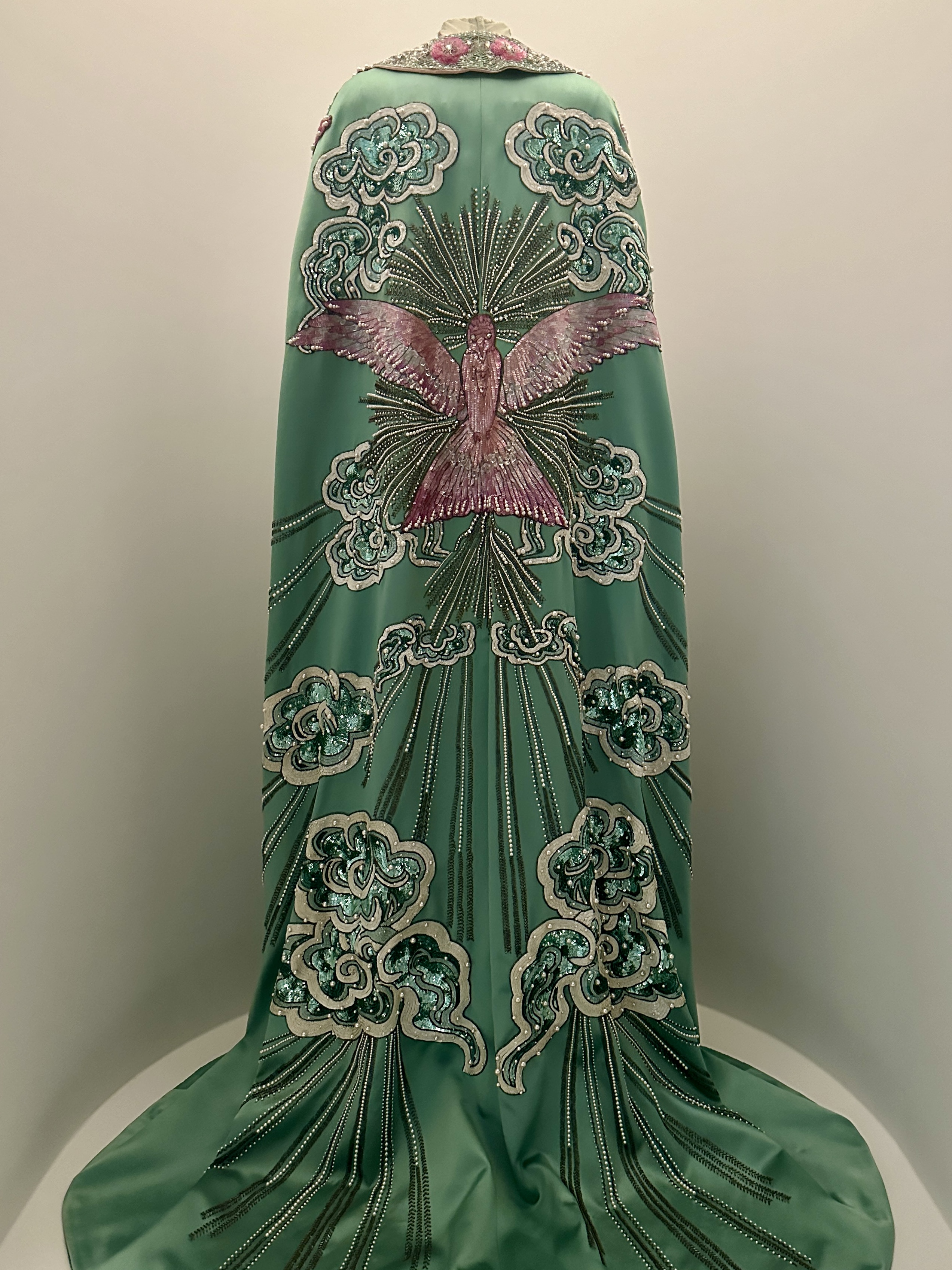
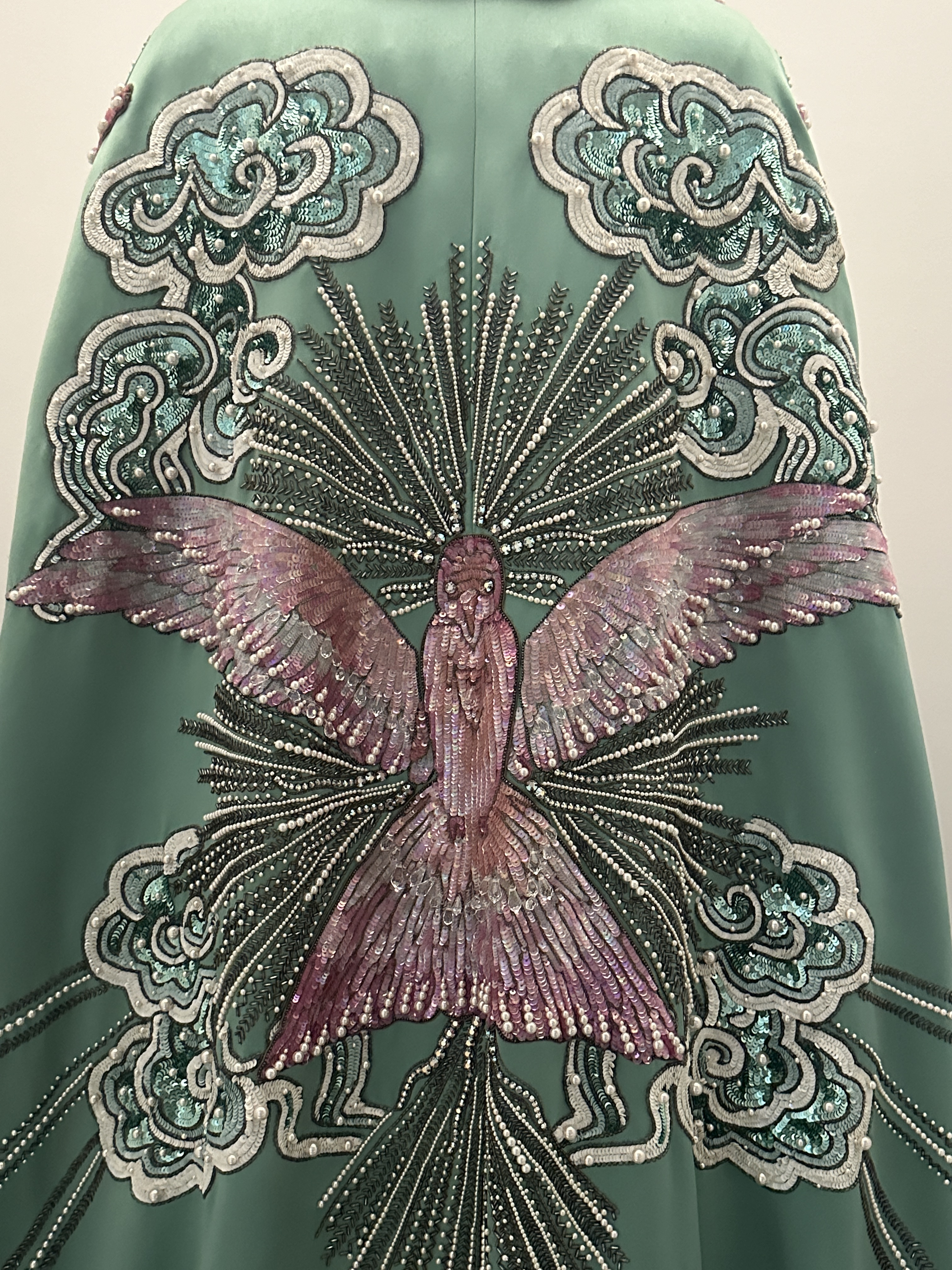
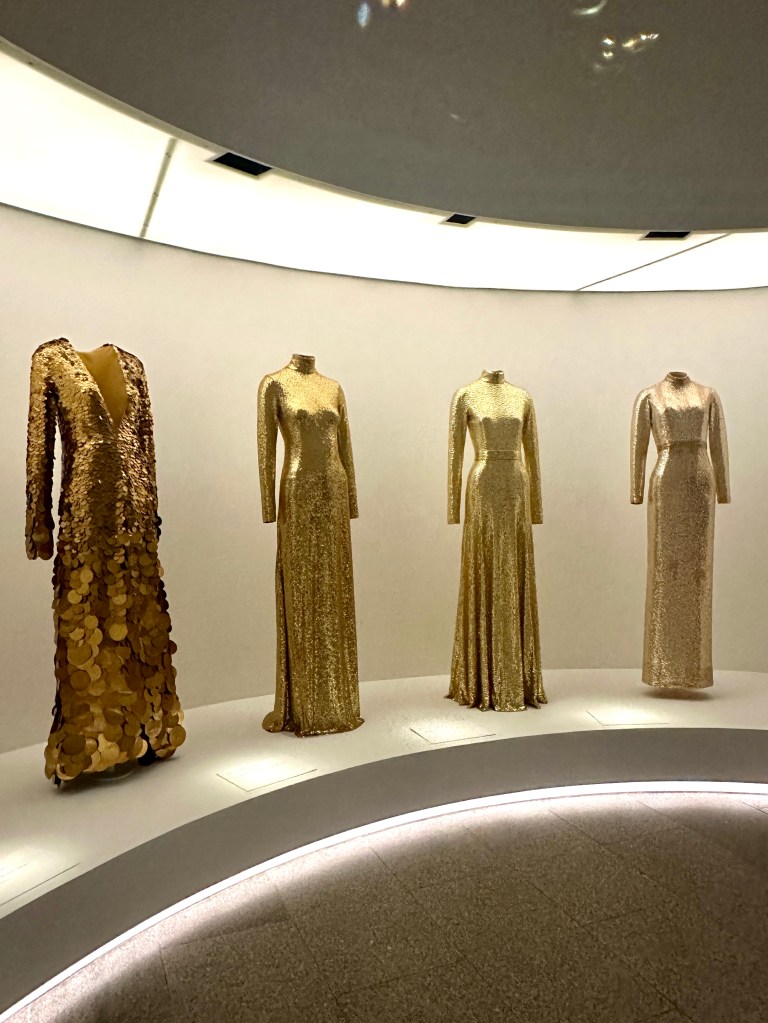
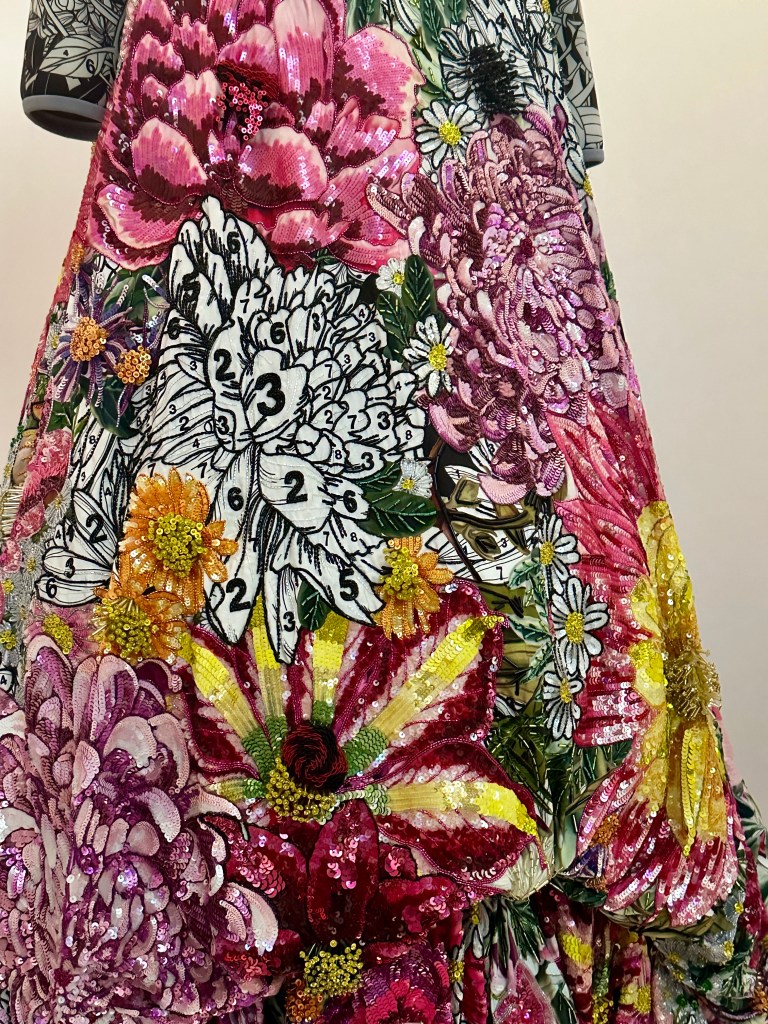
Many/most sported beads and sequins in designs and colors that celebrate the theme of nature. Needle, thread, beads, and sequins are very accessible… just think of the things we can bling up!


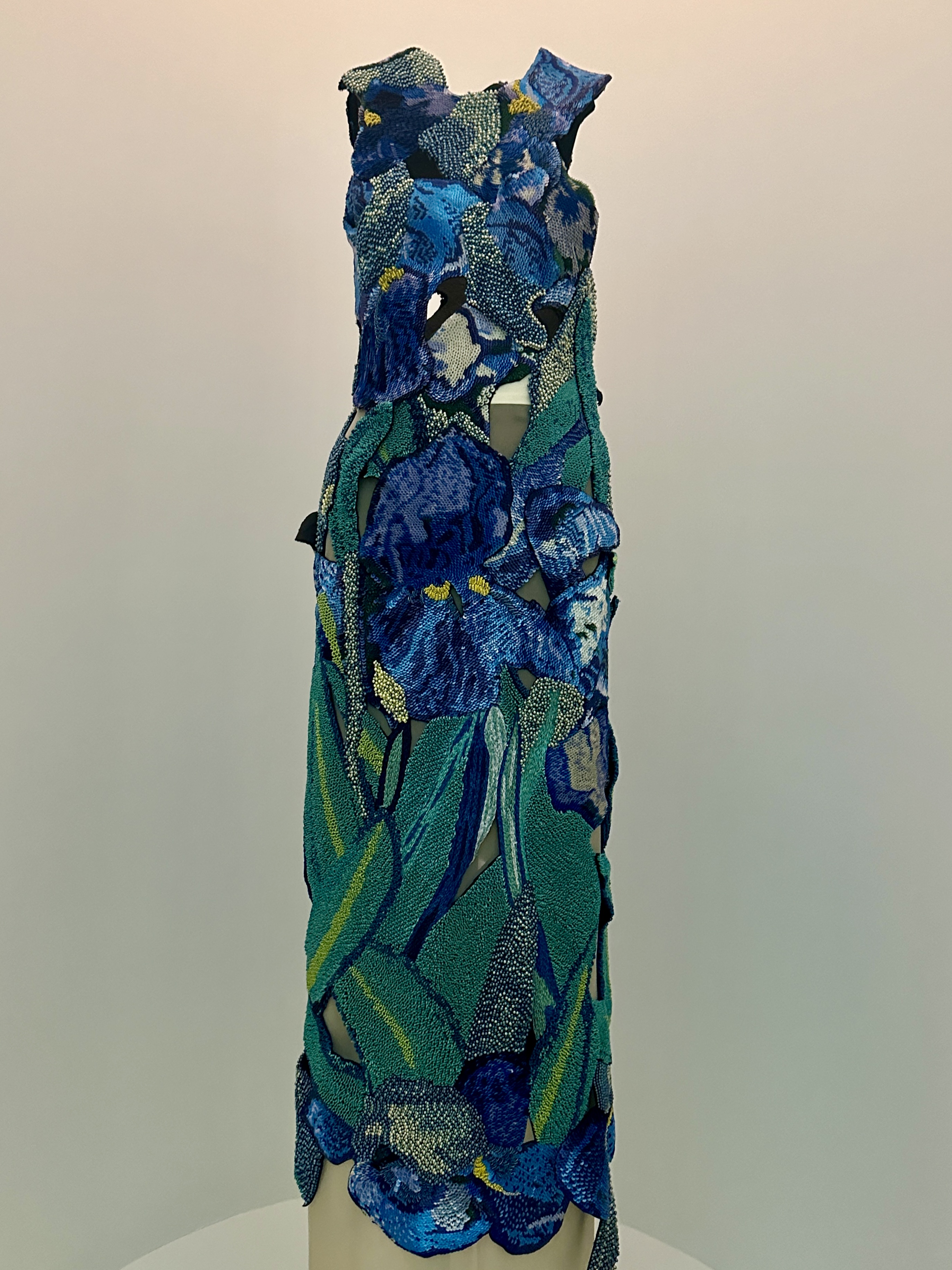

I walked the show thinking about how heavy and hot the dresses would be, how they would limit movement. But if I were going to a gala, I would put up with all of that :-).


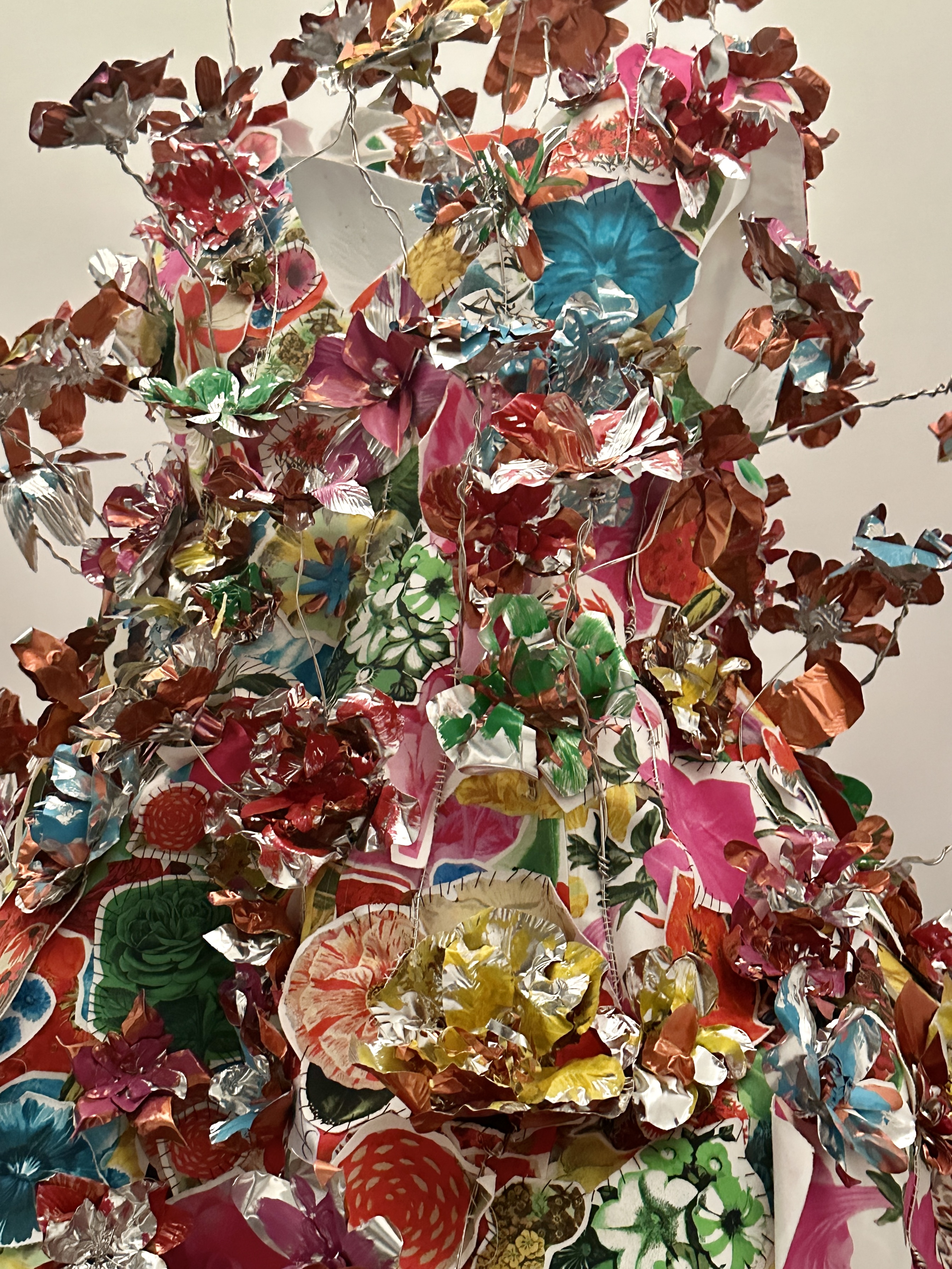
There are arm holes, but I am still puzzling over what you would have to do with your arms to keep them from getting cut on the metal edges.


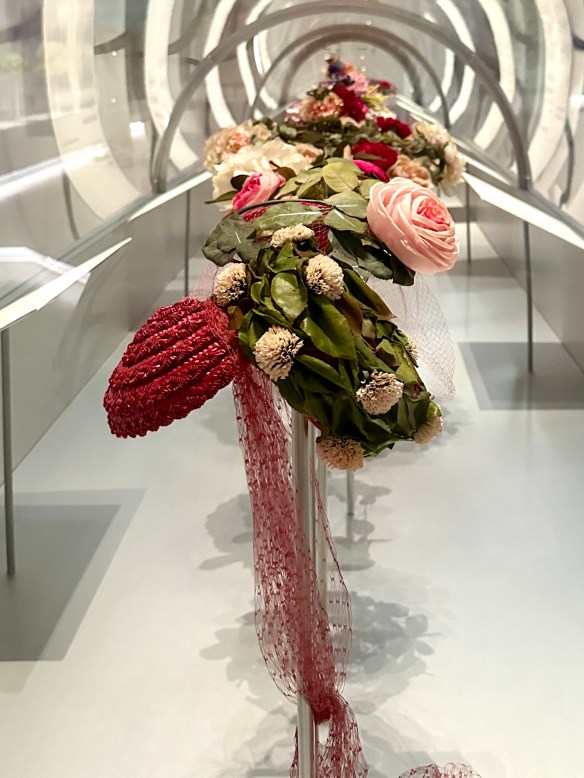
And hats! I should have taken more photos of them all.
“It is the hat that matters the most,” notes Rezia, the Italian milliner in Virginia Woolf’s novel Mrs. Dalloway (1925). Rezia’s observation was echoed by Christian Dior in his 1954 Little Dictionary of Fashion: “[A hat] is really the completion of your outfit and in another way, it is very often the best way to show your personality. It is easier to express yourself sometimes with your hat than it is with your clothes. “
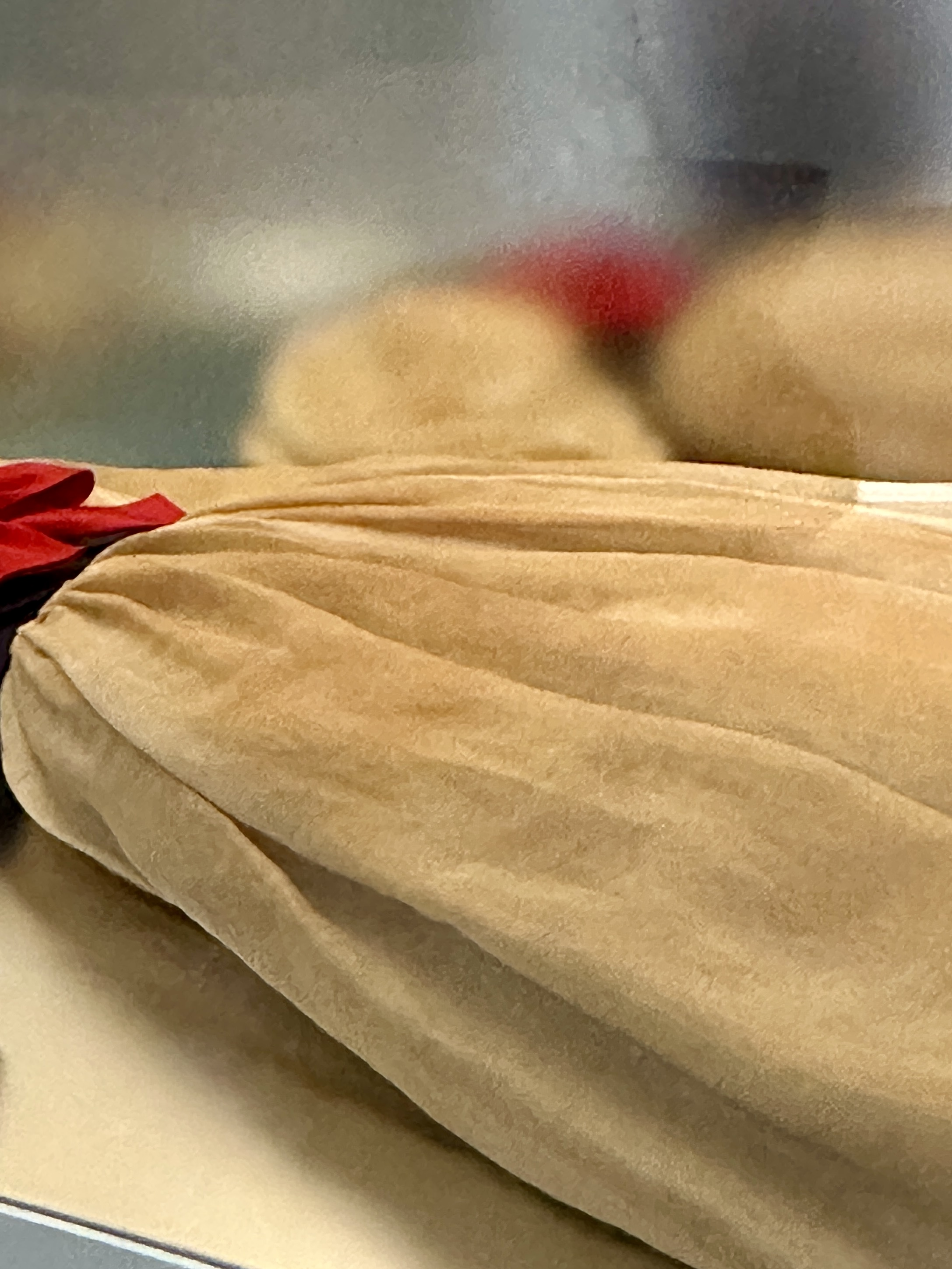
Next is a cautionary tale for quilters who use starch. We’ve been told that starch can draw bugs, but I’d not thought about it discoloring and damaging fabric. Polysaccharide gum is different from corn starch and I am not a chemist but it does raise questions in my mind.
While this nautical-inspired ensemble remains in good structural condition, its visual appearance no longer represents the clean aesthetic of Norman Norell’s original design. Scientific analysis of the organdy has revealed that the discoloration is occurring not in the cotton fibers themselves but in a starching agent (polysaccharide gum) added to the cotton to provide sheen and stiffness. Although it is not unusual for starched cotton to yellow over time, the severity and the unevenness of the discoloration has made this dress unsuitable for display, as it distracts too much from the designer’s intention.



There was more… so much more. I got lost amid Impressionist paintings, then remembered to visit the roof to garden.

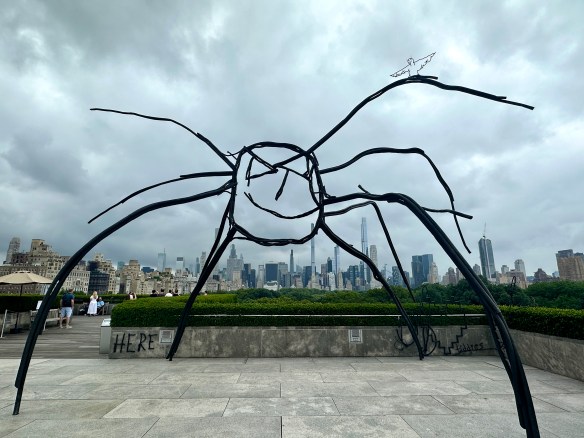
I visited with a guard who loves her job, spent a bit of time and money in the gift shop, and walked the 2 miles back to Jeff’s apartment. What a great way to spend some hours of my life :-).

 Piece O Cake Blog
Wow. Amazing.
LikeLike
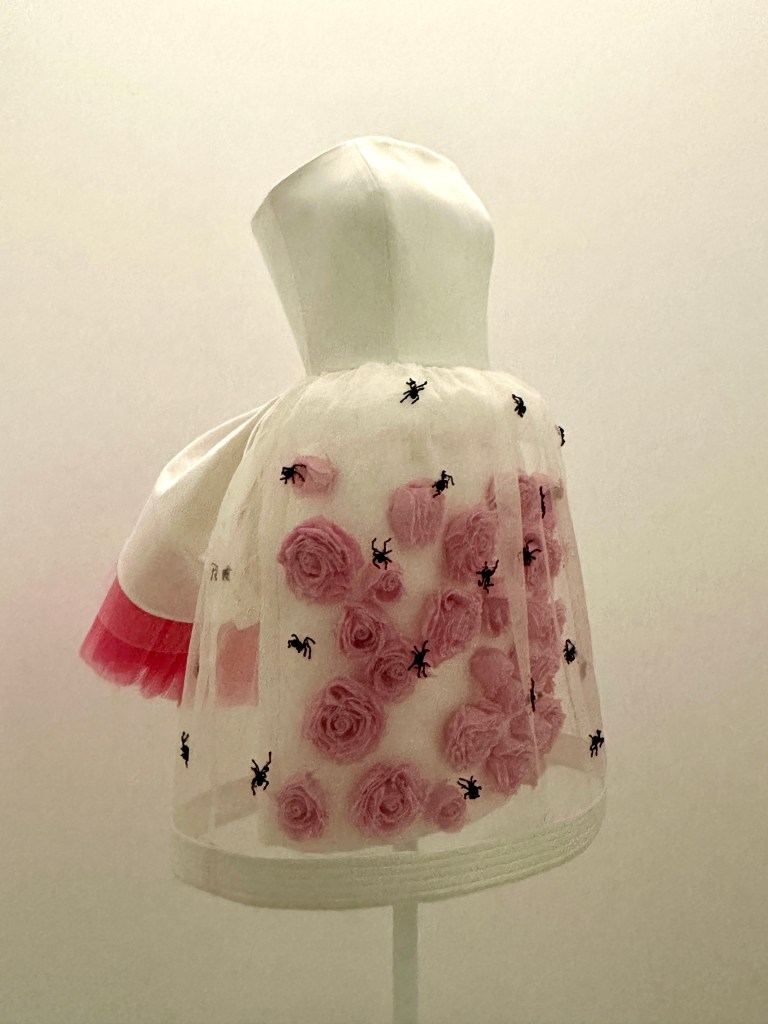
I absolutely loved this! Thanks for the great photos although the one with the bugs gave me the creeps!
LikeLike
Exquisite. Loved it all except for the beetles. Bugs…not so much.
LikeLike
Fantastic!
LikeLike
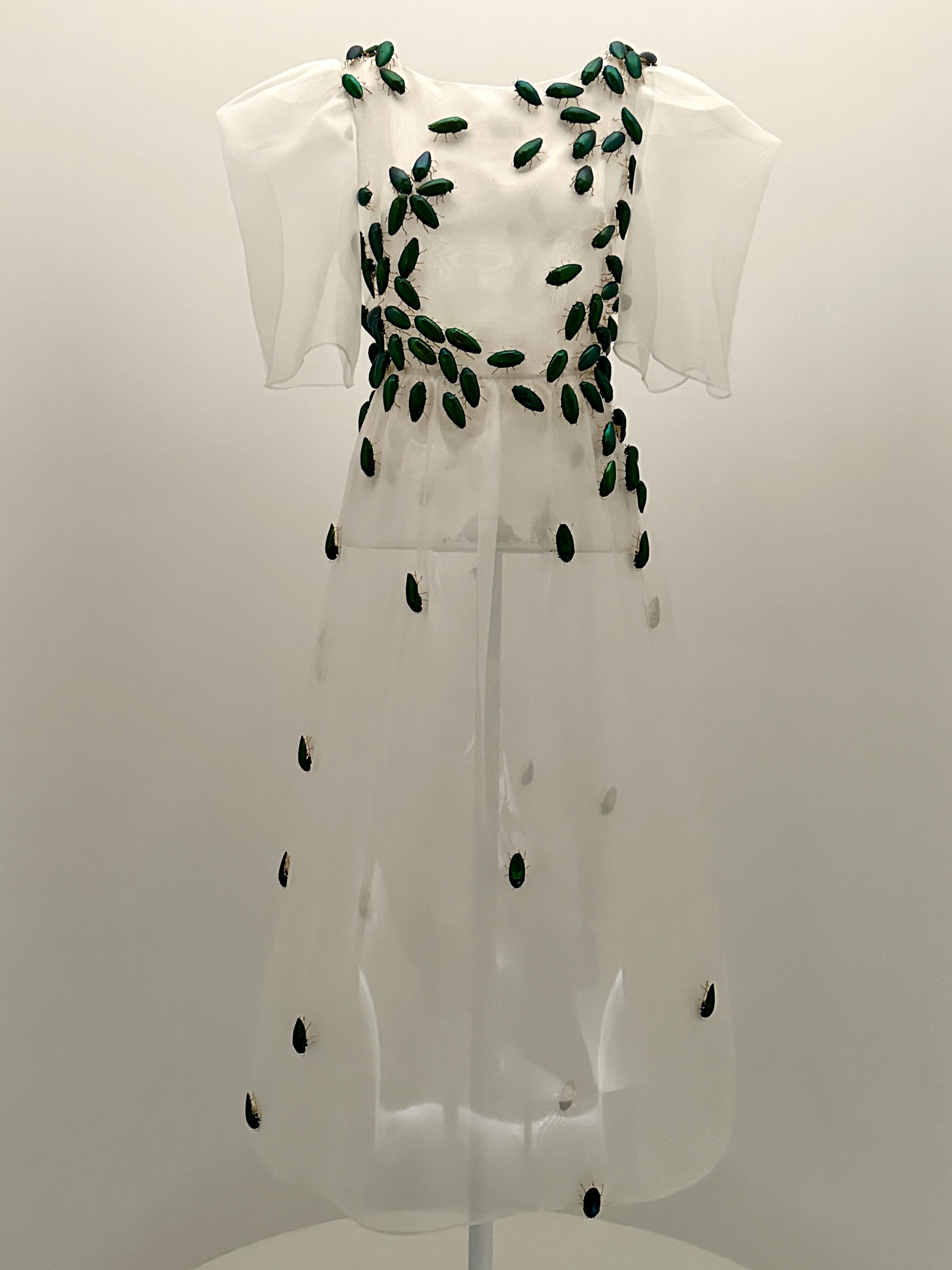
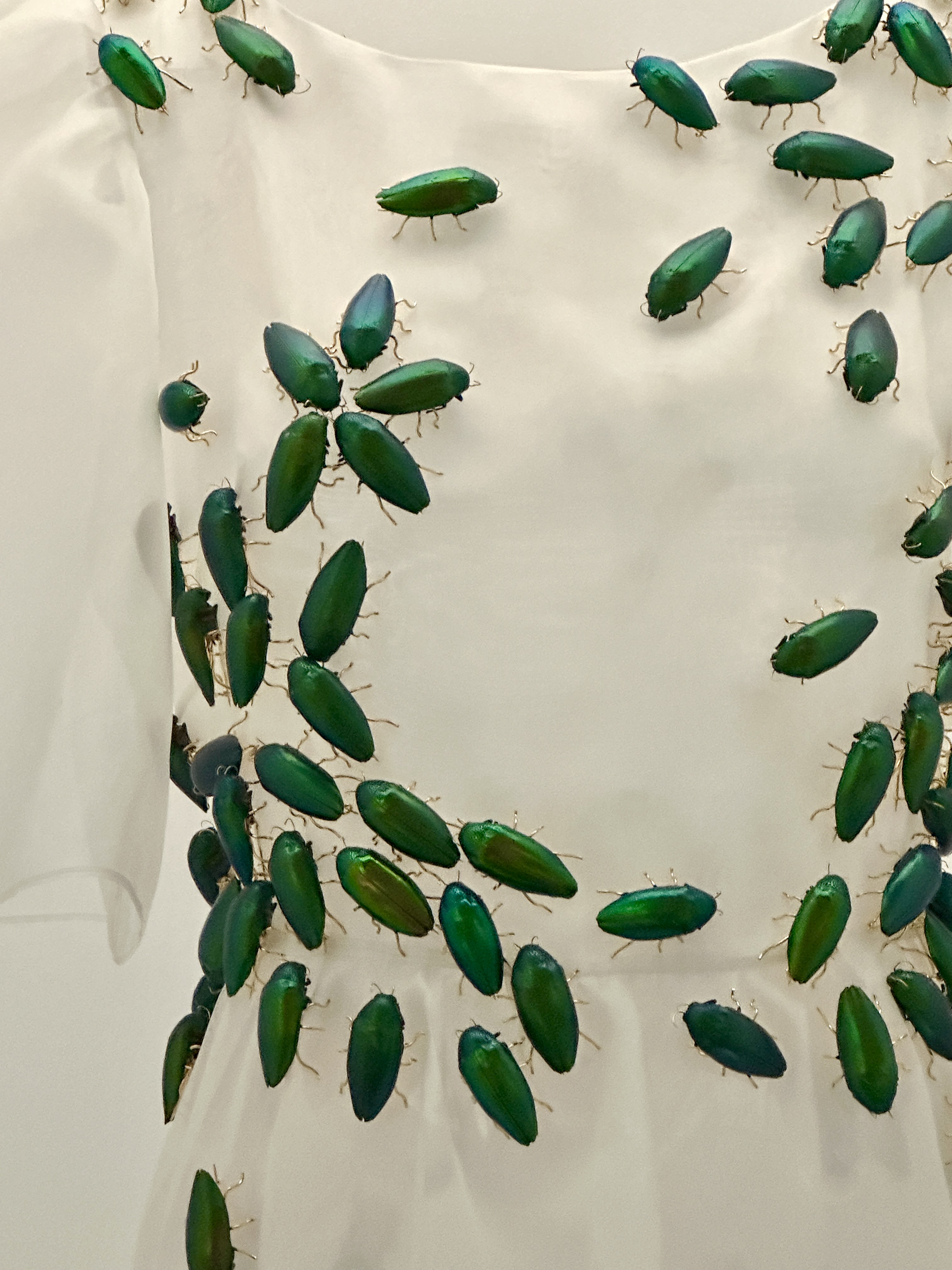
Thanks for sharing However, the “Dauphinette” ensemble I could do without. Looks like green cockroaches, not beetles. lol!
I loved the “”Morning in the Garden at Vaucresson” by Edouard Vuillard 🙂
LikeLike
Spectacualr! Words can’t fully describe the artwork and the intricacies. Lovely.
LikeLike
Wow…wh
LikeLike
You asked how you would keep your arms from getting cut on the metal dress. Short answer: you can’t. I was a model (45 years ago) and I had to wear a dress in a fashion show that was covered in small shards of glass. It cut my arms and underarms to ribbons. I just had to be careful not to bleed on the dress! It was stunning to look at and lethal to wear. I can’t imagine they sold too many of them.
LikeLike
I’m impressed that you didn’t bleed on that dress!
A man I was standing next to wondered if the wearer would have to keep hands on hips but that didn’t look possible either. Fashion is kind of crazy.
LikeLike