A block for breast cancer research…


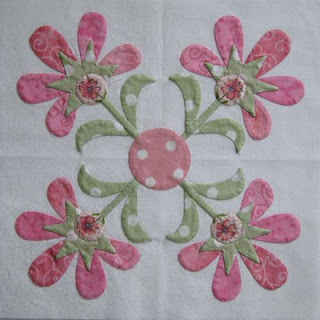
Linda and I are both making a block for a new quilt to benefit breast cancer research. I don’t know how many blocks there will be in the quilt but I would bet it’s going to be a big quilt. The Susan G. Komen Foundation will handle the auction/sale and the funds raised with the quilt. The quilt will be shown at the IQA show in Houston next year and at other venues.


I used a block from Applique Delights, enlarging it to 9″ x 9″ finished size. The block colors were set by the people coordinating this project. I think it’s going to be a lovely quilt and I hope they raise a lot of money!

A Halloween card…

Lynda at the Great American Quilt Factory/Possibilities shared Smilebox with me a while ago. Smilebox is a site where you can create web cards using their templates and your own photos. It’s pretty cool. 


I finally got around to making a halloween card for Elanor. But you can send the card to as many people as you want to. And you can post it on a blog which is why you can see it below. 


Turn the sound up, there’s music. There is one photo of Chris and Jeff when they were kids, and one of Steve with Jack. This will be Jack’s first halloween, so I don’t have a picture yet of him in costume.

Happy halloween!

Click to play Spider Webs
Create your own postcard - Powered by Smilebox
Make a Smilebox postcard

Hiking the Grand Canyon…

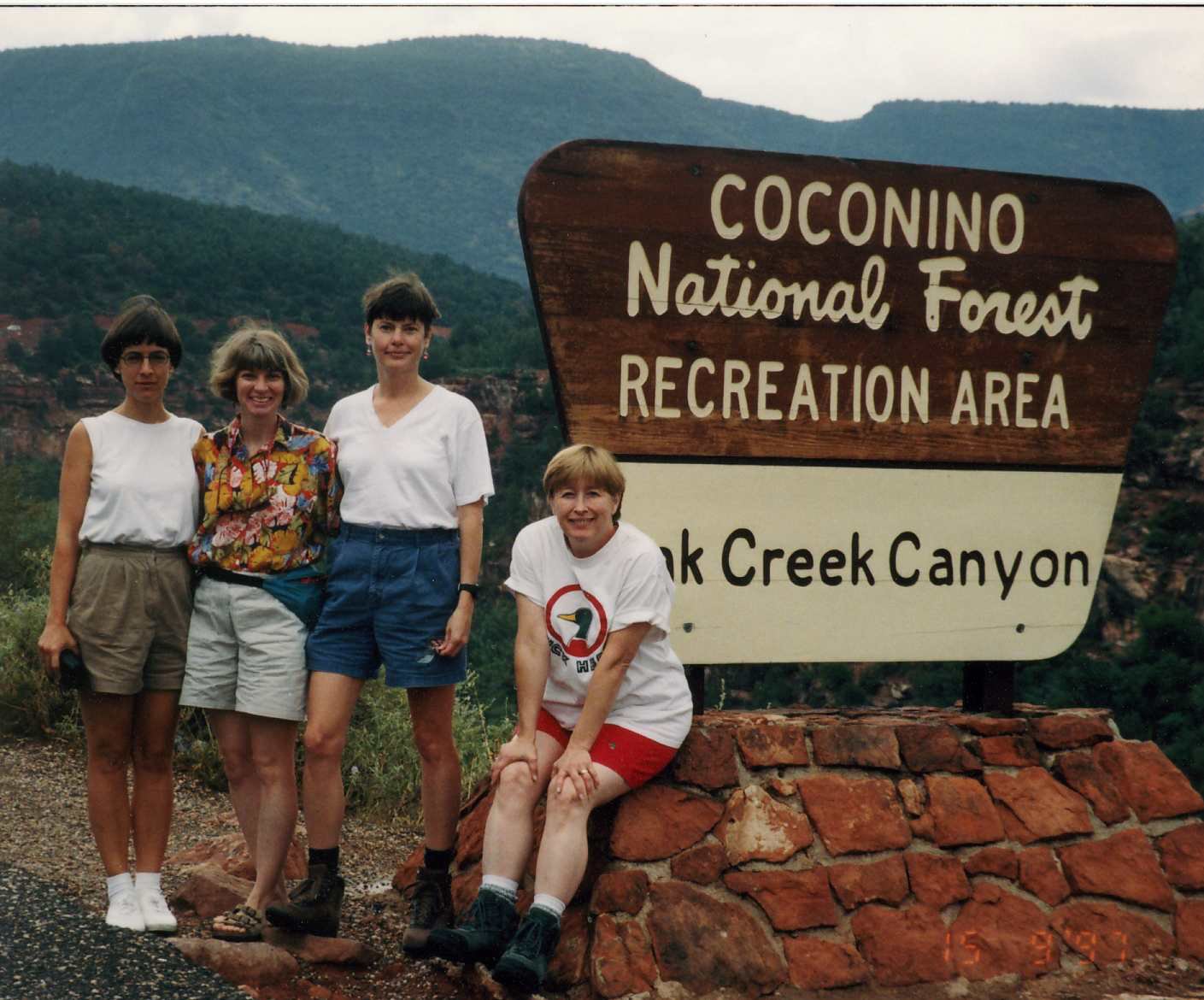
I was working on one of my lectures last week. I usually tweak my lectures before I give them. This time I was working on “How did I get to here from there?!” which is a story of my life with quilts. In the process of tweaking the lecture I came across this photo. 


That’s me with 3 friends. We were all turning 40 that year except for Helen (on the left), who is younger than the rest of us. She’s still younger, as I remind her at her birthday every year. Karen, on the right, had the great idea that we should hike the Grand Canyon in our 40th year. Laurie, 2nd from left, had just had a baby. She and I walked five mornings a week to prepare, often with Margaret in a stroller. We carried backpacks as we got closer to the hike. We were ready! 


Well, I wasn’t as ready as I had hoped. We walked downhill 13 miles from the north rim to Phantom Ranch at the bottom. (FYI – down is really hard on your knees!) I could barely move at the end of the day. We hiked 8 miles uphill the next day which is harder on your lungs but easier on your knees. I made it out alive and am still proud of myself.

This hike showed me that I needed to work my body if I wanted to keep it running. Laurie and I still walk 5 days a week (unless I’m on the road). We walk 3 miles and include the big hill in Sherman in each 1-mile circuit. 

I joined a gym 2 years ago and I strongly recommend that you do the same. No matter what shape you are in, being in better shape will make you feel better. And it will help your quilting! The stronger you are the better your posture will be which is good when you sit and applique. The stronger your upper body is, the better your machine quilting will be.

I’m 52 now and in the best shape of my life. I look back at this photo and I don’t wish myself back there. I was younger and less wrinkled but I was also 10 lbs. heavier a lot softer. Getting older is not all bad!

Show and Tell

az
Show and Tell is my favorite part of guild. SSQ guild here in Grand Junction if a prolific group of quilters. There show and tell is always worth seeing. The guild has a lot of classes and it shows with their quilts.

I took a few for you to see. 

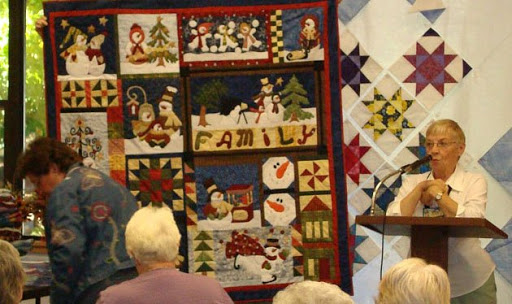
The first was Joan Walker’s Snowmen quilt. She is one of the prolific quilters. 

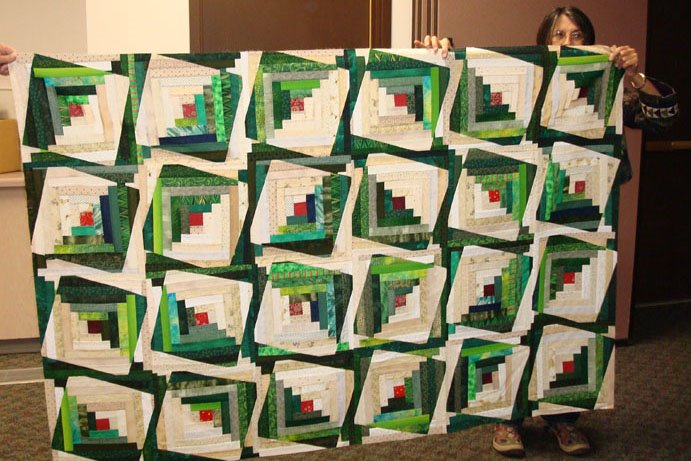
Next is of Jo Conforth and Dancing Logs. This was a class many members took. I could not get them all in my camera.
Sonja’s Star Quilt brought Oohs and Aahs

I do not know the name of the designers of these quilts. If you do let us know and we will put them up. It is important when possible to credit the designers. 

Second post in one day this will really surprise Becky.

Until next time blessings Linda


Sally Schneider Guest Speaker


It has been a long time since I was able to attend Quilt Guild on a regular basis. It was such a treat to go yesterday. Wonderful memories came back yesterday when I attended. I loved my guild in Tulsa. So many friends and that is where I met Becky. 


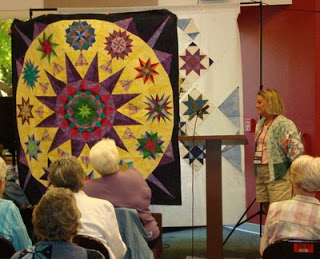
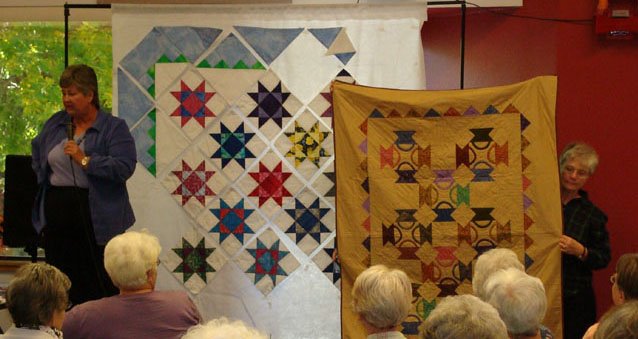
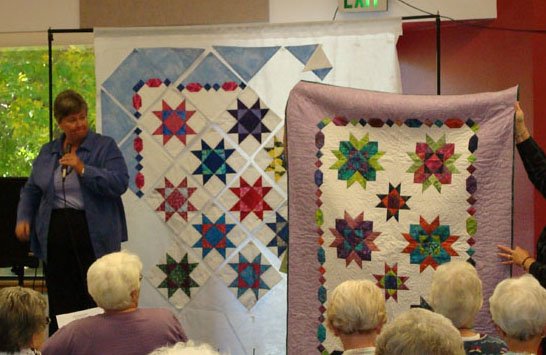
Sally Schneider was the guest speaker. She did a program on built in borders from her book Designing with Built In Borders. Built in Borders is a method for making complex pieced borders as simply pieced blocks. Make the blocks using your own designs for the center and select a built in border for the sides. It was so simple. You can contact her at quiltersally@yahoo.com. 

She had a sheet hung from a quilt rack with the center of a pieced star quilt hung from it. There was velcro on the sides of the sheet. As she showed a quilt with the built in borders she would attach that to the sides. We saw a lot of different border treatments. Check out the pictures of her demonstrating how it works. I think you can see what I am talking about. 

My Aunt Millie has been a member of this guild for a long time. Several members commented to her they were surprised how much I enjoyed it.  You never know when you will learn something new. It may be built in borders. or a quilt that inspires you with the use of color. There are so many things to learn. More than anything I just love quilts. Seeing what others are doing and the proud look on their faces when they show a completed quilt is so much fun.

The plate mosaic…


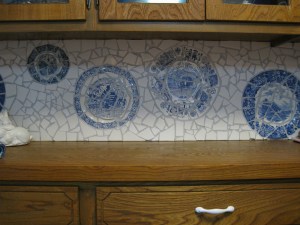
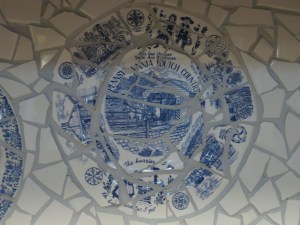
“Fitzy” emailed, asking about the broken plates on the wall behind Elanor’s painted pumpkins (my post from October 4). I promised that I would tell you all about them.


We have a built-in set of cabinets in the breakfast room area of our kitchen. When we bought this house that area was covered with white formica. OK, but boring. After seeing mosaics by Kaffe Fassett in his book, Welcome Home, I was inspired.

I have laid tile before. If you have not ever tiled anything, read up on it. This is not rocket science but there are tools (the toothed mastic spreaders, tile cutters, floats for spreading grout, etc.), different mastics (the “glue” that hold the tile pieces to the wall), and grout (the stuff between the tiles) that you need to know about. So do some homework.

I used a pre-mixed wall mastic, not a concrete-type mastic that you use for floors. I bought cheap white tiles and broke them (very carefully, wear eye protection) with a hammer. I put newspaper above and below the tiles before I whammered them to keep the stuff flying through the air to a minimum.

I bought chipped blue and white plates at garage sales. I broke them between newspaper with a hammer. I think I put a piece of wood between my hammer and the plate so that the plate broke, but didn’t shatter. This takes some practice. Once you break it, the real trick is keeping the plate pieces in order. You think it will be easy. It was not for me. I broke them as I went and that worked for me that day.

I mostly planned where I wanted the plates to be. I spread the mastic in small areas and stuck a broken plate on the wall. I then stuck the broken tiles around the plate. I moved quickly, broke the next plate, etc. It was a bit stressful getting the pieces on the wall before the mastic got too stiff for anything to stick to.

FYI – you can do this better than I did. You can buy a tile mesh, cut it to the correct size, and glue your broken pieces to it. Cut the glued mesh/tile sheet into manageable chunks and stick them to the wall in units. If you have shopped for tile you have seen 1′ x 1′ squares of small tiles stuck to mesh… you can make your own. I should have taken the time to do that. I didn’t. If I do this again, that’s what I’ll do.

I have a grinder that my Mom gave me that she used when she made stained glass. It’s for grinding off really sharp edges. I should have used it on the sharp broken edges of both the tiles and the plates. I didn’t and there are some of the broken edges that are dangerous. If this was in an area that I touched a lot that would be a problem. Next time, I’ll grind the sharp edges. If you don’t have a grinder you should be able to sand off the sharp edges.

I used a gray, sanded mastic which is meant for floors. I knew that I was going to have wide spaces between the tiles and this sort is less likely to crack in wide channels. Grout comes in a lot of colors so you should take that into account when planning the overall design.