Unknown's avatar

About Becky Goldsmith

I am a quilt designer/teacher/author, a wife/mother/grandmother, and certified yoga instructor who is searching for balance, strength, and happiness in all things.

Looking ahead to the 2025 BOM

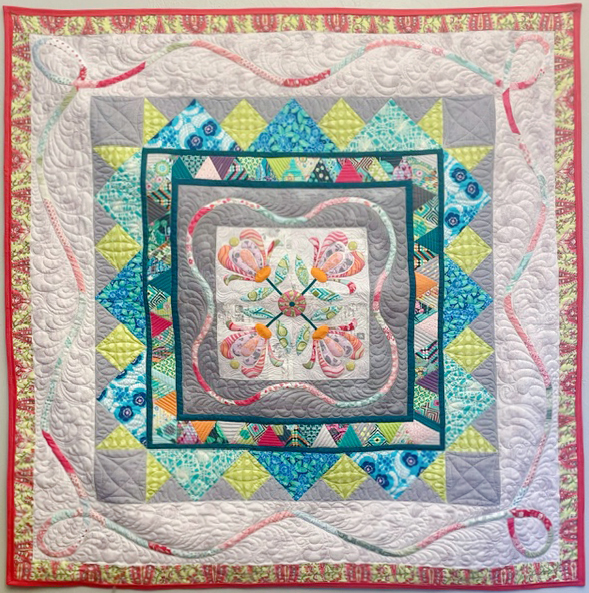
My quilts begin with an idea, then sketches. What you see below is the final sketch before I moved it to the computer.

This new quilt is going on my bed. Steve’s Birds, the current 2024 BOM, is for Steve’s bed. (Yes, we sleep in different rooms because—snoring 🤣. In our case, a good night’s sleep leads to a very happy marriage.)

The new BOM patterns will be available on their own, in January 2025. The downloadable patterns will not come with fabric—you can use any fabric that suits you. However, I am doing my best to make it easy for you to color your quilt like mine, if you want to.

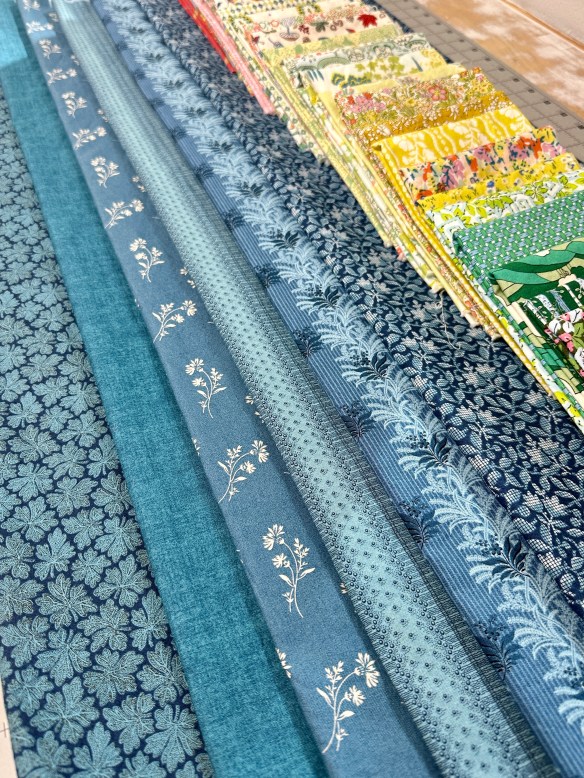
I am using medium blue backgrounds cut from a variety of Laundry Basket fabrics. This is what I have so far, there may be more. We will offer a kit with similar background fabrics, in a few months, for those who want it.

I am going to use many Liberty of London quilting weight cotton prints in my applique. The prints are iconic, the colors make me smile. I have started gathering fat quarters, but it takes time. You have to get the fabric when it is available and it sells out fast. Some fabric that we have on order won’t be released until next year. Patience is a hard virtue 🤣.

Knowing that some of you will also want to start building a palette of fabric, we are offering a Liberty Stash Building Club that will start soon. If you are interested, please get on the Waiting List. There are a limited number of slots and being on the Waiting List does not guarantee a spot—but you will get an email when it’s time to really sign up.

You don’t have to save this fabric for the 2025 BOM—you can use it for other projects. In fact, you will have Liberty left over after the BOM to use in other projects.

I need to start my quilt soon and will probably have to supplement with other fabric from my stash. Happily, Liberty plays well with other fabrics ☺️.

Thread Tamer Fix + LoLo Testimonials

We love hearing from you when you let us know that you love something and also when you have an issue to resolve. Lee was the first to ask about this:

“I love my Lolo thread tamer, but I have a question. After several months of use – there’s a distinct thumbprint – it feels like the product is dry and a little gritty. Is it just time to replace it?”

Lorna talked to Kismet at LoLo who offered to replace the Thread Tamer but also suggested gently warming and stirring. Lorna relayed that info and here is what Lee did!

“So you can pass along to others, I ended up melting mine down on a candle warmer and adding some more extra-virgin olive oil. It’s worked perfectly since then.”

Thank you so much, Lee, for sharing! And it’s good to know how to keep LoLo’s Thread Tamer supple, no need to replace.

I did something similar to make a very small container of Thread Tamer to travel with. I carefully warmed up the original tin until I could scoop some out to put into a tiny little jar. That’s just one more idea to add in.

More about Thread Tamer from Marie: “I’m so glad I purchased Lolo thread tamer. Received today and immediately tried it.  What a difference as I’m sewing. Smooth, no tangles.  I absolutely love it!!!
Thank you for recommending a great product.”

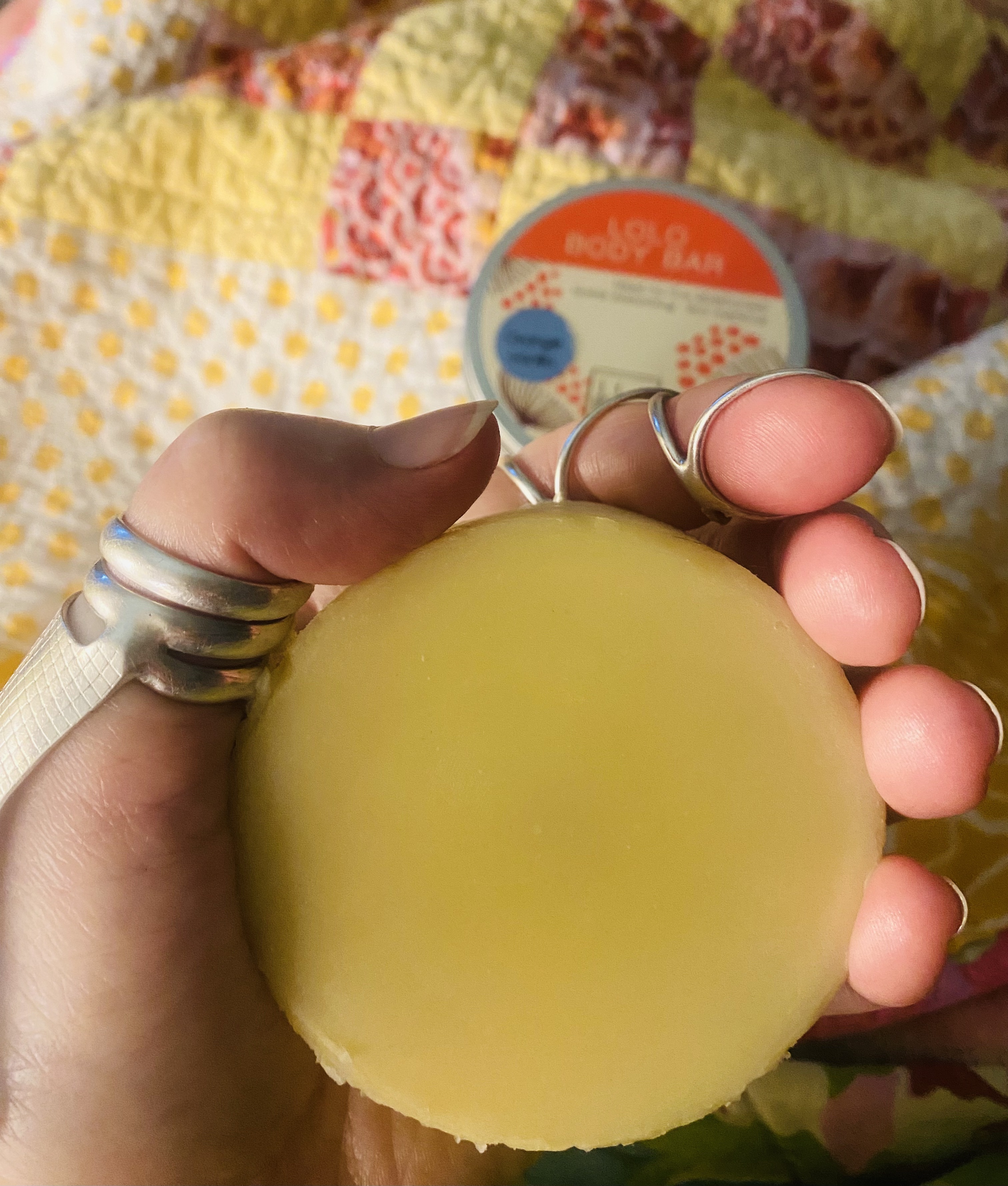
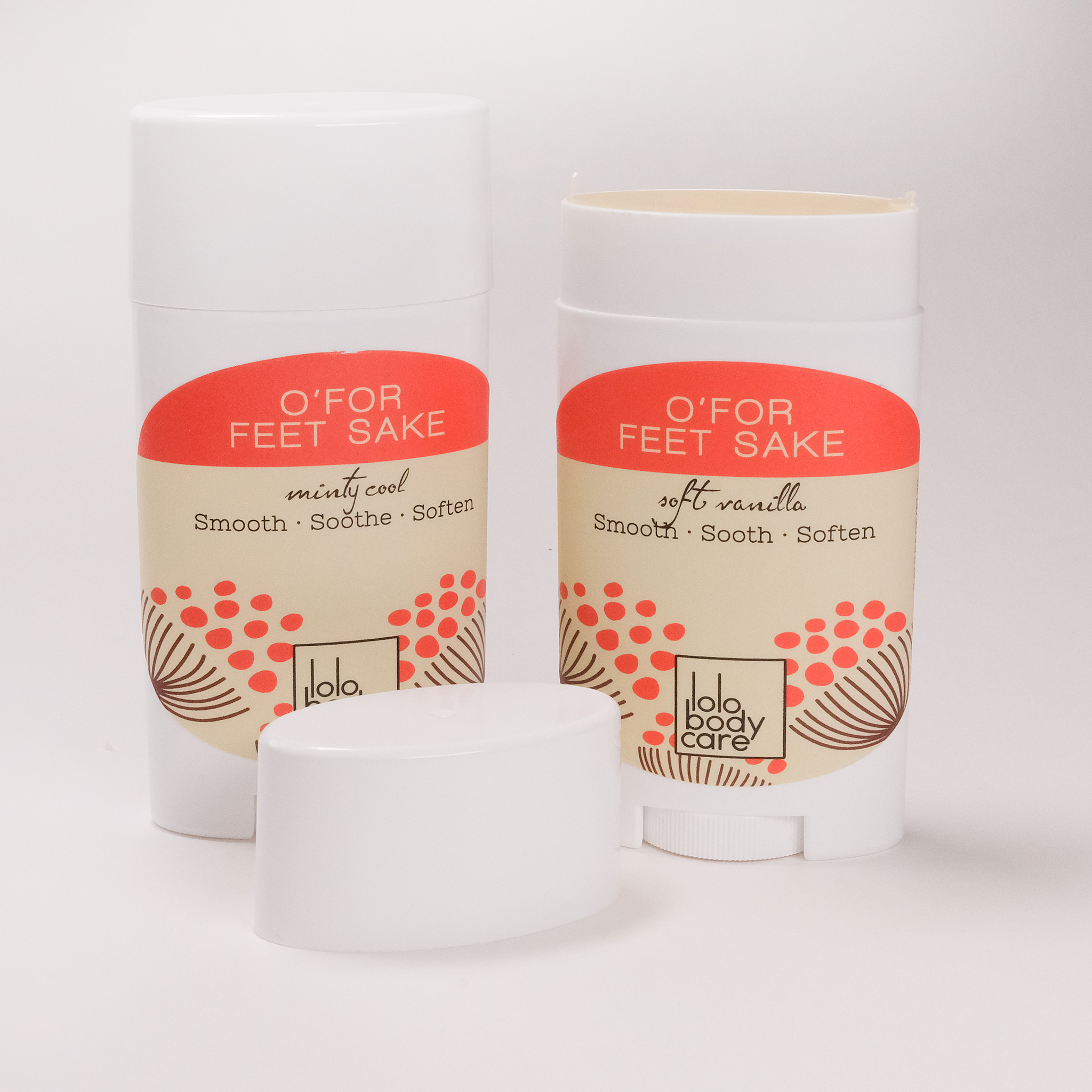
For your body, you will love LoLo Bars (a moisturizer in a convenient bar), Cuticle Intensives (love these miracle sticks!), Soaps, and LoLo Feet. But don’t just take my word for it…

From Cathy: “I ordered the LOLO bars and LOVE them. It works so well on my split finger tips, I can stitch!”

Cathy also said that it’s amazing how after applying, LoLo doesn’t rub off on the wool or the thread she’s working with. She went from needle-turn appliqué to wool because of eyesight problems. Wool appliqué is “so forgiving,” she says, enjoying her afternoon hand sewing ritual.

Hand sewing is a calming focus when the world might not be calm. I’ve enjoyed evening hand sewing for decades. It’s what we do.

Click here to see all the LoLo.

Sleeping Beauties at the Met…

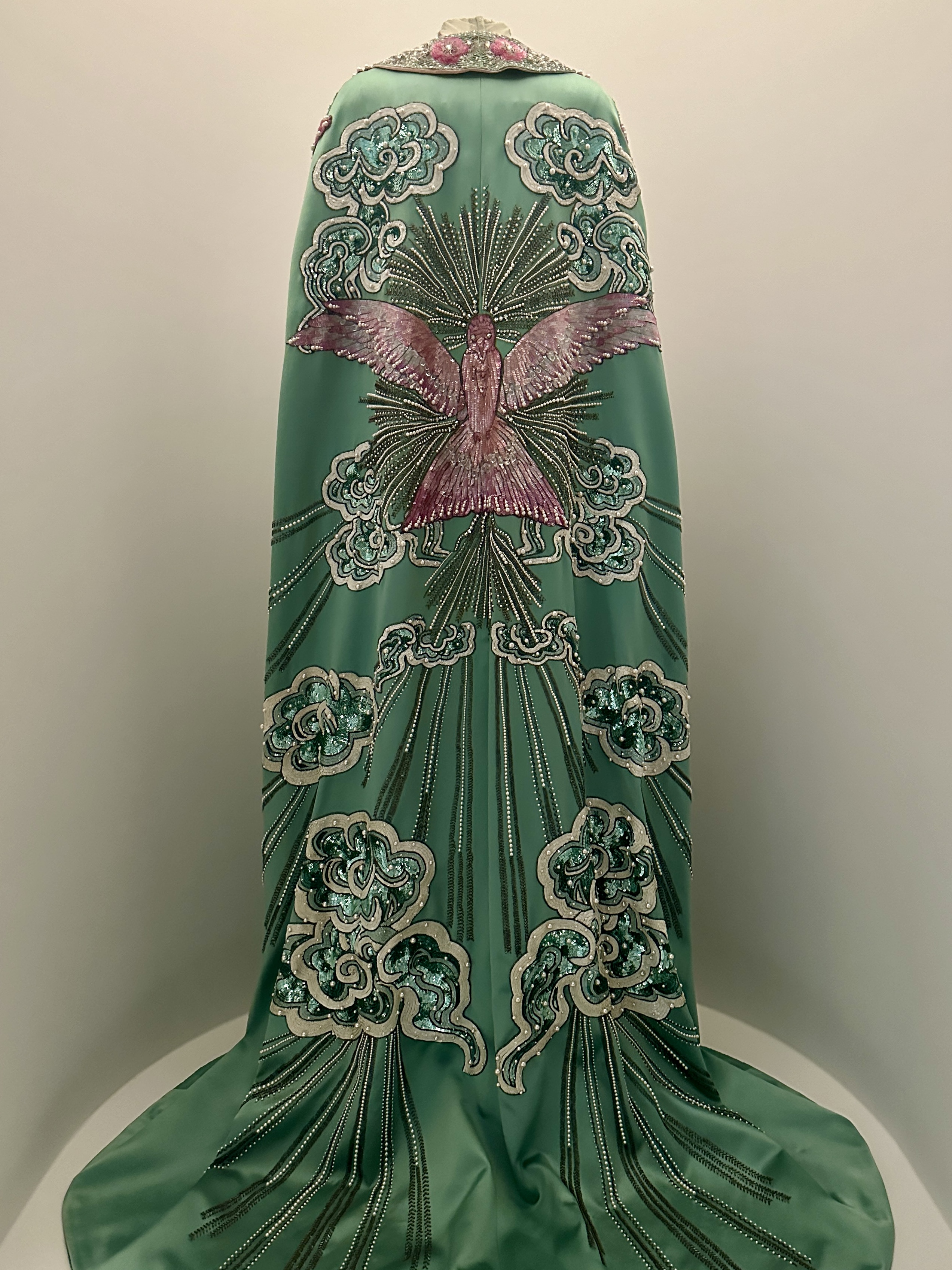
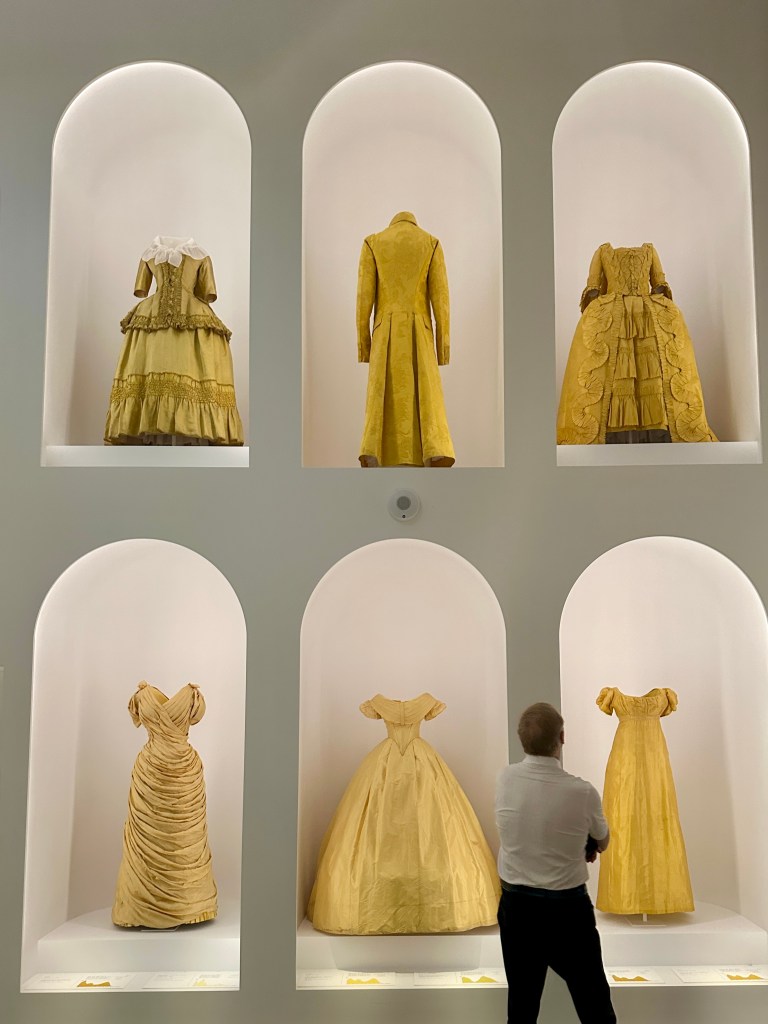
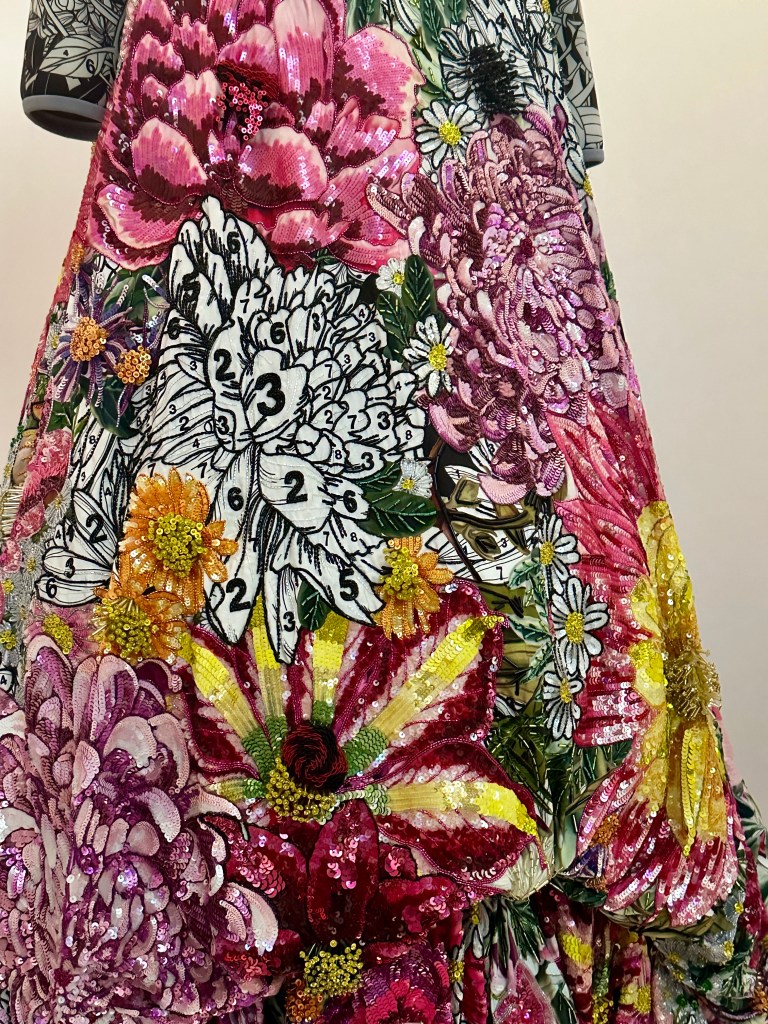
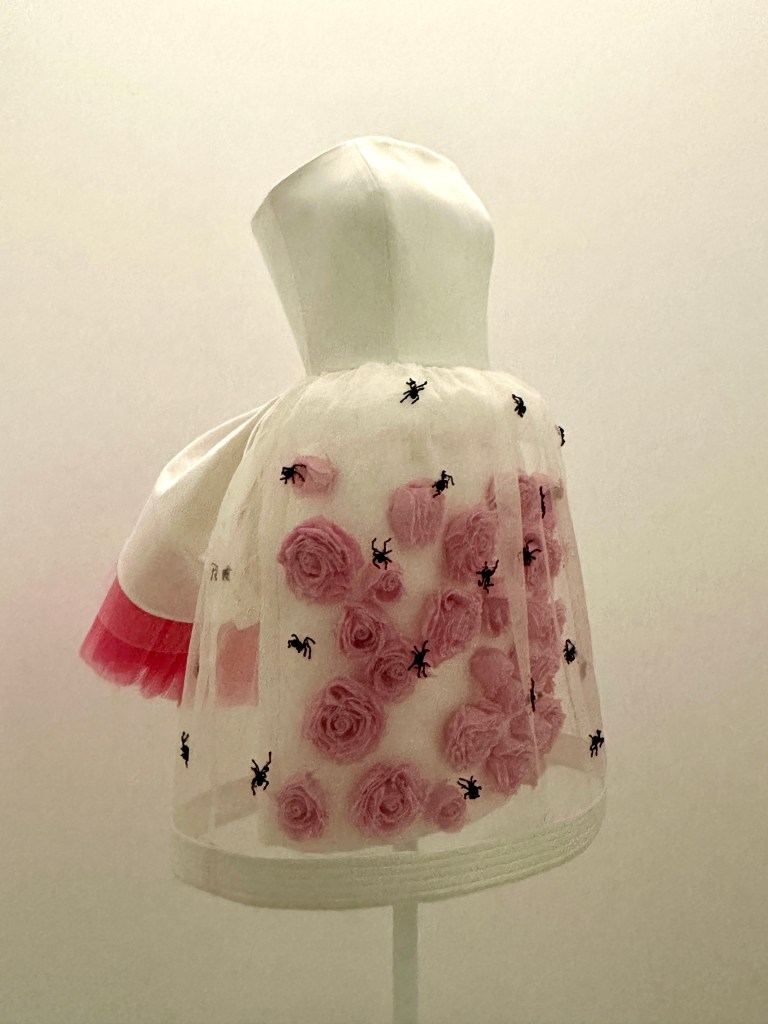
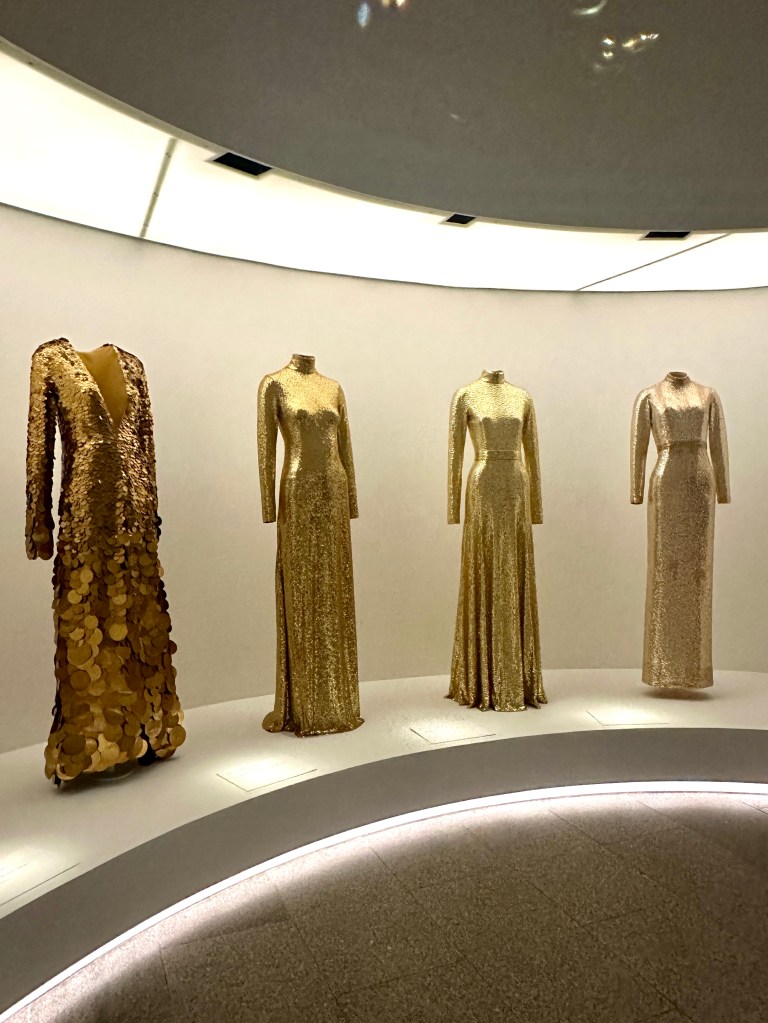
To quote the Met: “This exhibition features approximately 220 garments and accessories spanning four centuries, all visually connected through themes of nature, which also serves as a metaphor for the transience of fashion.” It is worth a visit!

These are works of art intended to be worn—maybe only once—but they are built for a human body. They are relatable in a way that flat canvases are not.

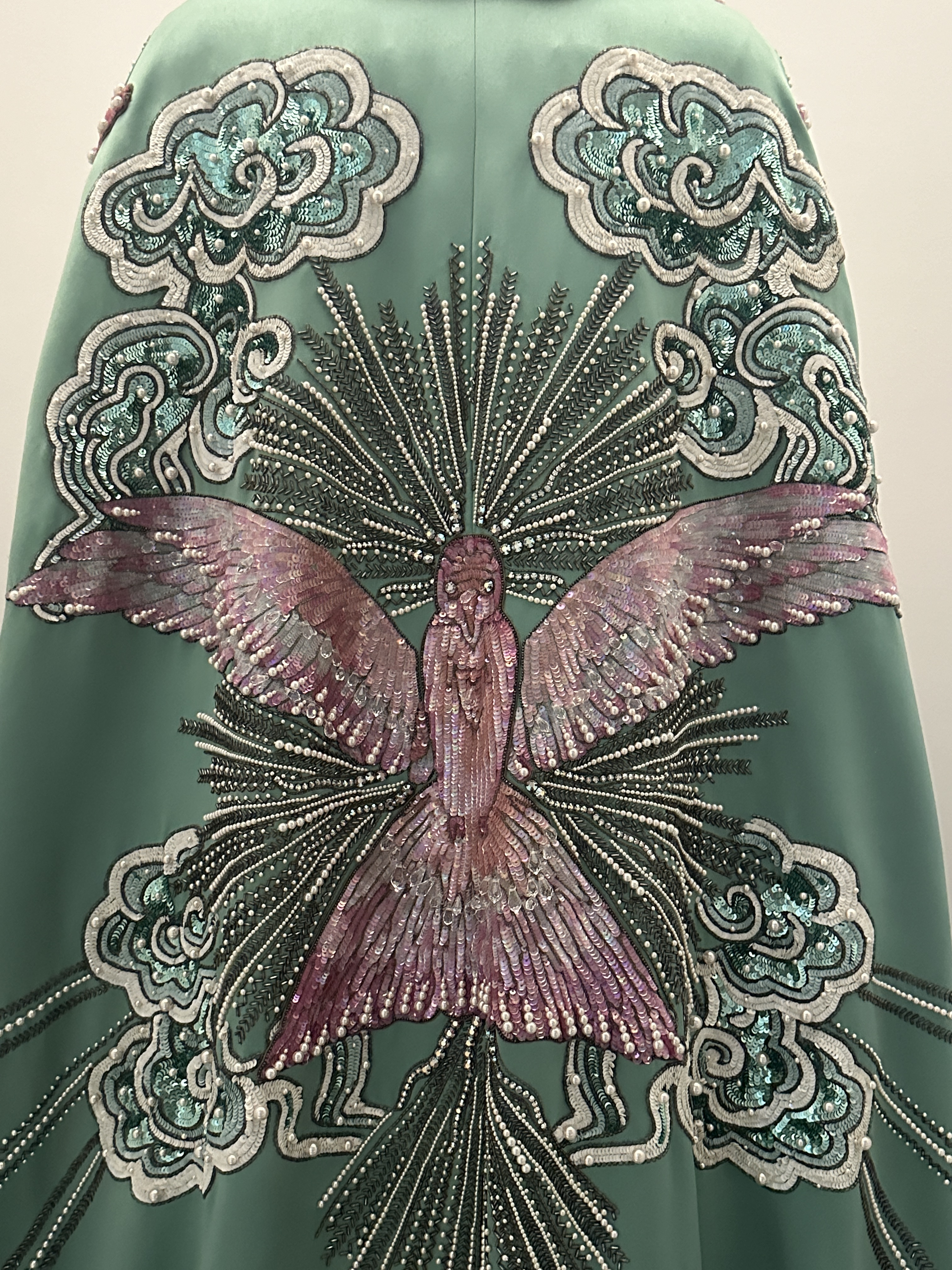
Gucci cape, 2017-18

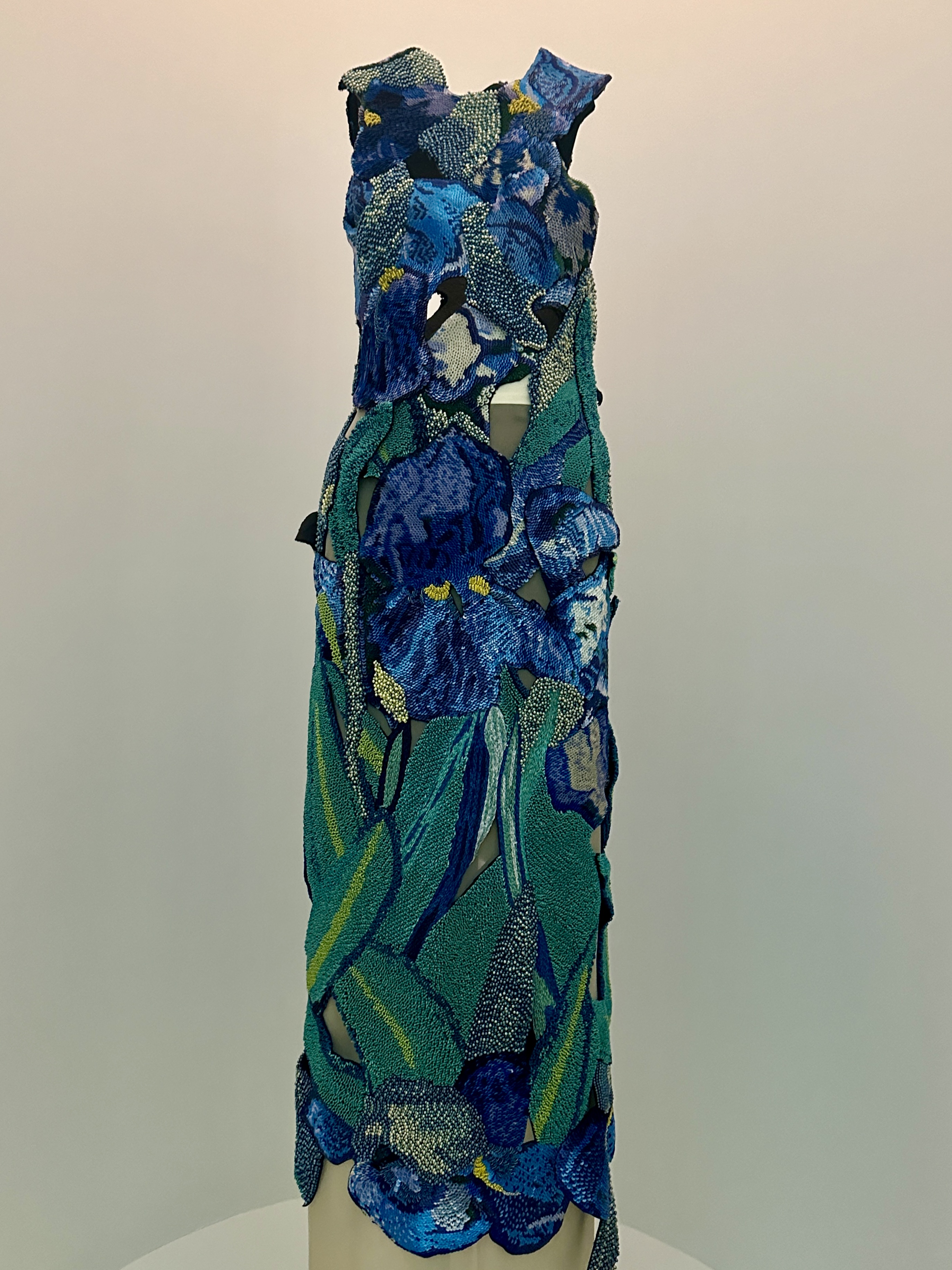
Many/most sported beads and sequins in designs and colors that celebrate the theme of nature. Needle, thread, beads, and sequins are very accessible… just think of the things we can bling up!

Conner Ives, 2021-22

I walked the show thinking about how heavy and hot the dresses would be, how they would limit movement. But if I were going to a gala, I would put up with all of that :-).

Marni, 2024.
There are arm holes, but I am still puzzling over what you would have to do with your arms to keep them from getting cut on the metal edges.
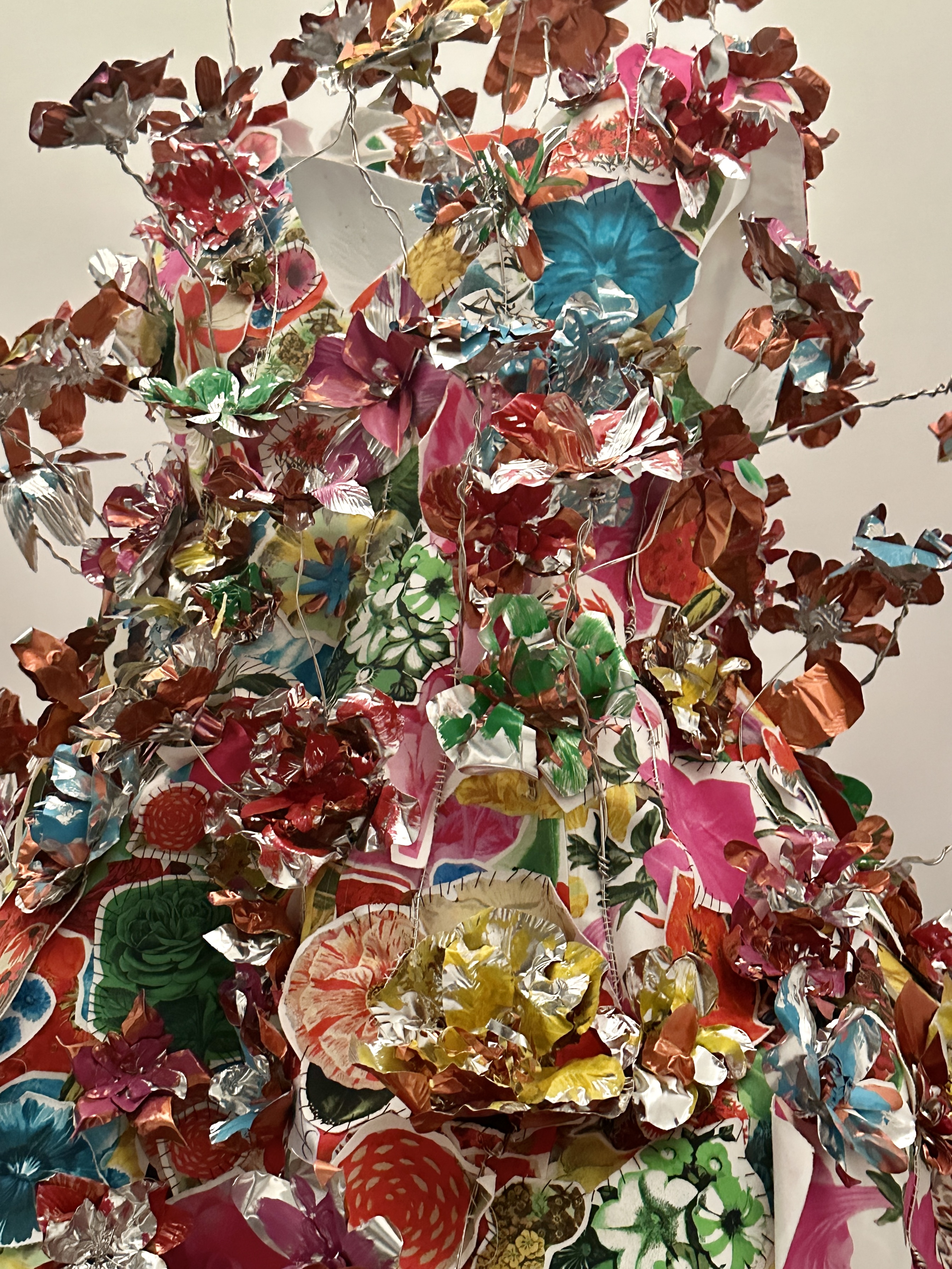
feathers and paint
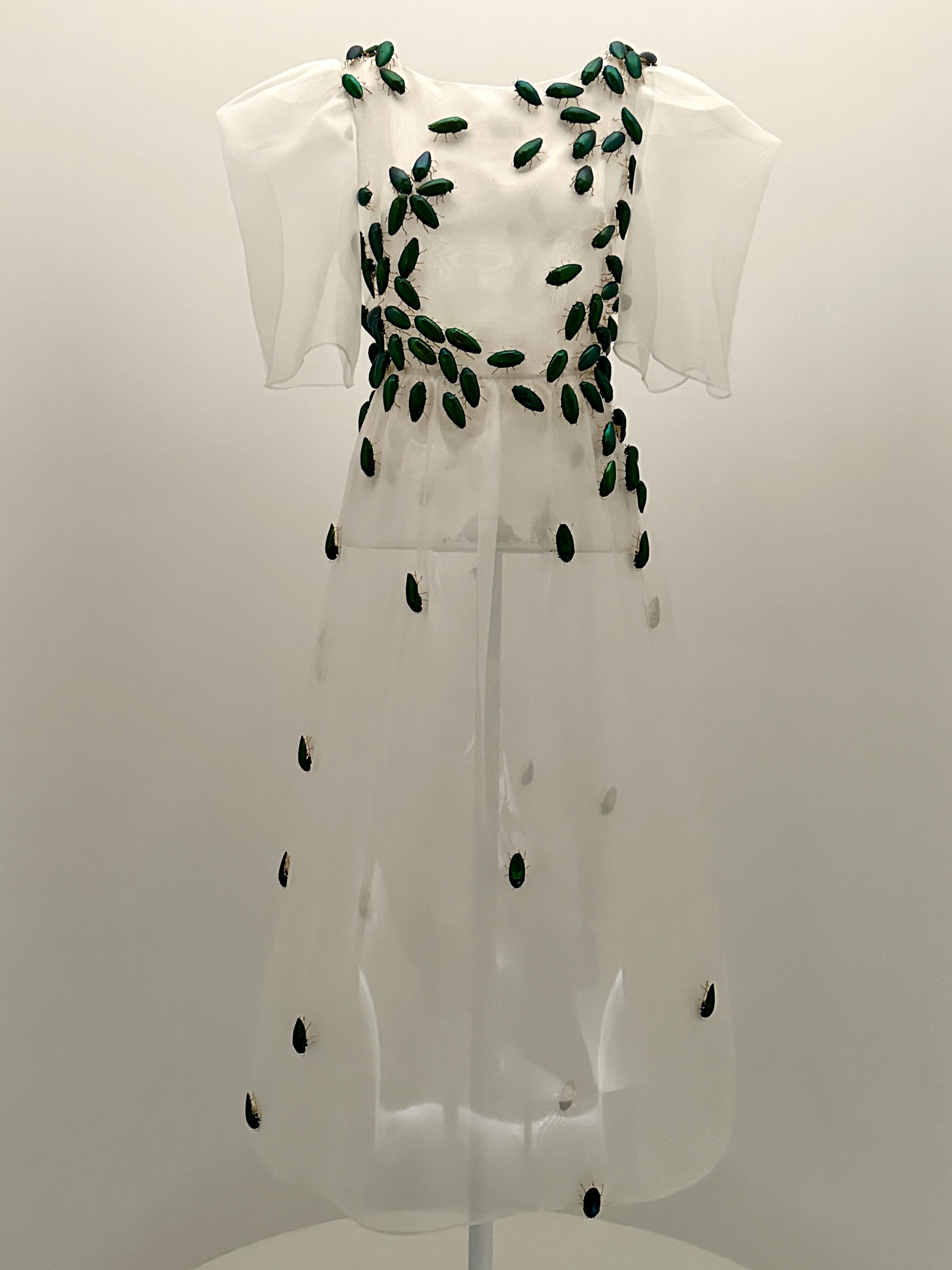
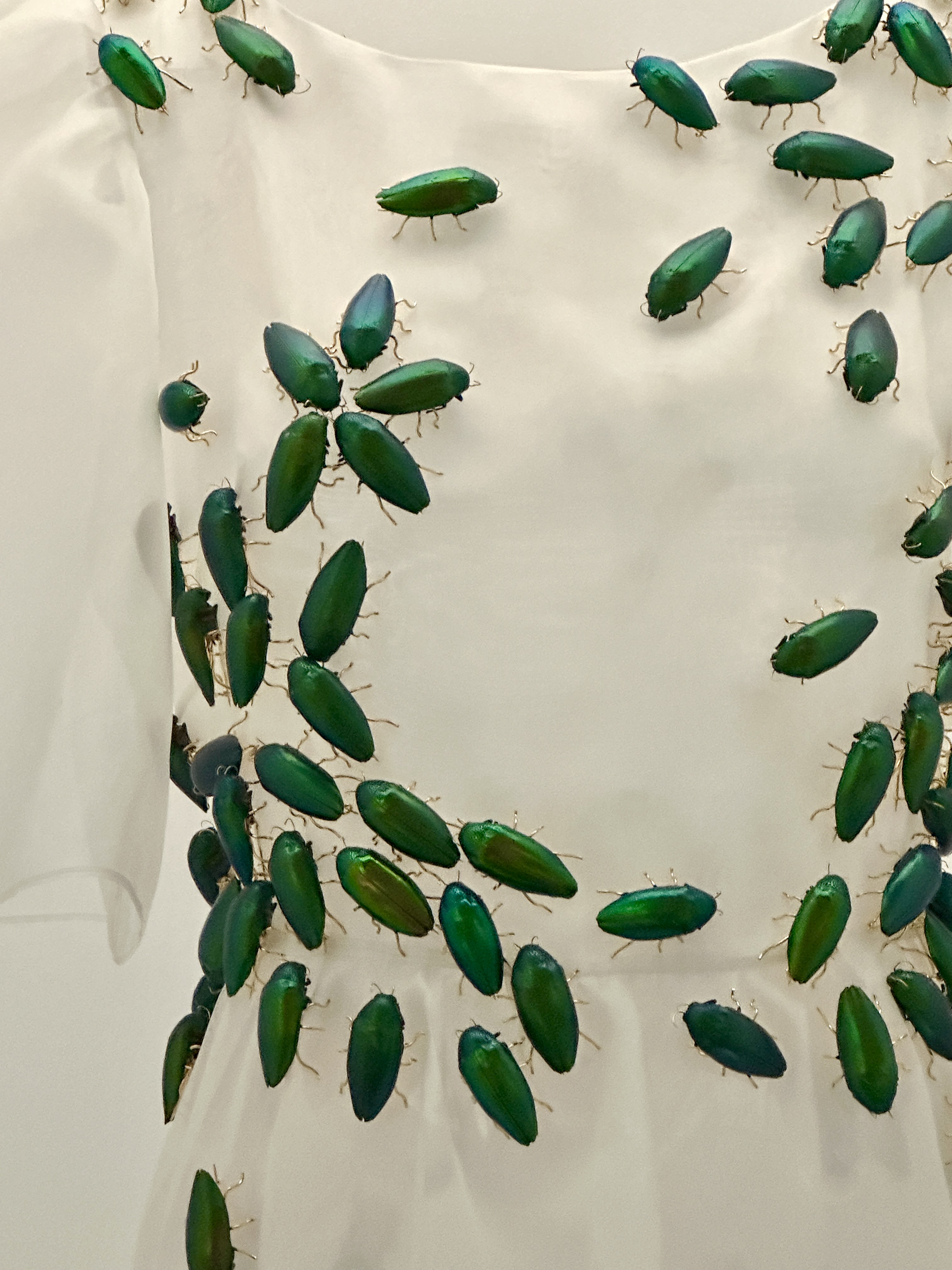
Dauphinette, 2022-23. White silk organza with brooches of gold metal and jewel-beetles

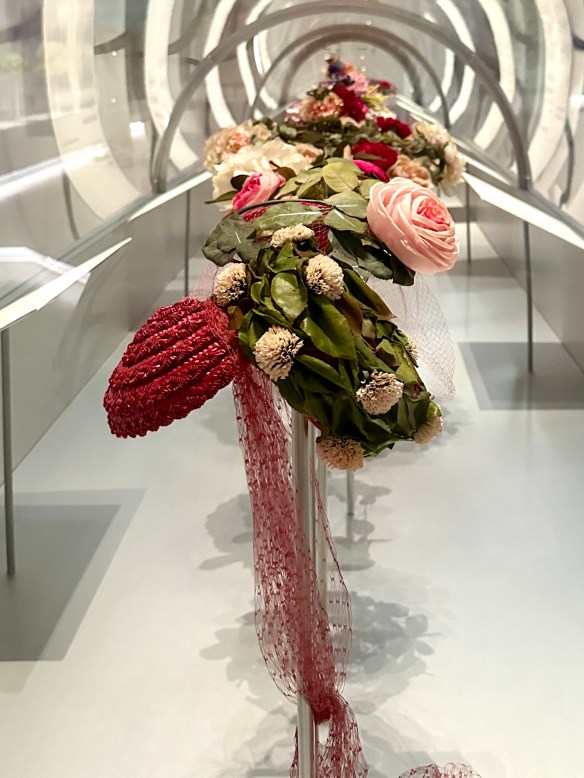
And hats! I should have taken more photos of them all.

“It is the hat that matters the most,” notes Rezia, the Italian milliner in Virginia Woolf’s novel Mrs. Dalloway (1925). Rezia’s observation was echoed by Christian Dior in his 1954 Little Dictionary of Fashion: “[A hat] is really the completion of your outfit and in another way, it is very often the best way to show your personality. It is easier to express yourself sometimes with your hat than it is with your clothes. “

Next is a cautionary tale for quilters who use starch. We’ve been told that starch can draw bugs, but I’d not thought about it discoloring and damaging fabric. Polysaccharide gum is different from corn starch and I am not a chemist but it does raise questions in my mind.

While this nautical-inspired ensemble remains in good structural condition, its visual appearance no longer represents the clean aesthetic of Norman Norell’s original design. Scientific analysis of the organdy has revealed that the discoloration is occurring not in the cotton fibers themselves but in a starching agent (polysaccharide gum) added to the cotton to provide sheen and stiffness. Although it is not unusual for starched cotton to yellow over time, the severity and the unevenness of the discoloration has made this dress unsuitable for display, as it distracts too much from the designer’s intention.

Norman Norell, 1968

There was more… so much more. I got lost amid Impressionist paintings, then remembered to visit the roof to garden.

Edouard Vuillard

I visited with a guard who loves her job, spent a bit of time and money in the gift shop, and walked the 2 miles back to Jeff’s apartment. What a great way to spend some hours of my life :-).

A Simple Hand Sewing Needle Guide

Have you made one of these cute needle caddies yet? If not, you can find the FREE ePattern for the Big Needle Caddy at pieceocake.com, While you are there, you might be interested in the other FREE ePatterns. But you don’t have to make a needle caddy to be interested in knowing more about hand sewing needles.

I am careful to pair a needle with the kind of sewing I am doing, and the thread that goes with it. Since I do a variety of kinds of stitching, I like to have a variety of needles to choose from with me when sitting down to sew. This is how I filled my own needle caddy.

First, you need to identify each needle so that when you need more, you know which package to choose. Cut a strip of paper to write the needle particulars on, grab a pen or pencil, and gather your needles. Which needles, you ask? Why… these needles!

  • #9 Crewel Needle by Bohin: This is a very versatile needle with a long eye and strong body. Use it with wool thread, perle cotton, and 30-40 wt cotton thread. Great for embroidery, big stitch hand quilting, and some hand sewing.
  • #9 Piecing Needle by Tulip: An all-purpose needle good for a variety of hand sewing jobs, especially hand piecing. This needle is a little long, with a sturdy shaft. If you have trouble handling smaller needles, this and the crewel needle above might be good choices.
The next four needles will work better with fine thread like Superior’s 50wt/2-ply thread that only comes on prewound bobbins. Presencia’s 60wt/2-ply thread, Aurifil’s 80wt, and Aurifil’s 50wt/2-ply thread are also good choices with these needles.

  • #10 Big Eye Appliqué Needle by Tulip: Tulip applique needles are smaller and finer than their size number would indicate. The big eye on this needle makes it easier to thread. It is longer than #11, but not as long as a milliner’s needle.
  • #12 Black Gold Appliqué Needle by Clover: This needle is tempered and honed to a very sharp point. It is rigid, not bendy. I get a very nice, small stitch with this needle.
  • #11 Appliqué Needle by Tulip: Very much like the previous needle, but this one is more flexible. I use them interchangeably except that sometimes my fingers have a preference. I don’t know why, but that’s true.
  • #12 Gold-Eye Appliqué Needle by Clover: This is a very nice, affordable, serviceable needle that you can count on. And I did mention… affordable.

Note that when the package says “appliqué” needle, it is often a sharp. A sharp is a needle most often associated with hand sewing. It could also be a longer milliner’s needle which is associated with hat making. Look close and the package will probably tell you which it is.

One of the best features of this needle caddy are the little pockets, shown in the photo above. Mine pockets hold round wooden toothpicks, Leather ThimblePads, and 1-2 flat needle threaders like Roxane’s RX Needle Threaders

Each caddy has two bamboo felt “pages”. My 2nd page holds needles I use less often. Any of the first three listed below would be good with strands of embroidery floss.

These are applique needles that I sometimes use:

  • #11 SuperGlide by Colonial: I almost never use this needle. It’s bigger than my preferred appliqué needles, but not as big as the #9 piecing. It is easy to thread!
  • #12 Appliqué Needle by Mary Arden: This is an excellent, inexpensive needle. The eye is kind of big which is not a bad thing. The needle is a good size, fine, and sharp.

There are two more little inside pockets inside the back page on the other side. I will add a Domed Under Thimble with adhesive pads in one of them.

Click the names of individual needles above to find them on my site or go to Everything In My Needle Caddy, to find them all.

There are lots of good needles out there, these are the ones I use most. And I still recommend Sewing Needle Guide for Hand Stitching by Laura Wasilowski for a more complete and easy-to-slip-in-your-bag needle guide.

Use clamps to keep the weight of the quilt off of your table…

In case you missed it in the past, this is the DIY clamping system I use to support the weight of a quilt as I machine quilt.

I first got the idea from Caryl Bryer Fallert-Gentry. The idea is to use two quick-release clamps suspended from the ceiling to hold the weight of the quilt off of the table while you work. Here are the supplies you need:

  • 2 quick-release ratcheting clamps. Don’t get regular clamps with springs—they are hard on your hands.
  • 2 plastic spring toggle for coats—that’s what those yellow things are
  • Several yards of nylon cord—the kind you would use in a Roman shade (not shown) 
  • 2 big, eye-bolts or hooks for the ceiling. If you can’t screw them into wood, use ones with a toggle.

This is an eyebolt in my ceiling. There is wood above the sheetrock in my studio. If there wasn’t, I’d use eyebolts and butterfly toggles.

Cut a length of nylon cord twice the length from your tabletop to the ceiling. That will be too long, but you can cut off the excess later. Squeeze a jacket toggle open and run one end of the nylon cord through it and then up through the eye-bolt in the ceiling. Run it back through the squeezed-open toggle.

Squeeze a jacket toggle open and run one end of the nylon cord through it and then up through the eye-bolt in the ceiling. Run it back through the squeezed-open toggle.

Tie one end of the nylon cord to one handle of a quick-release clamp. My clamps came with holes that were perfect for this. You might have to drill a hole.

To raise or lower the clamp, squeeze the toggle and pull the other end of the cord. As you use the clamps, you will figure out how much of the excess nylon cord you want to cut off. I like to be able to reach it from a sitting position.

My BERNINA Q20 sits in a table, front to back, not side-to-side like a home machine. My eye-bolts are positioned in the ceiling about 30″ apart, centered over the machine—one on one side, one on the other. They sit back from the front of the table about 12″.

If you machine quilt on a home machine, position one bolt in the ceiling, about 12″ behind the needle. Position the other eyebolt 14″-16″ to the left of the needle (in the ceiling). 

It is fast and easy to change the position of the clamps as you move and turn the quilt. The more you work with the clamps, the easier it is to know where best to clamp the quilt.

When I’m not using the clamps, I pull them up to the ceiling, coiled excess cord, and clamp it in place.

So there you have it! This is an inexpensive and simple way to support and control your quilt as you machine quilt. I hope you have as much success with this as I have!

Cows, sheep, birds, and bunnies!

We sometimes experienced cows and sheep on the road :-).

The sheep were white and everywhere we went outside of towns.

These fellows have been sheared. They look so different!

And this was new—brown sheep! Only saw them once.

I heard more birds than I saw. I’m pretty sure this is an Oyster Catcher.

Gulls are everywhere. More than one kind and Steve could tell them apart.

These are juvenile Jackdaws (I think). They were fuzzier than an adult. While we watched, one of the parents flew in with food 😊.

Most of the rabbits were cottontails but we did see this albino rabbit whose coat was textured. He looked huggable.

The rabbit was with these chickens. we didn’t see many chickens 🤷‍♀️.

The most exciting animal spotting for me were the Puffins!

We are at the Edinburgh airport, ready to fly through London Heathrow to Dallas. I’m out of sewing and knitting so will read one book, or listen to another book, and maybe doodle in a notebook. Lorna and I will have time to map out what to work on next.

I have loved every bit of this vacation. Scotland is a wonderful place filled with some of the nicest people I have ever encountered.