That’s Linda and Paul. We’re on our way to our next flight.

Sent from my iPhone

I'm just back from Las Vegas where I taught at Quiltique. What a great quilt shop! If you are ever in Vegas, don't miss this shop.
I gave my lecture on color and Kara, one of the shop owners, asked me several really good questions afterward. One was about what fabric I buy. I get this question often but Kara asked it in such a way that I thought I really need to add that information to my lecture. So, for all of you, here's the answer to that question, with a photo of what I bought at Quiltique.
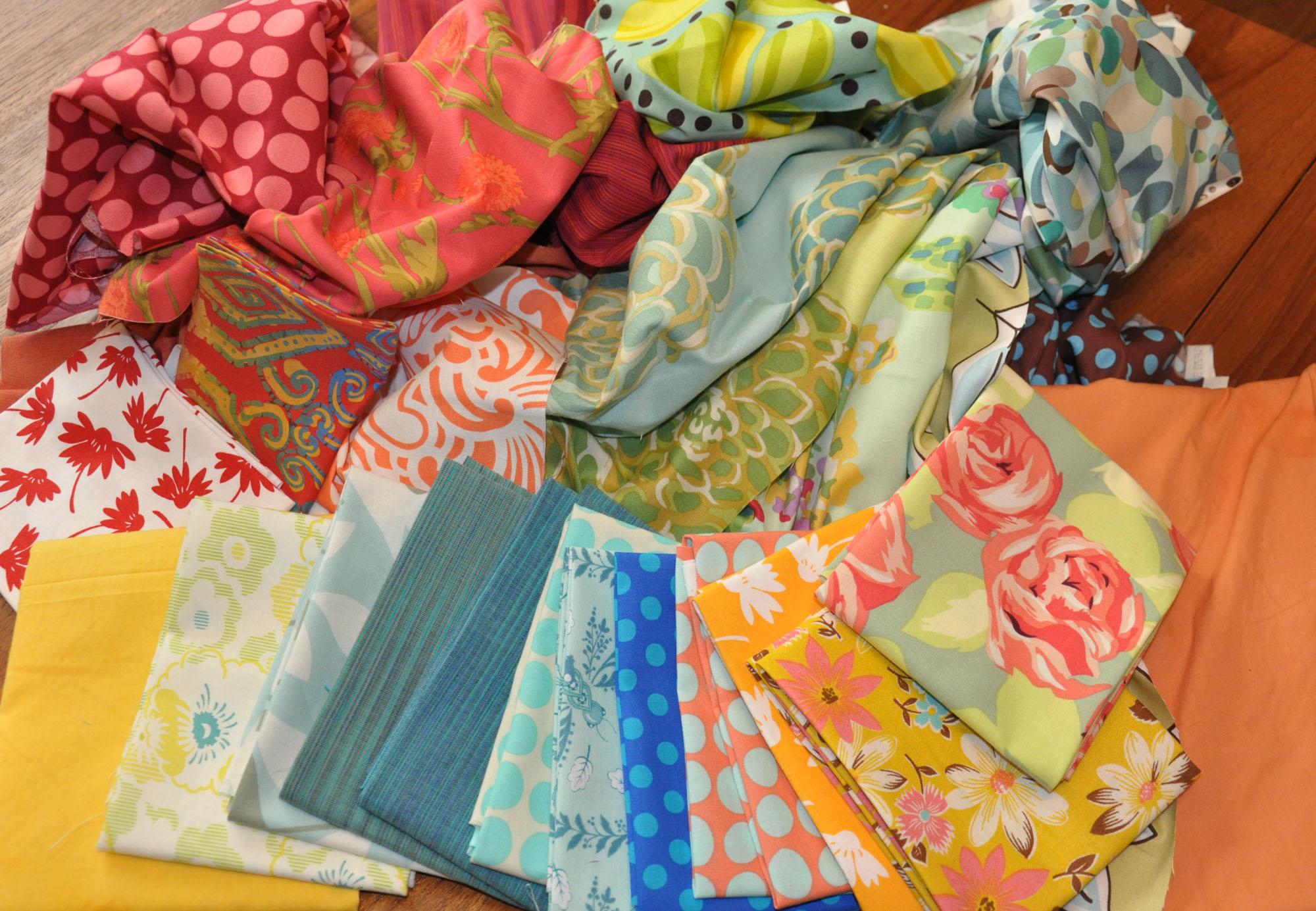
I buy fat quarters most of the time. That's what you see above, with the exception of the solid yellow (1/2 yard) and solid orange (1 yard). These are the new Gees Bend hand dyed solids on a bolt and they are colors I know I'm out of. When I buy a yard it's either a really great dot or it's a large print that might end up on a quilt back. I almost never buy more than 1 yard of anything.
Notice that there are lots of dots in my pile. I'm buying lots of dots because one of these days they won't be as prevalent and I'm still going to want them. I buy small, medium and large scale prints. I buy woven plaids and stripes (hard to spot these days).
Happy fabric hunting!
Steve and I and Linda and Paul are leaving for Hawaii today! I'll do my best to post updates from there…
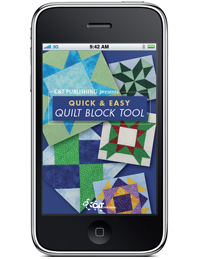
C&T has produced a way cool iPhone app. The Quick & Easy Quilt Block Too. features rotary-cutting directions for lots of traditional quilt blocks, plus bonus reference
tables every quilter needs. I'm not doing that much piecing these days but I'm enjoying having this info in my phone. At $3.99 it's worth the price.
Yesterday I wrote about why we
pre-wash our quilt fabric. Today I'm going to show you how I do it. If
you look at the photo from yesterday's post, you'll see a square gallon
jug. That is a jug of Orvus Paste (aka Quilt Soap). It's a sheep
shampoo and I buy mine at Tractor Supply. I've used it for years and
have been very happy with it. I found an informatinve article at Hart Cottage Quilts.
I
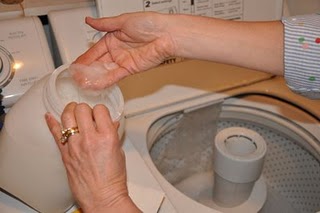
use warm water. It doesn't take much Orvus per washer load. I wet my
hand in the washer water and dip it into the jar and scoop a bit out.
In reading that article I find I should be wearing gloves. Oh well.
As
the washer is filling, I grab my fabric with wet hands. It's a real
hassle to unfold fabric and get it in the washer with dry hands. Wet
hands can grasp the fabric better and that saves a lot of time and
energy. As my hands get dry, I stick them back in the washer water –
with the lid up, my washer won't agitate. NEVER stick you hands in a moving washer!!!! (See note below.)
Once
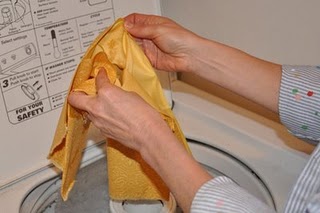
the washer is done, I pull the fabric out of the washer and put it in
the dryer. I cut the tangle of threads free from the fabric. I view
this as a cost of doing business – it's just part of the process. You
could get creative and do something with these threads. I know I never
will so I throw them away. I've tried all sorts of tricks to cut down
on the threads and none have worked for me. I'm too lazy to serge or
re-cut the edges with a wavy cutter. But that's me – one of those
tricks might work for you.
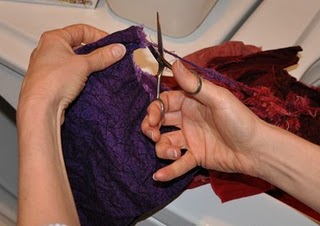
I dry on warm. Once the fabric is dry I pull it out and fold it. I don't iron fabric until I'm ready to use it in a quilt.
Now – about that note… When
my brother was 4 (I was 8), he had to have surgery. We lived in
Oklahoma City and he went to Children's Hospital there that is
affiliated with the University of Oklahoma medical center. I'll never
forget my mom telling me about a much bigger kid (he was 18 I think)
who was on the same floor with my brother. He had been doing laundry
and he reached into a spinning washer to pull something out. Instead,
he lost an arm and they were doing their best to re-attach it. I don't
think any washers then had the switch that is supposed to stop the
spinning when the lid is up.
I decided to look to see if I could find a reference to this incident online and I didn't find one – but I did find a link to this story dated March 25, 2009. It has happened again! And there are links to even more incidents. So, let me stress this again – NEVER reach into a moving washing machine!
I
really thought that all washers came with the safety
switch that stopped all spinning when the lid was up. Be aware, as I am
now, that they don't all come with that safety feature.
I am revisiting an old post. spend time in every class telling students why I wash my fabric and it seems like a good topic for the blog. So, why wash?
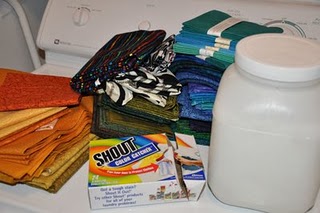
Linda and I always pre-wash our
fabric – meaning that we wash it before we cut it up and use it in a
quilt. Always. We wash in a washer and dry in a dryer.
So that answers the "why" question. Tomorrow I'll answer the "how" question.




 Piece O Cake Blog