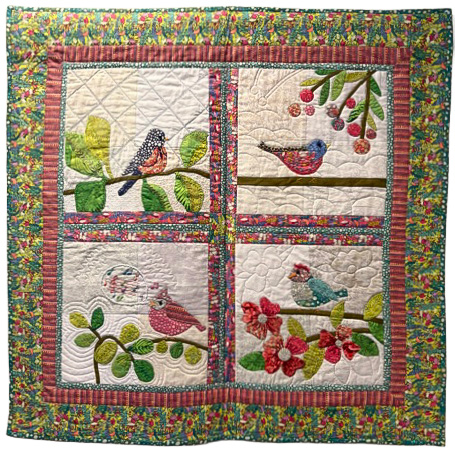
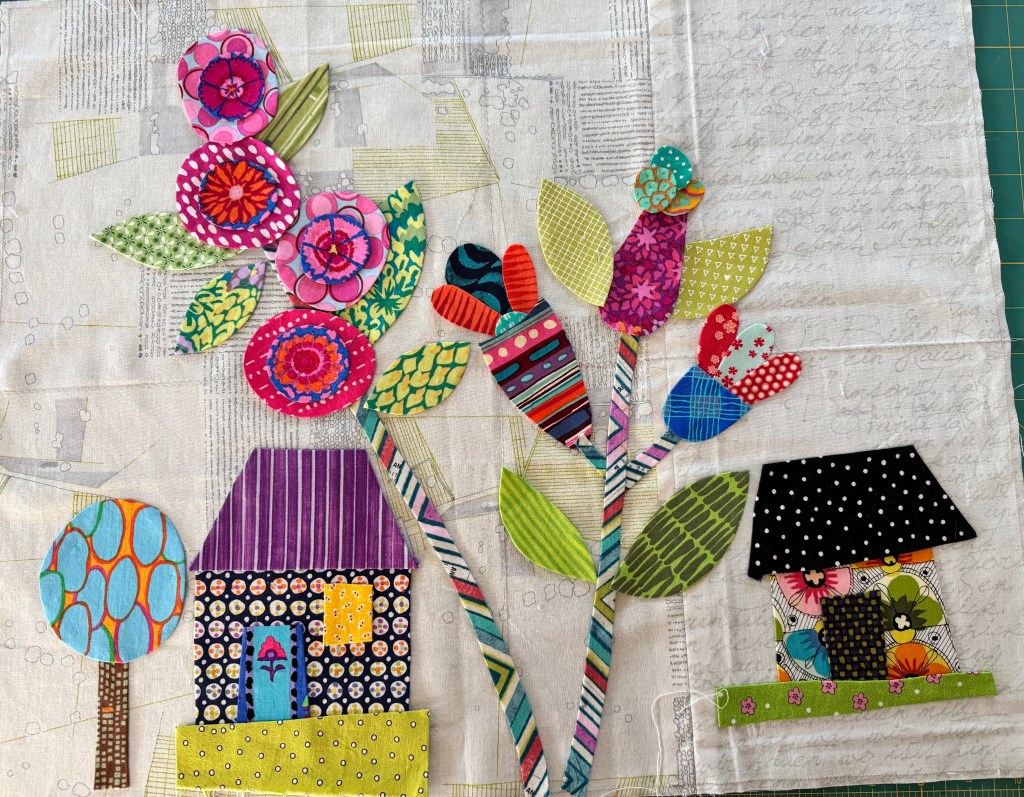
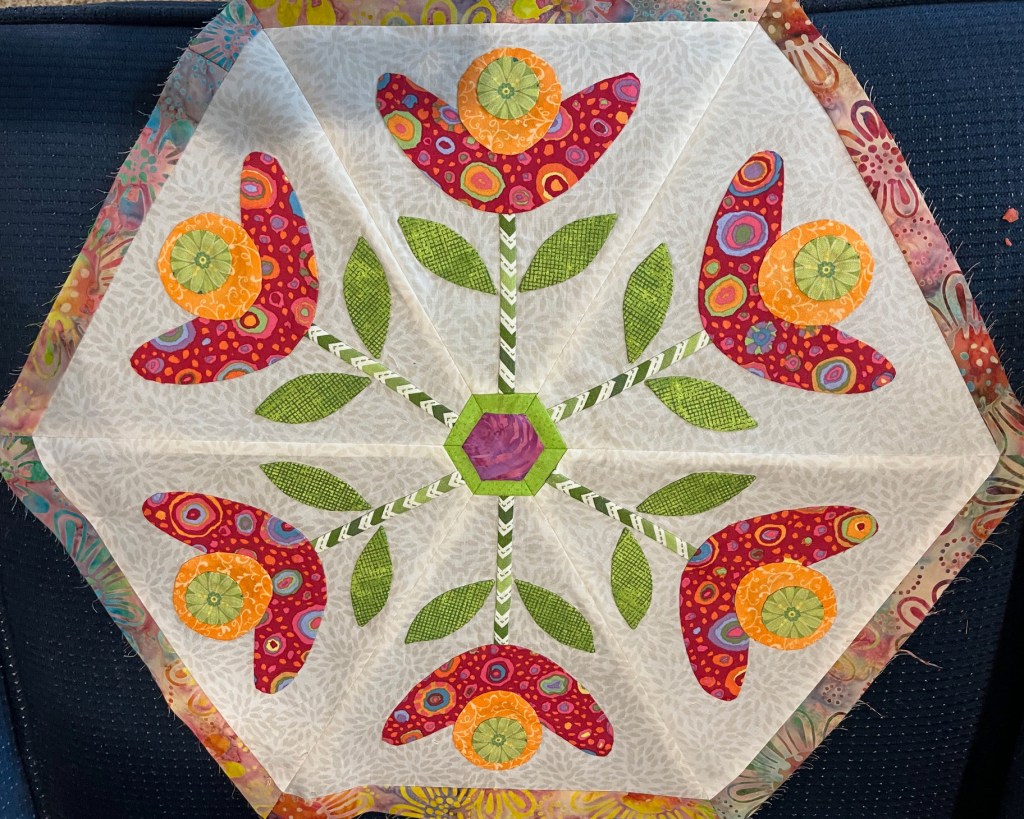
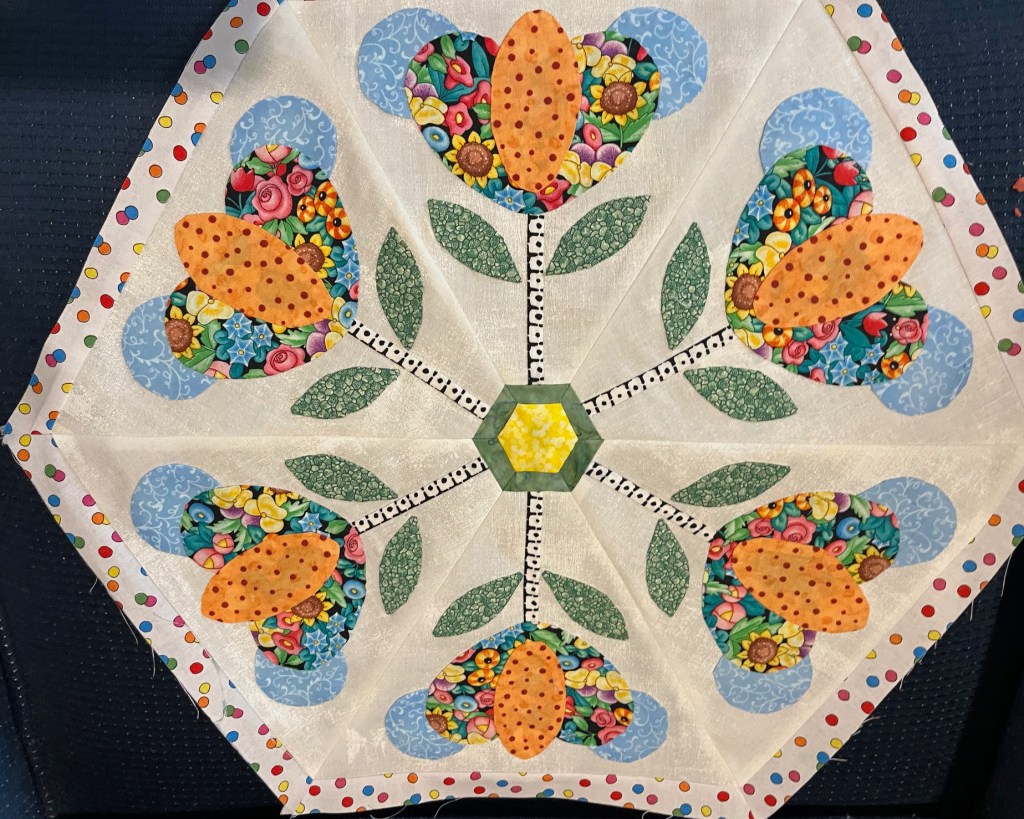
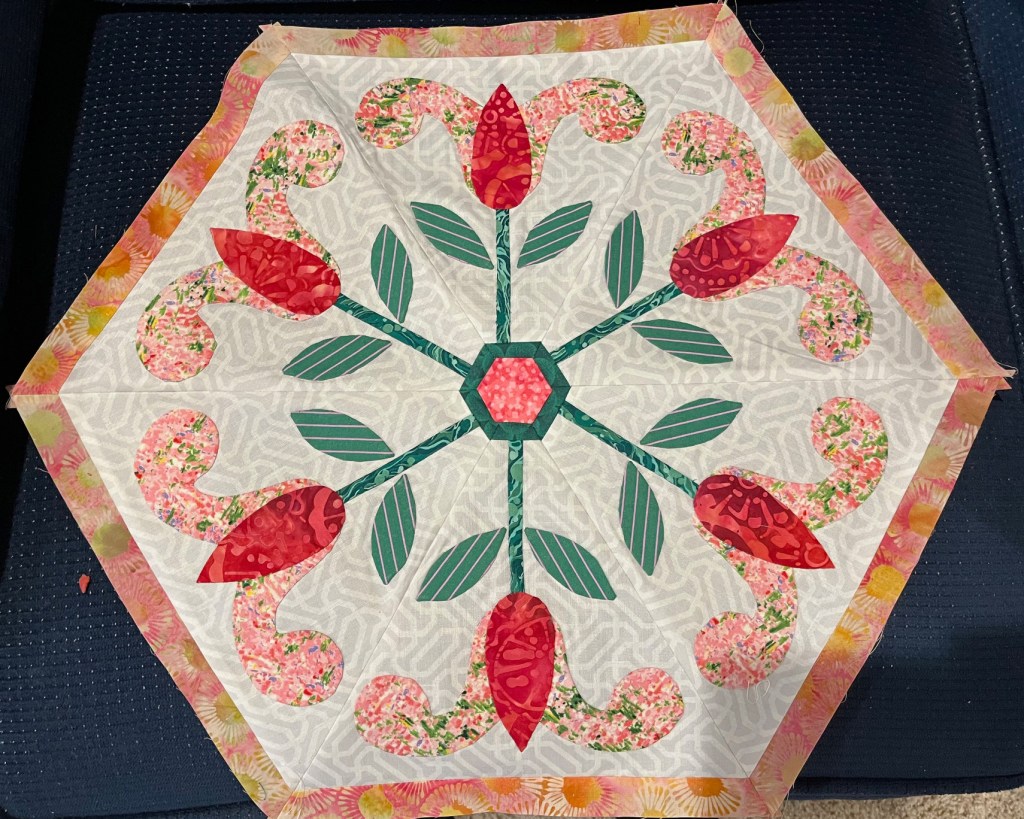
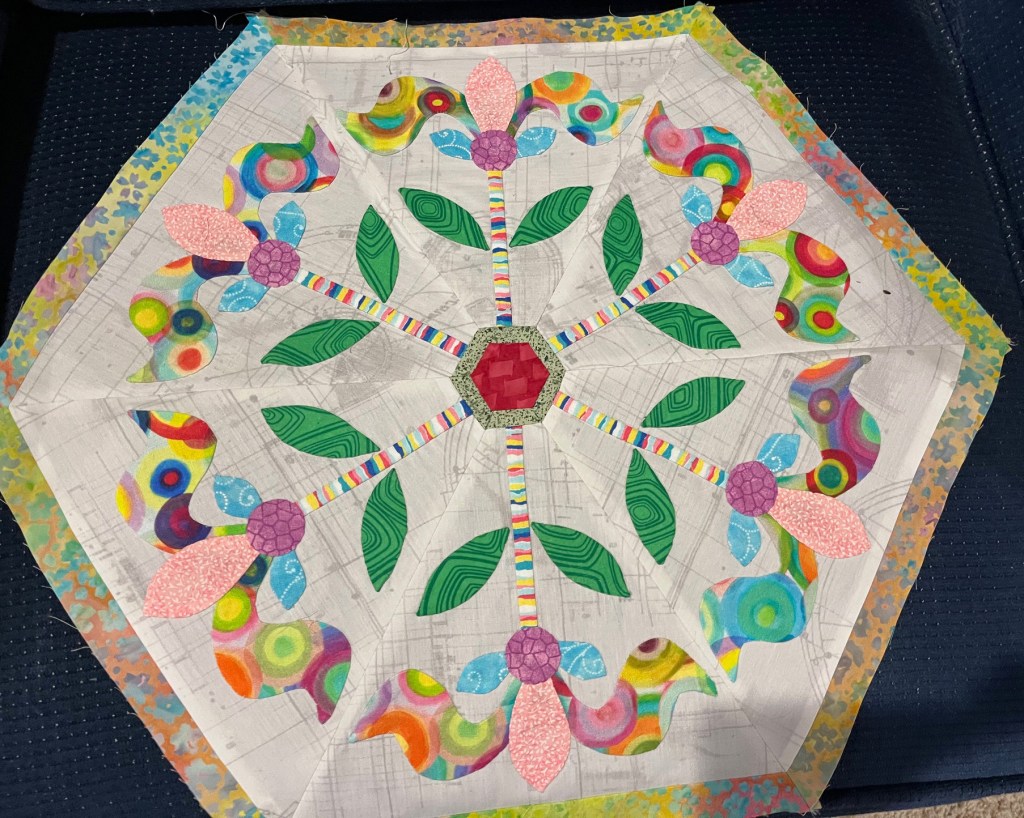
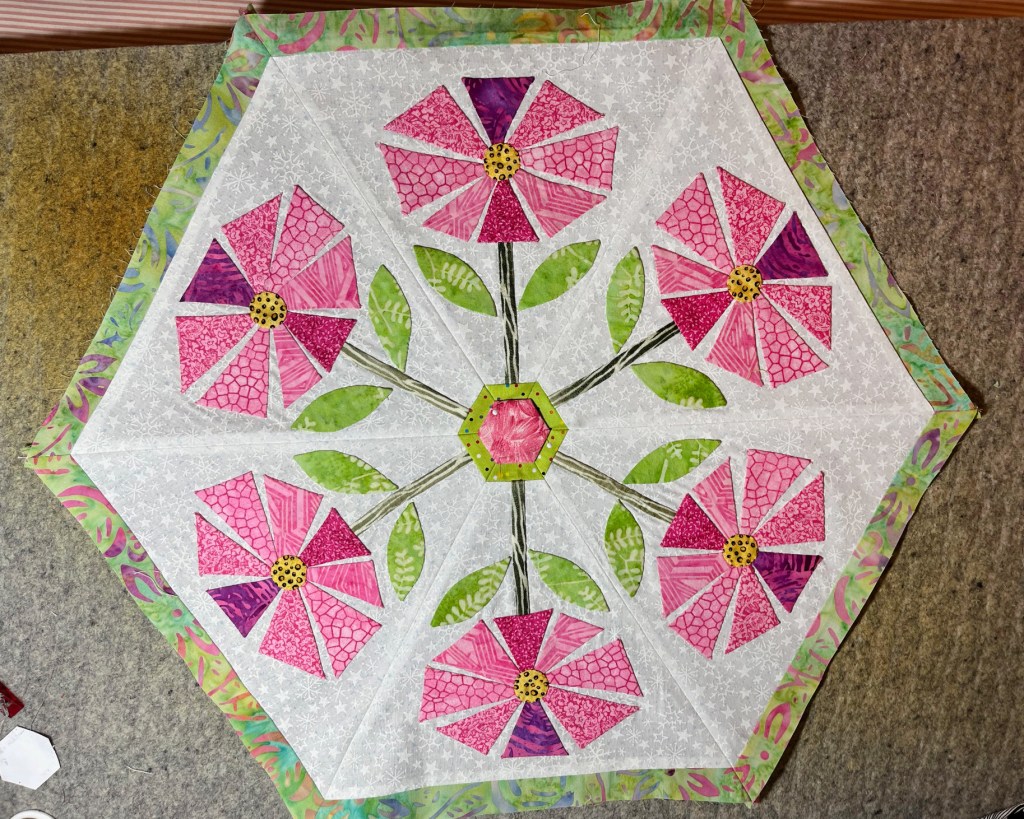
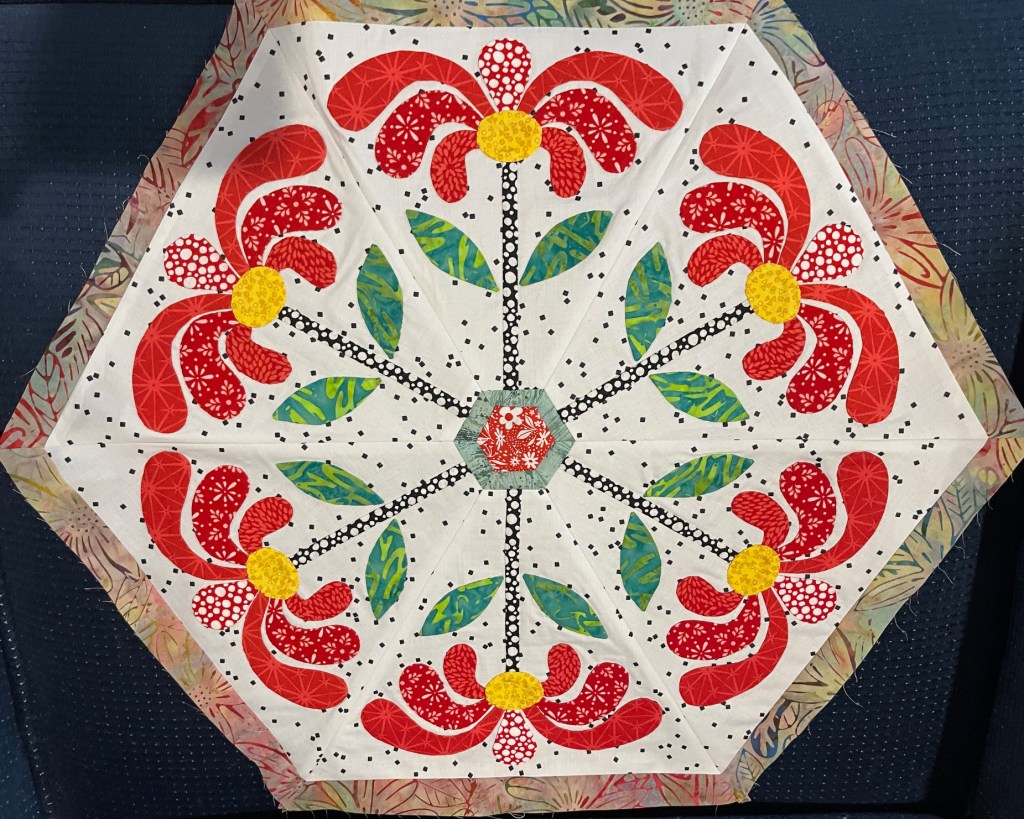
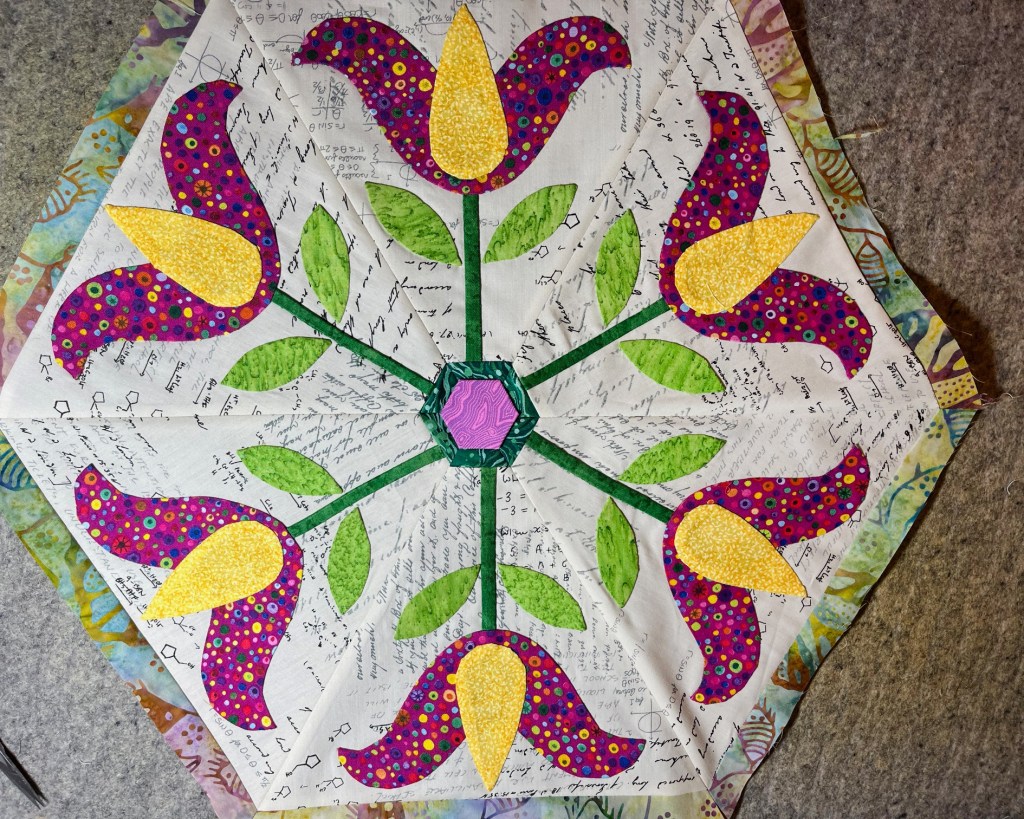
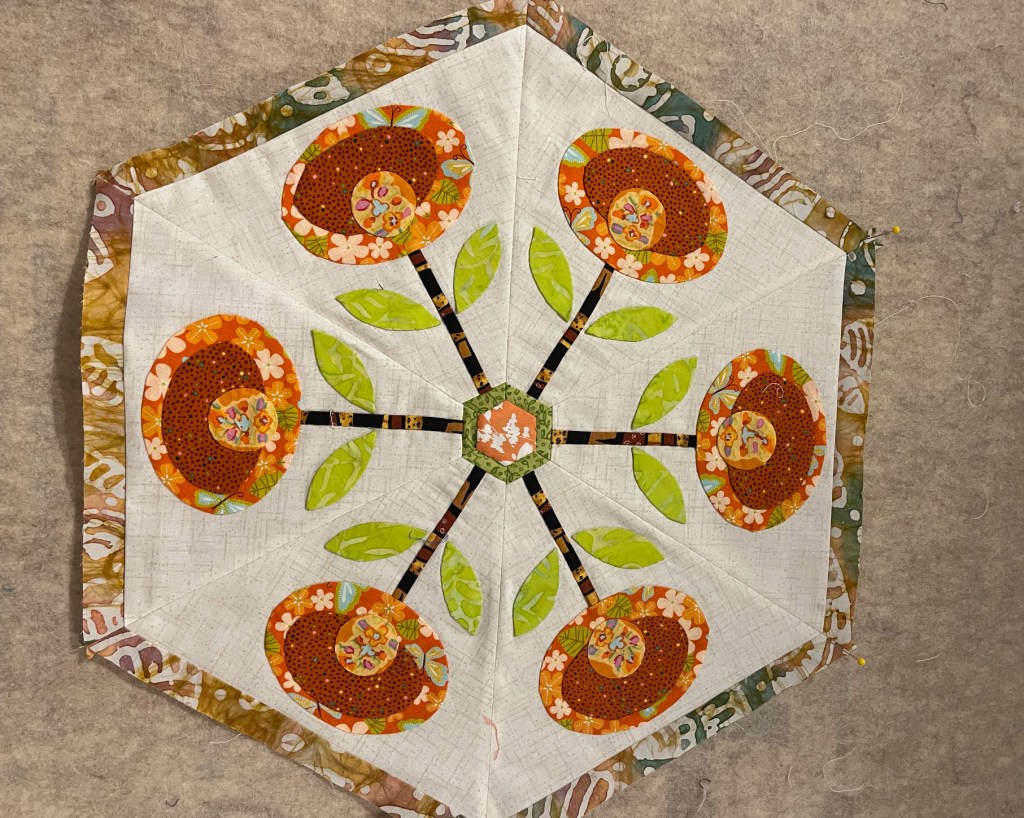
I received a fabric collection as a gift that was way outside my comfort zone but it inspired me to make a version of backyard birds. I embroidered every leaf. It was a fun project. When I got today’s email thought I’d share with you.
I’m lovely what look like musical notes in the lower left block. Very creative!
Thank you, Mary, for sharing and I’m proud of you for playing with this fabric :-). Well done!
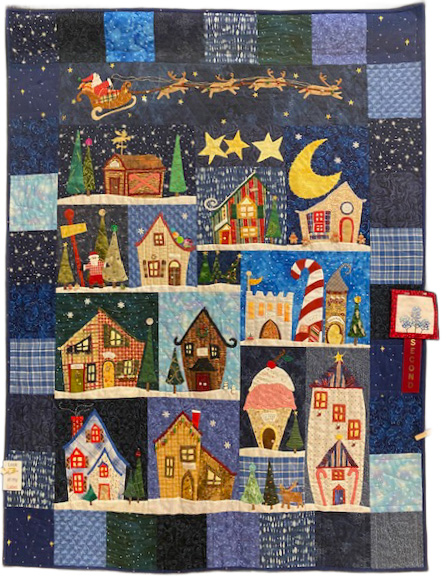
Barbara MacLeod sent photos of her North Pole quilt along with this lovely email. I am inspired!
Hi Becky — I’m excited to share with you that the New Braunfels Area Quilt Guild had our bi-annual show this past Friday and Saturday and my North Pole received a second place ribbon. It was entered in the mixed technique category — machine pieced, needle turn applique, hand quilted, some embroidery, and embellishments. (Hobby Lobby had wonderful Christmas charms starting in October). The judge said “The North Pole is full of activity and has the viewer linger for a 2nd look” and my ” piece has a lot of whimsey & charm”. I just want to thank you and Linda for designing such a wonderful pattern. I will say it is the most challenging quilt I’ve ever made (I’m 87) but I loved every moment of it. Well almost every moment 🤣. This quilt is a love letter to my family and even when I’m no longer here, I’ll be able to spend Christmas with them.
Thanks again to giving me so many hours of enjoyment.
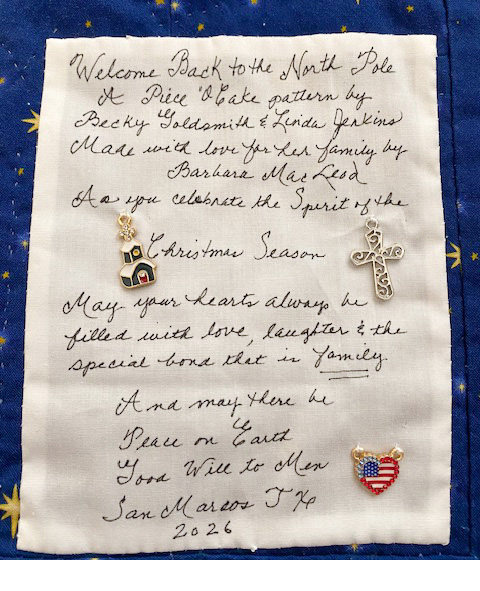
But wait! There’s more! Barbara included a photo of her documentation patch…
I absolutely love that. Thank you, Barbara, for sharing you quilt and beautifully worded documentation with us.
Rebecca Wolf wrote a few days ago to share this happiness…
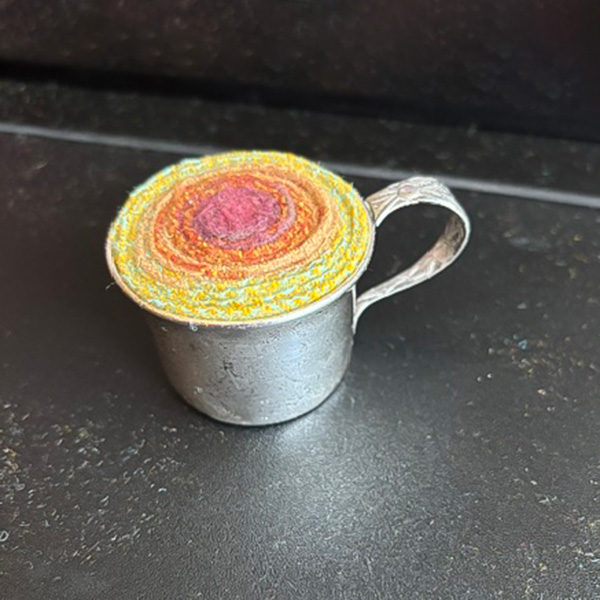
Hi Piece O’ Cake! I viewed the video on making pincushions out of any type of vessel with rolled wool….I didn’t know one video would send me searching through the house for pin cushion containers, but it did. Found this sterling baby cup that was my mother in laws, so circa 1924. I polished it up and what a delight to make this pincushion. It is fitting since my mother-in-law was an amazing quilter. I think she would approve. ❤️❤️❤️
I’m sure she would love this!!! Thank you for sharing it with all of us :-). If you missed it, here’s a video about rolling felted wool into pin cushions:
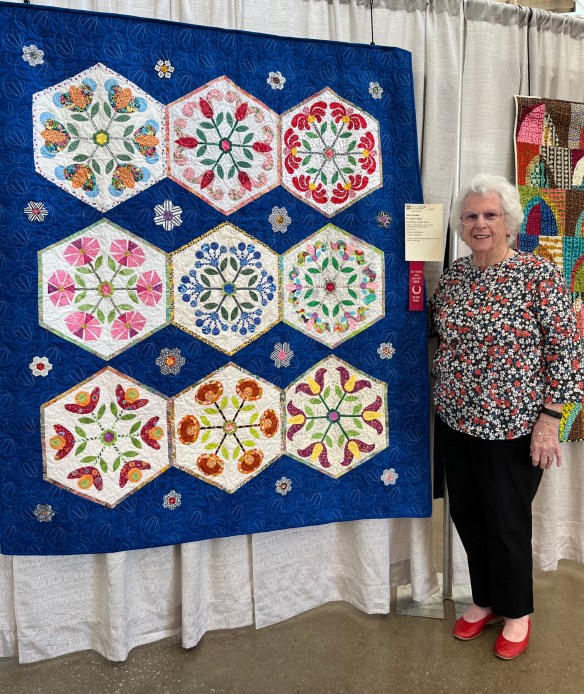
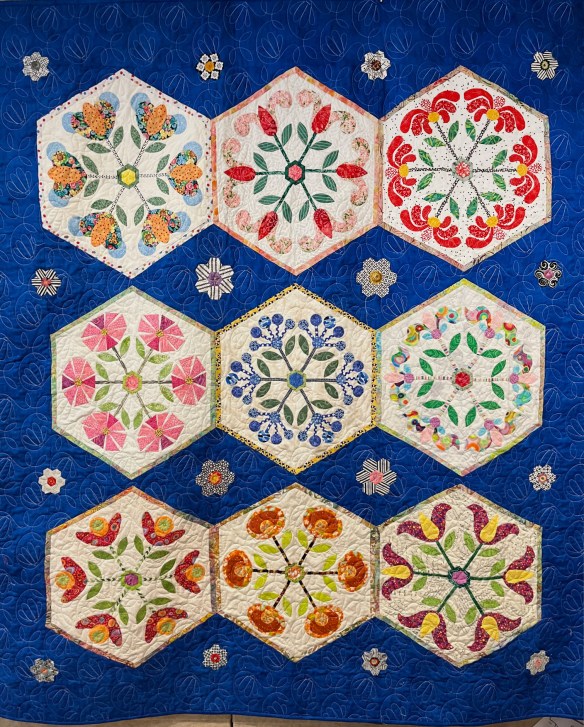
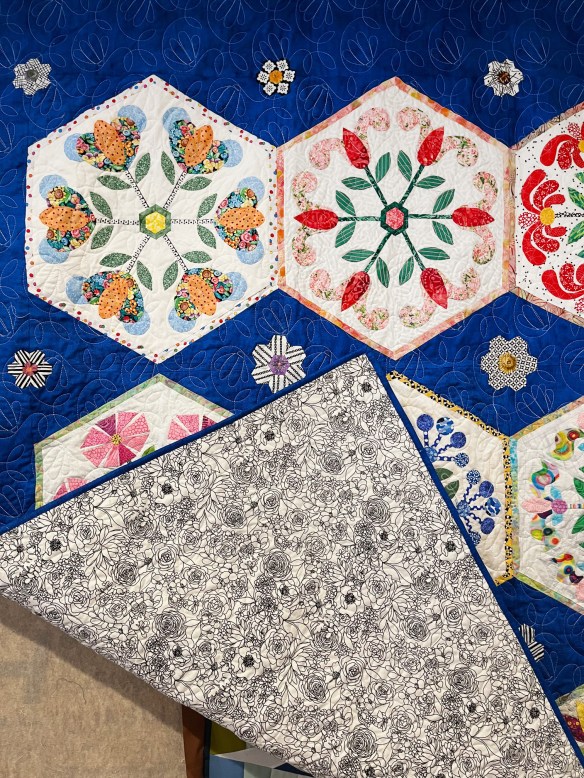
Susan Skeel sent me these photos of her newly finished Hexie Quilt Garden quilt saying: “This was great fun. I added an inch strip between rows to help with bulk and meeting points.”
Susan, you did a great job! The colors you used are spot on and the narrow strip that separates the points is a very good idea. I also like you quilting pattern very much. Well done and thank you for sharing your quilt with us!