One more top done, 5 to go…

Here’s my most recent quilt top for the piecing book, before I cut it free from the machine…

LastSeam-Wowie

The quilt is 90″ x 90″ and covered my design wall from floor to ceiling. I was happy to be moving on, until I realized that the bed this will someday cover has such a deep mattress and pad that 90″-square is just not big enough. Sigh.

I made a border round of blocks, following the same design but with just one light and one darker, blue fabric. The quilt is now 118″ x 118″!!! It no longer fits on my design wall. I haven’t made a quilt this big in many, many years. If ever.

I plan to quilt it myself. I’m thankful that I have the Sweet Sixteen and my clamp system.


An Everyday Best Challenge!

Valerie Prideaux sent me these photos from a friendly quilt challenge that she and some friends took part in. The quilts were recently displayed at Quilts at the Creek 2014, a yearly outdoor quilt show in Toronto, Canada. Aren’t they great! All the quilts were quilted by Sandy Lindal of Scrappy Gal Quilt Co, who was so busy doing the quilting that she never got hers done.

FYI: I’ve loaded the 6 pictures into a slideshow, which is a new feature I’ve found on WordPress. Hover over the picture and you’ll see a pop-up control bar where you can click to go from slide to slide.

This slideshow requires JavaScript.

Shirley entitled hers “One Thousand Three Hundred and Sixty pieces of my mind” which cracks me up. I have never taken the time to count the pieces in any quilt I’ve made because, if I knew, I might despair of ever finishing :-).

I do love Valerie’s minimalist interpretation of the design—so very contemporary. Thank you all, for sharing your work!

Seven Starry Sisters…

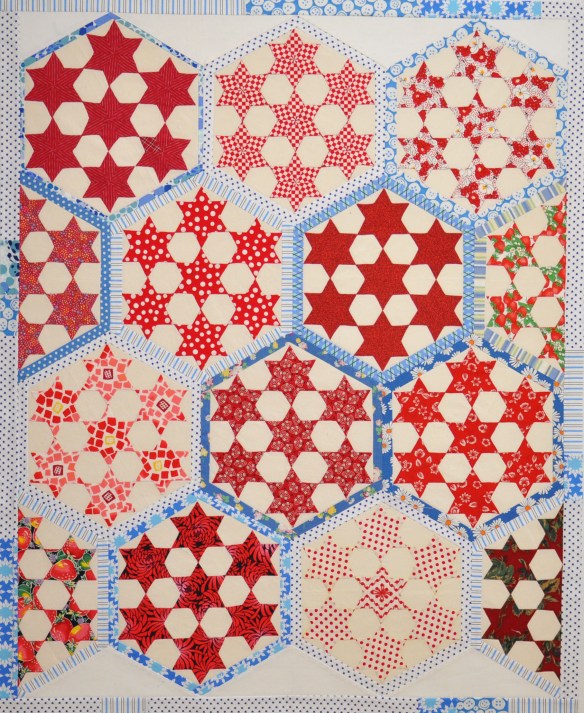
If you receive my newsletter, you have already seen this quilt and read at least part of the story behind it. (FYI: I posted the Seven Starry Sisters ePattern today.)
7Sisters-18

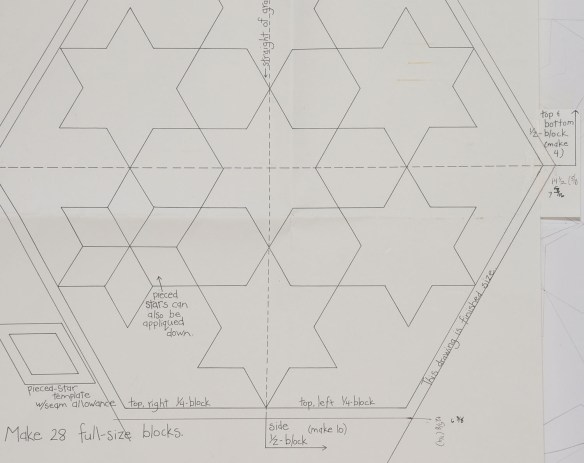
I started this quilt in the early days of Piece O’ Cake… back in the 1990s. In fact, it was so long ago that I drew the pattern by hand!
7Sis-Drawing

My Mom wanted to make a quilt and she offered to applique blocks. I gathered fabric, made the overlay and templates and she got started. And, as sometimes happens, years passed by :-). Every now and then she’d sew on the blocks and then move on to something else that interested her more.

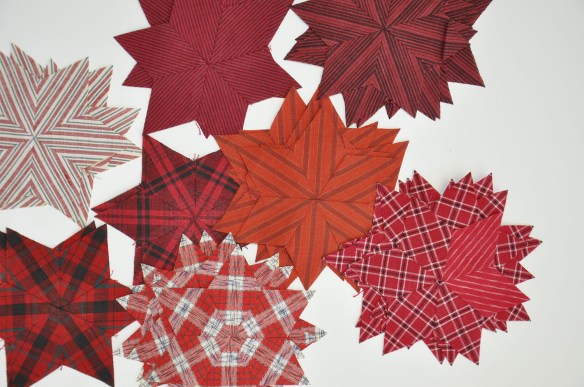
When Mom moved to Texas a few years ago, she gave me the blocks. Most of them were finished, but some were not. Interestingly, she hadn’t appliqued the pieced stars.
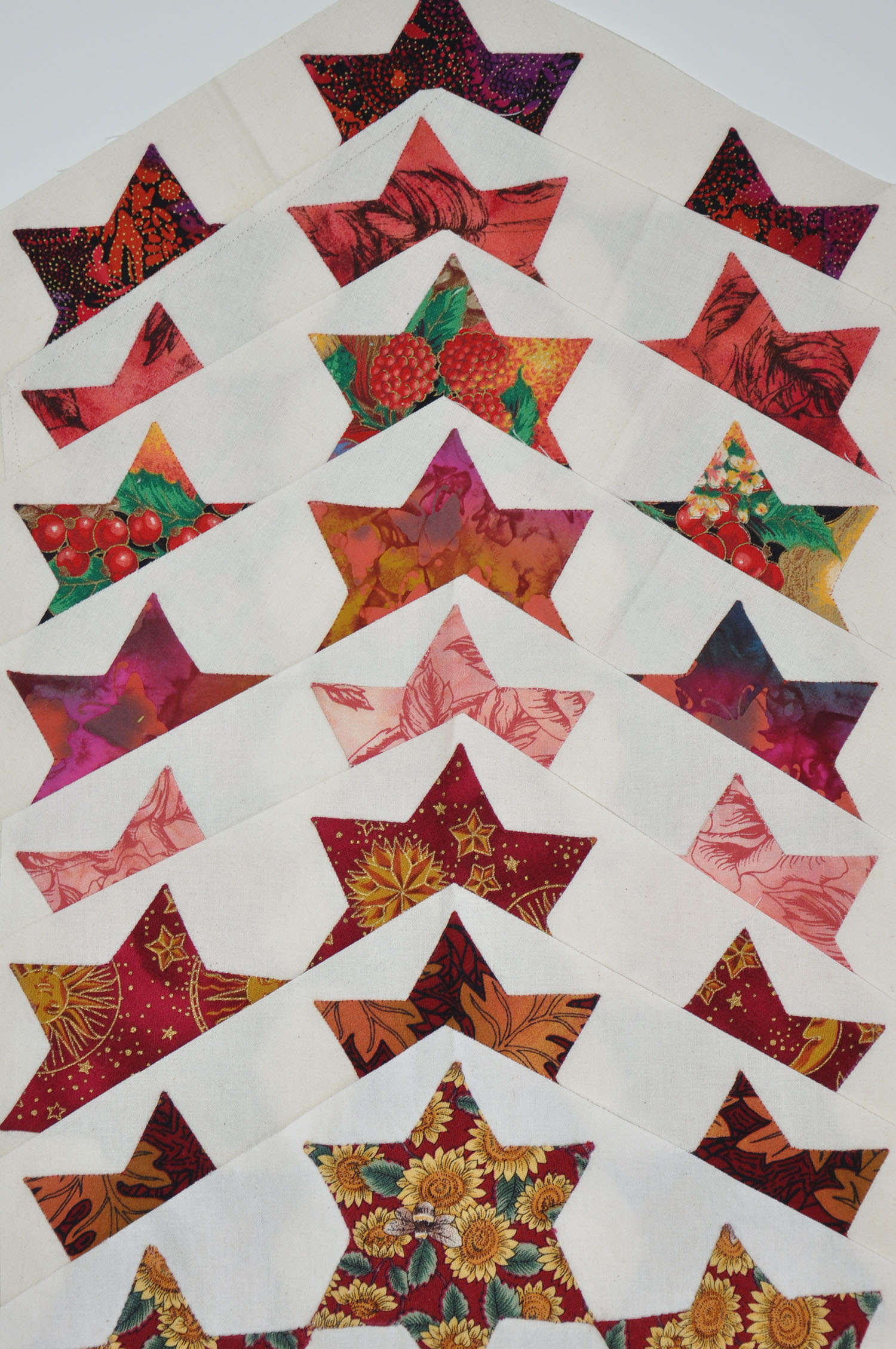
7Sis-PiecedStars

My tastes in color and fabric have changed over the years which is not at all surprising. I chose the clearest red and white blocks for the quilt I made and set these aside…
7Sis-QuietStars

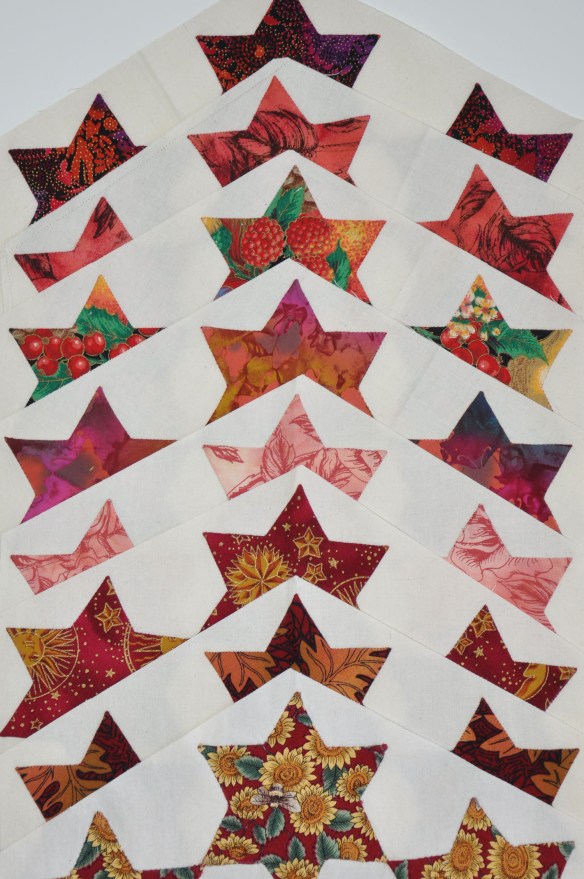
And these two blocks have also been set aside. Honestly, I’m not sure what I was thinking when I chose these fabrics!

7Sis-BrightStars

The Seven Sisters is a traditional quilt pattern based on legends that relate to a distinctive star cluster, the Pleiades. The traditional quilt block can be pieced, although it’s a complicated block. There are probably English paper pieces that you can use to hand piece it. I have always thought that it is an easier block to applique.

I cut my blocks in a non-traditional way, with star points hitting the edges of the hexagon on all sides. I added sashing because these blocks were not all exactly the same size, but that turned out to be a blessing in disguise. The sashing adds a terrific spark of color and sets this quilt apart.

I’m sure that I chose blue for my sashing because I found the blocks on the 4th of July. But If I had run across them at Christmas, I might have used green sashing and this quilt would be different but still great fun. Click here if you’d like more info on the Downloadable ePattern.

And, in case you were wondering, Mom was very happy to see this quilt! In fact, the top is now in her living room, waiting for me to find a little time to get it quilted!

7Sisters-18


Pixelate it!

An image on your screen is actually made up of lots and lots of little tiny squares, each one with its own color (a pixel). We don’t see the little squares unless the image is enlarged to the point where it is no longer smooth.

Counted cross-stitched images are created by sewing x-shaped stitches, in specific colors, inside little squares that are formed by the weave of the base cloth. The images are ‘pixelated’ so it makes sense that there is a free tool for cross-stitchers to make a pixelated chart of any image.

Even if you are not a cross-stitcher, this is a cool tool. In fact, it was a quilter in my class last week who shared the site with me (thank you, Lucy!). She is making a quilted portrait of her granddaughter from little squares of fabric that she is coloring with the help of the chart she made on My Photo Stitch.

Here’s how it works: Go to myphotostitch.com and click the try it free button. I used the VW Bug image from last week’s blog post…

VWBug-SurfBoard-2

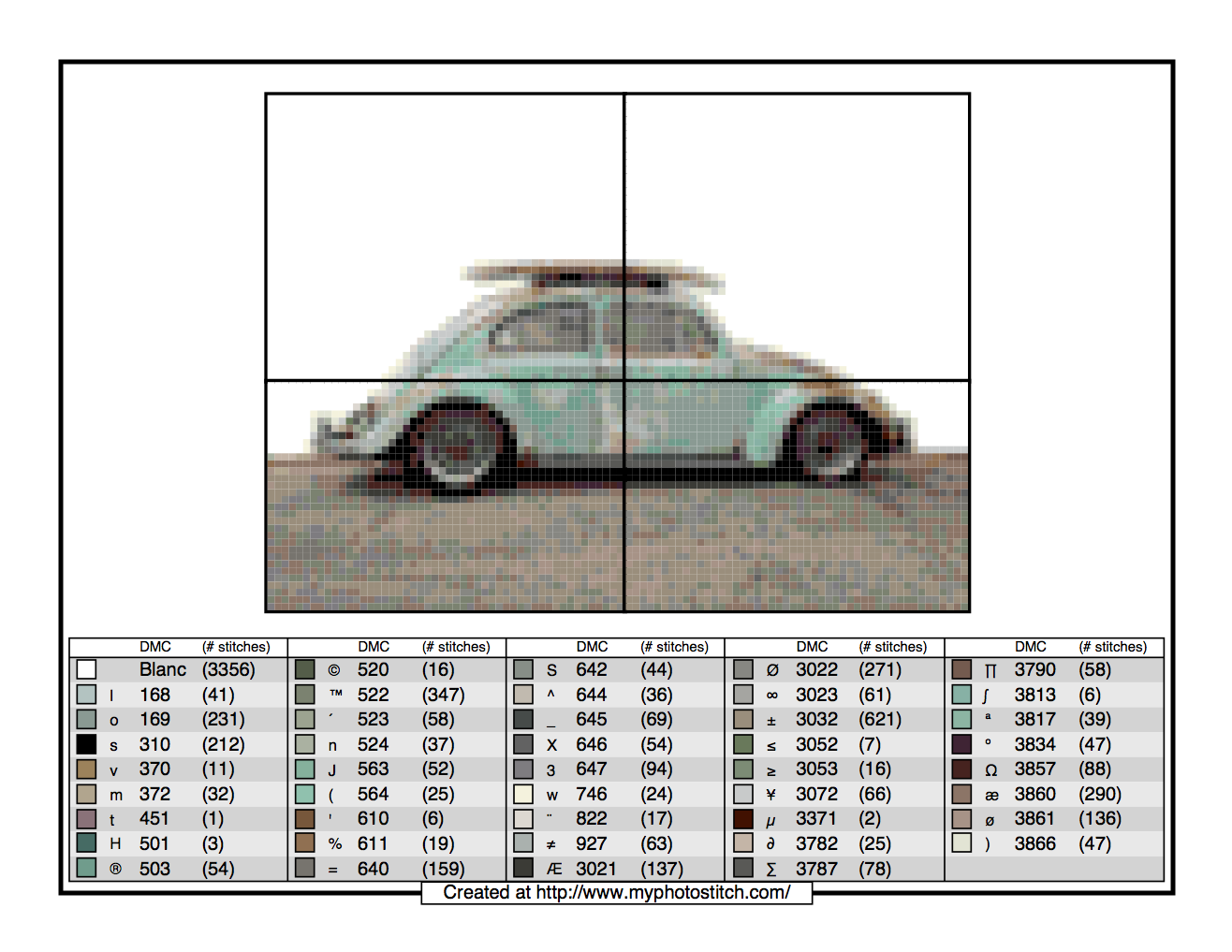
Myphotostitch.com generated the following pattern and thread chart.

Screen Shot 2014-06-20 at 1.27.03 PM

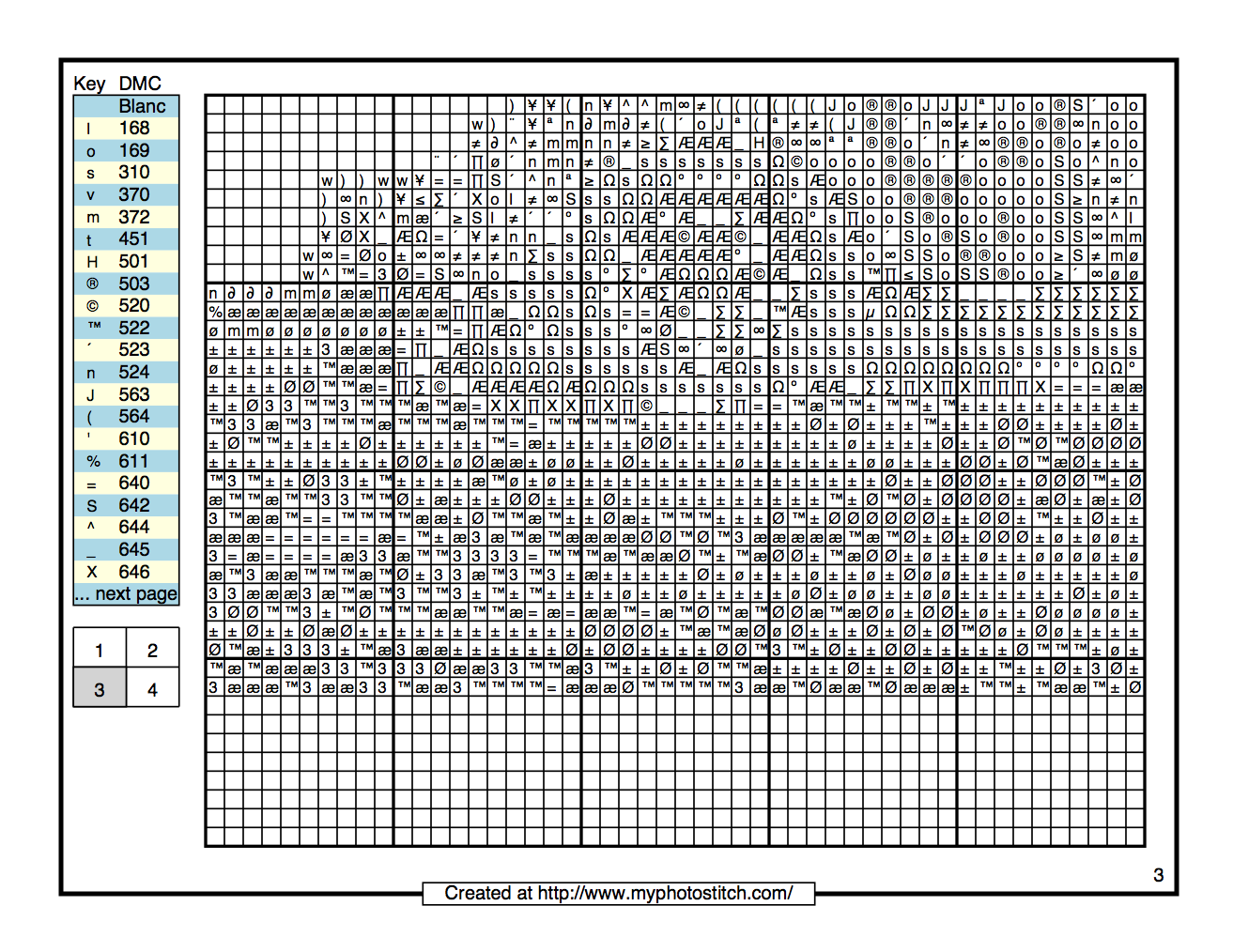
This is one of the pages with 1/4 of the chart, showing where each color goes.

Screen Shot 2014-06-20 at 1.29.48 PM

It’s always nice to find another tool for the toolbox :-).


Maybe I could paint that!

Perspective is a technique whereby an artist implies distance on a 2-dimensional surface. This idea did not exist before the Renaissance.

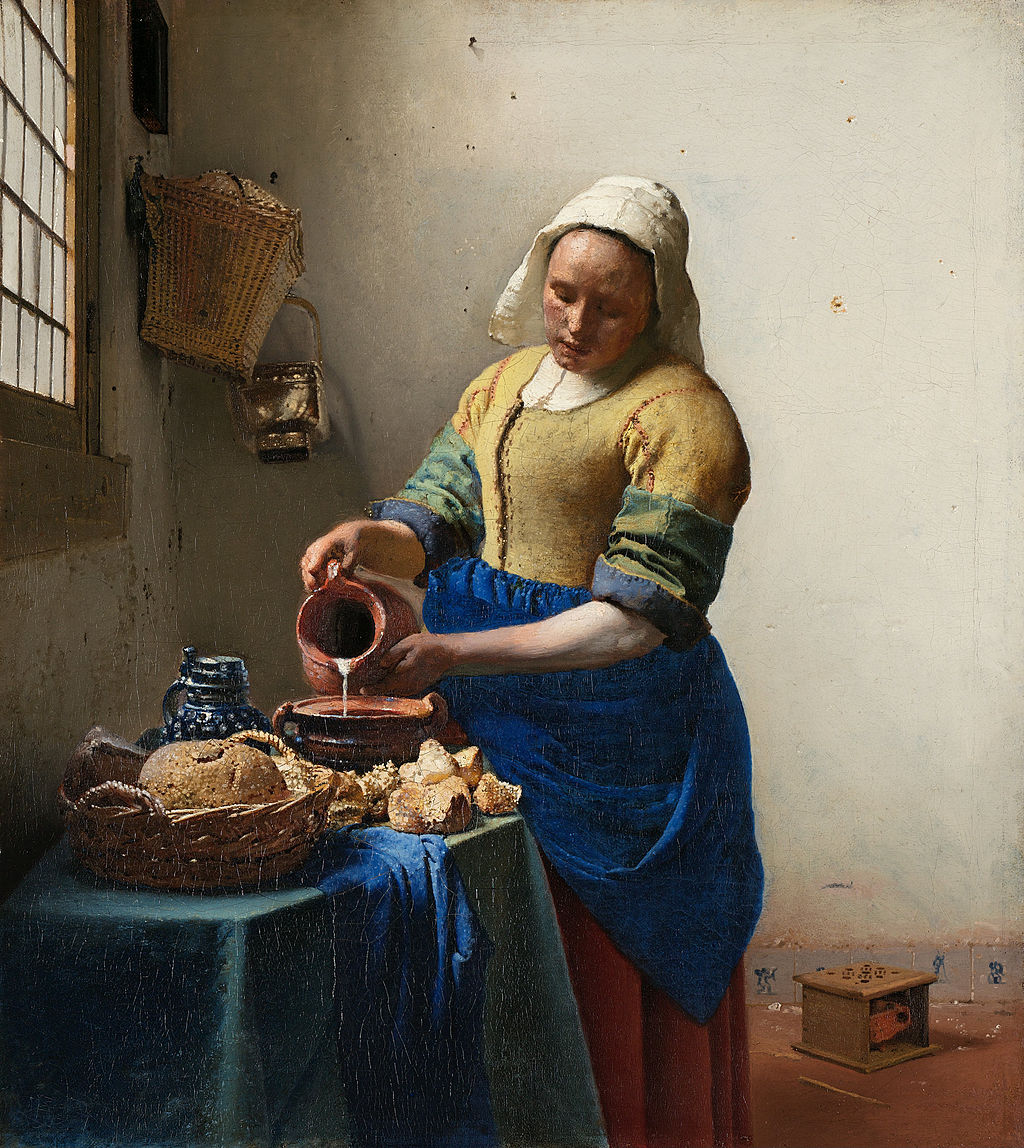
Johannes Vermeer (1632 – 1675) went way beyond getting the perspective right in his paintings. The man was a practically a human camera—painting the image he saw nearly perfectly on canvas as you can see in his painting, The Milkmaid (1658). How on earth did he do that?

1024px-Johannes_Vermeer_-_Het_melkmeisje_-_Google_Art_Project

Tim Jennison has figured out how Vermeer could have done it. I think that you will enjoy the 10-15 minutes you will spend reading this story. All I can say is that, no matter what, I’m impressed by both Vermeer and Tim Jennison.

Some artists might use the best technology available to them to help them in their art. And it’s good to be reminded that if they do use that technology (the way great artists in the past may have used the best technology of their day), it’s not cheating. That’s a happy thought in our very tech-heavy world.

Here’s a trailer for the documentary, produced by Penn and Teller, that shows Mr. Jennison’s journey. I’m definitely going to have to watch the film.