Summer project—2014…

If you have read my blog long, you know that Steve and I usually work on some sort of big ‘house’ project during the summer. Since we just had our house remodeled last year, we don’t have a project to do at our house. We helped Chris with his bathroom remodel in the spring and early summer. Now what?

We decided to work on the McCarley Woods. Howard and Marian McCarley donated a wonderful property to Austin College a few years ago. It is primarily used by faculty and students in the biology department.

The cabin on the property is solid but needs a bit of spiffing up. Steve and I decided that this would be a great project but first we needed a place to put the tools that are occupying one of the bedrooms. Se we decided to build a shed!
WoodsShed-01

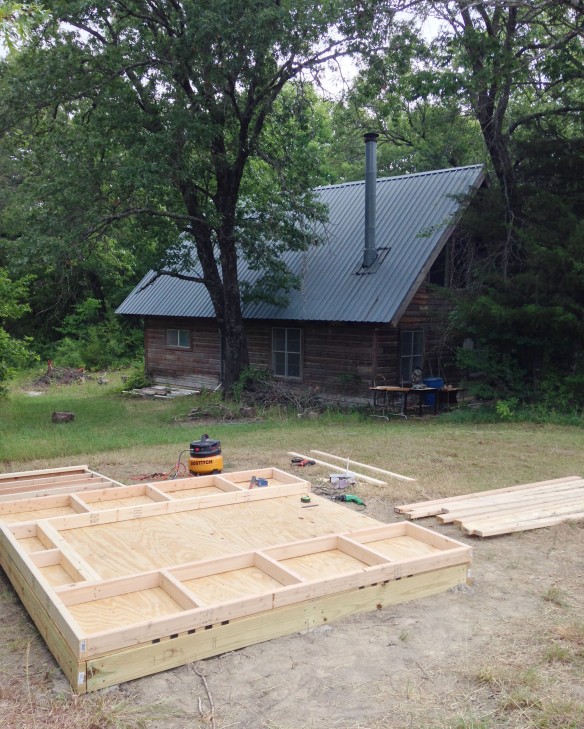
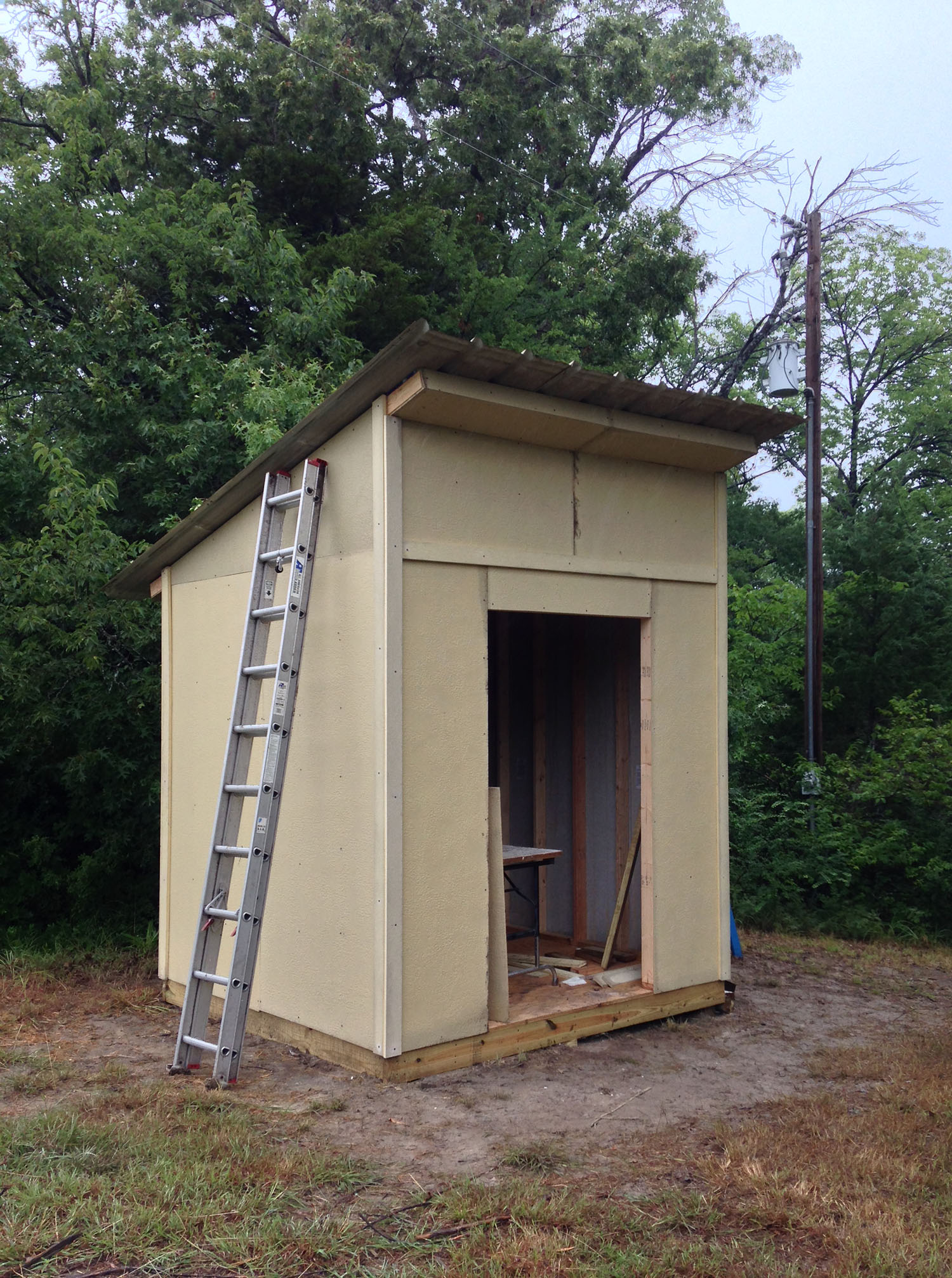
Steve designed an 8′ x 8′, pier and beam structure. Last weekend he put in the foundation and built the framework for the front and back wall. Tuesday morning (after Pilates) I showed up to do my part which is to be both foreman and gopher.

I helped him raise the end walls and secure them in place. Then the framing for the side walls went up. After that, we added the 2′ tall extension that he had prepared to the top of the front wall. The roof will slope from front to back.

WoodsShed-04

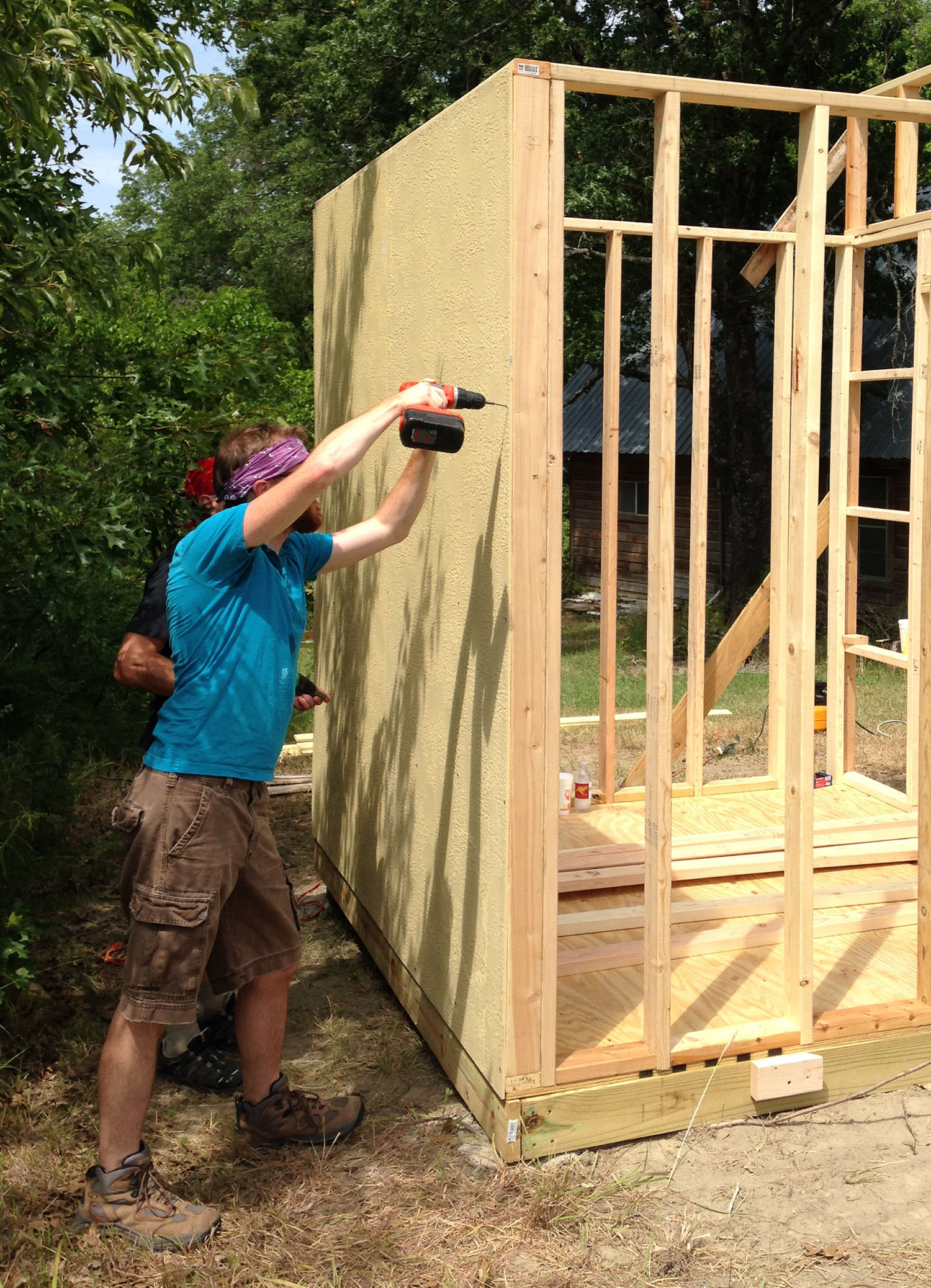
Christopher joined us after lunch and I, for one, was very happy. The siding is Hardie paneling and it is heavy! Drilling holes and driving screws through it was hard on their hands… I have a feeling I could not have done it at all.
WoodsShed-05

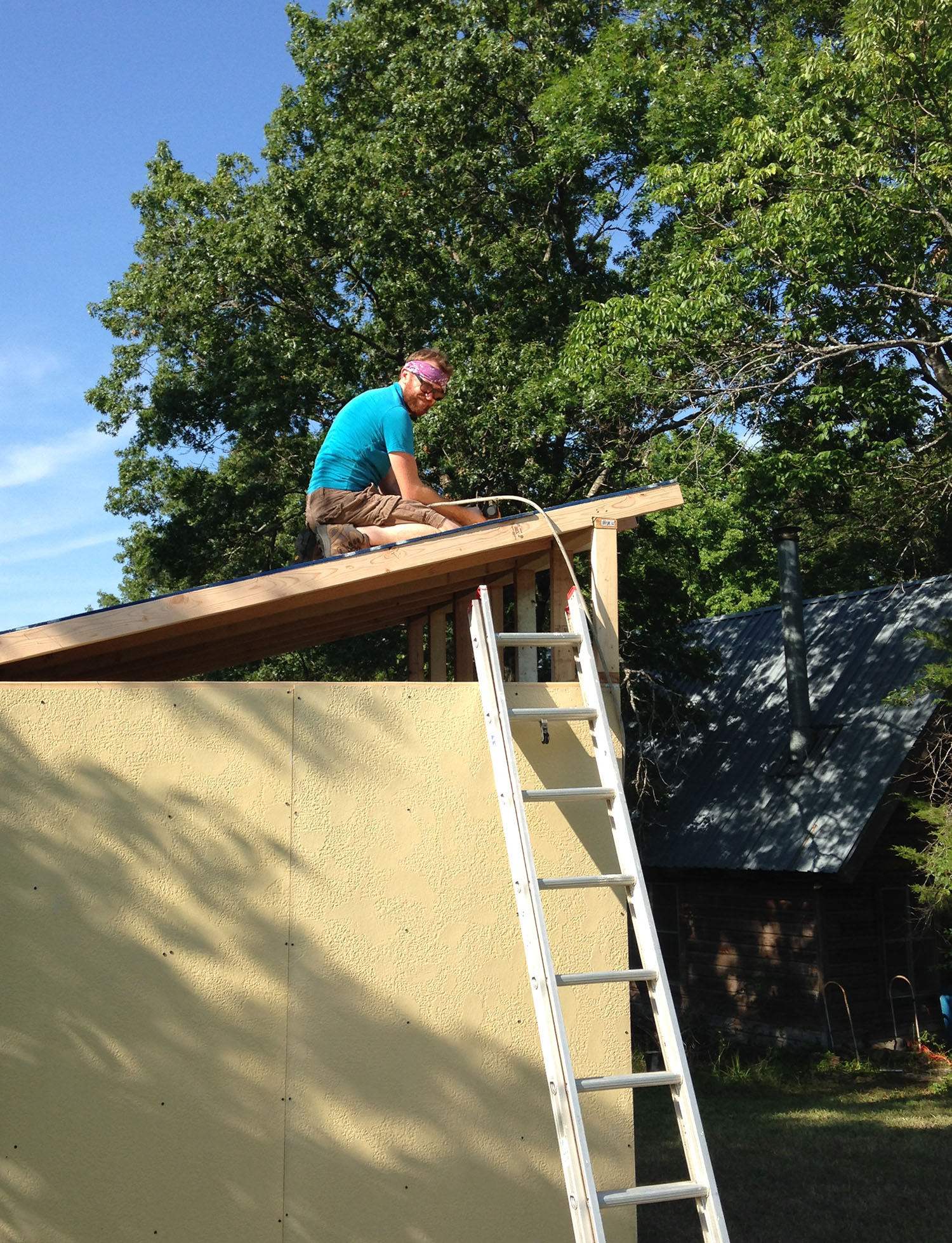
Once the back and two sides were paneled, Steve and I hoisted and slid 4′ x 8′ sheets of chip board up to Chris, who nailed them to the rafters. Next we sent up metal roofing sheets. All of that sounds a lot easier than it was :-).
WoodsShed-09 copy

It was a long day and we called it quits at 6:00. Wednesday it rained. Luckily I had found time to put a coat of water seal on the plywood floor while the guys were doing other things so it didn’t peel apart.

This morning Steve went out early (because I went to Pilates again) and started getting Hardie panels cut and installed on the front wall.

WoodsShed-11


I helped him get the remaining, small wall panels up. Next we worked on enclosing the roof rafters to keep the critters out. And we wanted to trim out the corners of the shed before we broke for lunch. At some point it started to drizzle, and then rain.

WoodsShed-12

We were wet and muddy when we called it quits at 12:30. Steve is going to build the doors later and maybe we can hang them Saturday. We’ll paint the shed in a couple of weeks, when I am back after teaching in Indiana next week.
WoodsShed-15

It is solid and functional. Once painted it might even be cute!

It’s sort of like piecing…

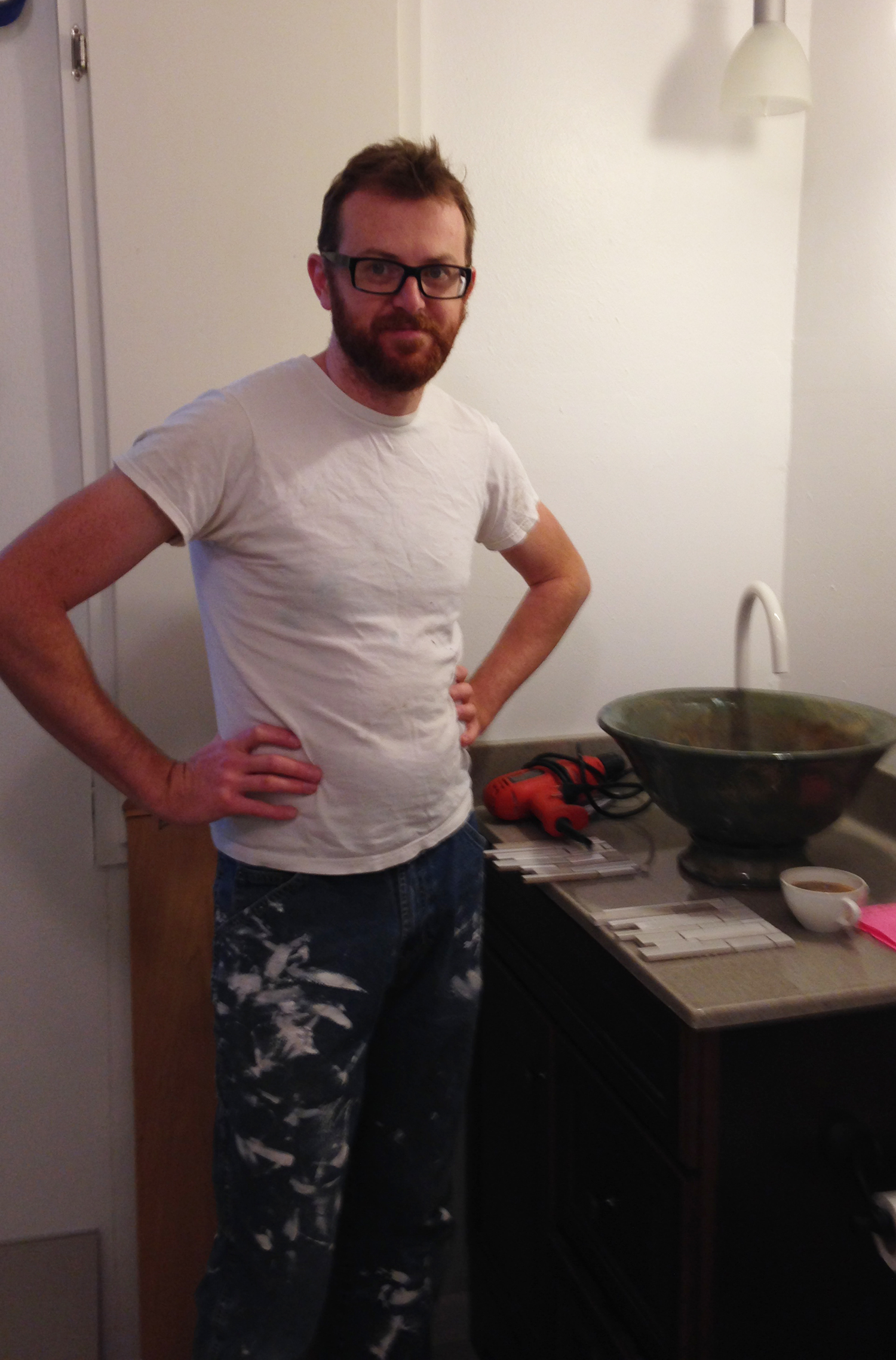
I had the privilege this week to spend some time with my oldest son, Chris, tiling his tub surround. I taught Chris how to tile a year or so ago but I think he is now better at it than I am which makes me proud!

Image

I helped him tile this bathroom floor a few weeks ago and then we both got busy with other things. Since then he managed to work on the walls, set in the toilet, and the vanity. The vanity required extra attention because the plumbing was in the wrong place. A drawer had to be removed and a shelf added. He installed the sink (twice) and the faucet (also twice) because of plumbing issues. The boy is more patient than I am, or at least he appears to be to me.

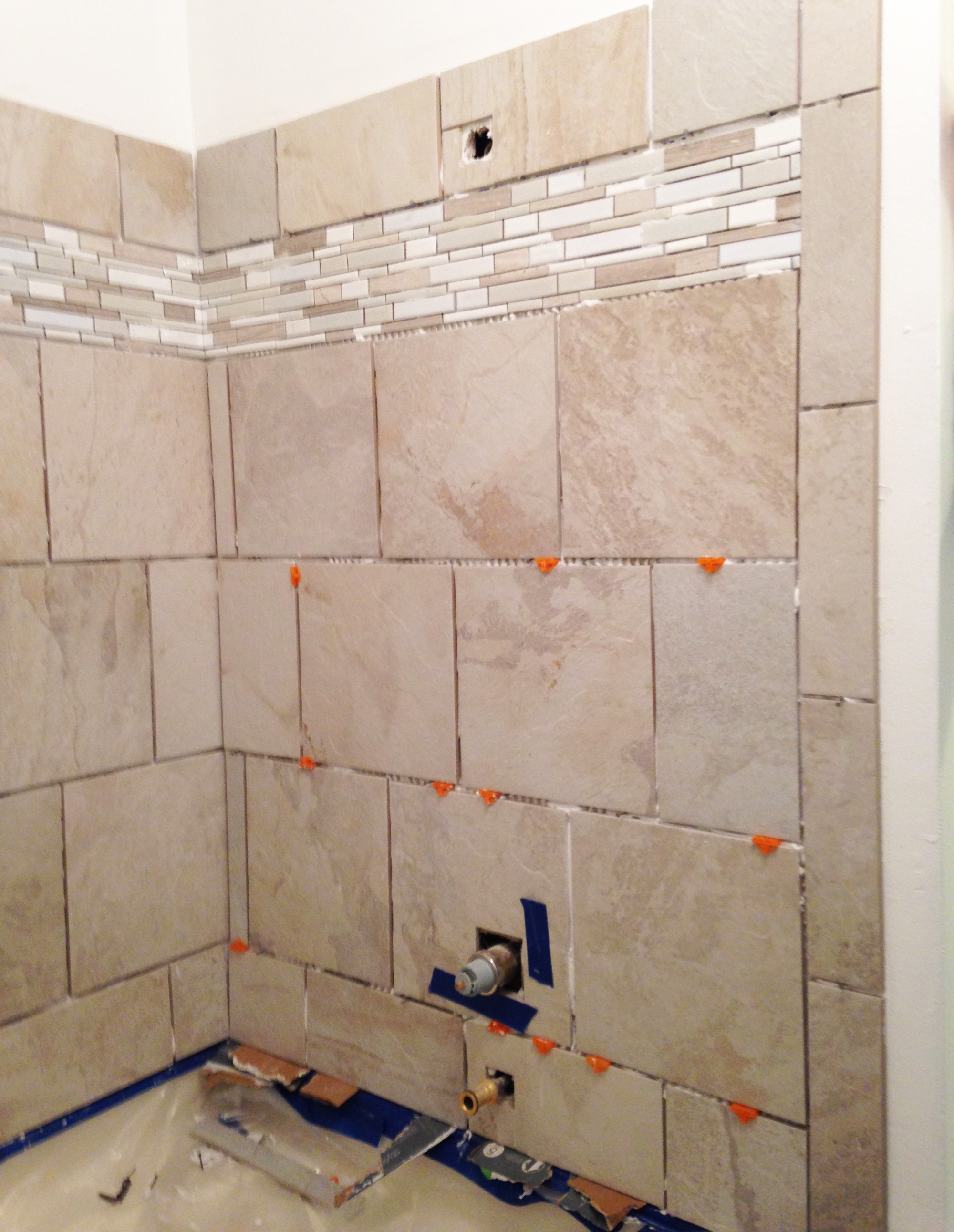
Tiling this tub surround was complicated by the fact the the bottom 6″ of the wall was not completely flat. The tiles did not sit flush against the wall. They rocked in places and the gap was big enough that the tile pattern was not going to work the way we originally thought it would. But, thankfully, there was a fix! We cut the bottom 12″ tiles in half, lengthwise. The non-flatness is not noticeable—yay!

I had to draw the tile pattern, and use a calculator. Chris was quicker and did more in his head but it was good that we checked each other before taking the tiles to Lowe’s to be cut.

Image

The wider, back wall was pretty easy. The harder wall was the one with plumbing…

Image

We were going to drill holes in the tile but it didn’t take long to figure out that, even with a tile bit, it would take hours. Instead we had the tile cut in such a way that we could set back in a little L-shaped piece. The holes themselves will be covered with plates that come with the plumbing fixtures.

Image

We ran into ‘level’ issues on this wall. For some reason, even though everything was level, the horizontal grout lines that carried over from the back wall wanted to not line up. The spacers only worked in some places and in others the spacers weren’t big enough. We ended up using nails below the tiles in some places to keep them from drifting down. It’s stuff like this that makes tiling so much easier when you have two people… even if one person (me) was not doing any actual tiling.

Image

Christopher is, today, cleaning out the mastic that oozed through the gaps. Then he’s going to grout it. I’m so glad I’m not involved in that job… I really do not like to grout. They should be using the shower by Saturday and I know that Lorna is extremely excited. And Chris is way happy too :-).


Window dressing…

The very last bit of our home remodel happened without me writing much about it. We replaced all of the windows that needed it a couple of months ago. That part was fast. The other part of this job, however, was slower because I wanted the inside window trim changed.

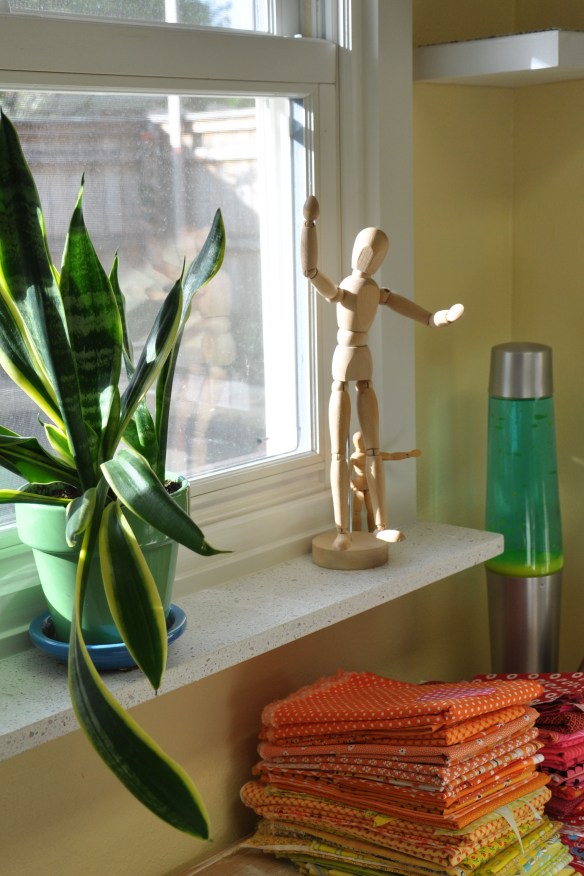
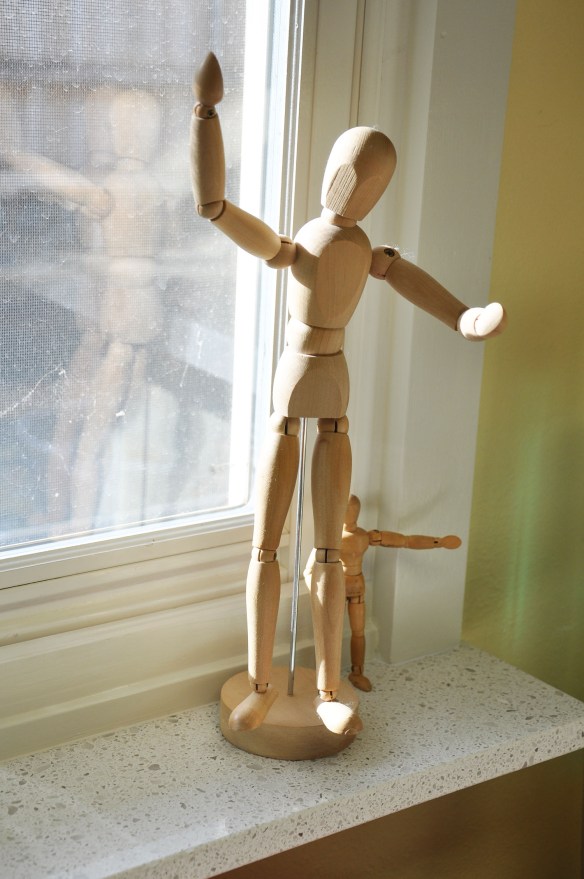
What I have always called a ‘window sill’ is actually called a window stool. My mom’s house in OKC had marble window stools and they were so very nice. I knew that if it was going to happen in our house, it had to be now. I wanted ours to be made from Caesarstone, the same one (Nougat) that we used on our bathroom vanities.

The Caesarstone had to be ordered and it took some time to come in. Before Easter, Rick’s crew took off all of our interior interior window trim…

WindowTrim-1The windows weren’t lovely, but we lived with it until our job could be worked into the Caesarstone crew’s calendar.
WindowTrim-2

A week or so ago David and his crew put in the new window stools. Then Rick’s crew put in the new trim and generally tidied it all up.

WindowTrim-3

Steve and I cannot remember a time when we could look around the house and call it done. We don’t have anything on the list that needs to be fixed. It’s unnatural—but nice! That doesn’t mean that we don’t have a project looming… it’s just that it’s not a project for our house. Oh happy, happy day!


The plate mosaic…


“Fitzy” emailed, asking about the broken plates on the wall behind Elanor’s painted pumpkins (my post from October 4). I promised that I would tell you all about them.


We have a built-in set of cabinets in the breakfast room area of our kitchen. When we bought this house that area was covered with white formica. OK, but boring. After seeing mosaics by Kaffe Fassett in his book, Welcome Home, I was inspired.

I have laid tile before. If you have not ever tiled anything, read up on it. This is not rocket science but there are tools (the toothed mastic spreaders, tile cutters, floats for spreading grout, etc.), different mastics (the “glue” that hold the tile pieces to the wall), and grout (the stuff between the tiles) that you need to know about. So do some homework.

I used a pre-mixed wall mastic, not a concrete-type mastic that you use for floors. I bought cheap white tiles and broke them (very carefully, wear eye protection) with a hammer. I put newspaper above and below the tiles before I whammered them to keep the stuff flying through the air to a minimum.

I bought chipped blue and white plates at garage sales. I broke them between newspaper with a hammer. I think I put a piece of wood between my hammer and the plate so that the plate broke, but didn’t shatter. This takes some practice. Once you break it, the real trick is keeping the plate pieces in order. You think it will be easy. It was not for me. I broke them as I went and that worked for me that day.

I mostly planned where I wanted the plates to be. I spread the mastic in small areas and stuck a broken plate on the wall. I then stuck the broken tiles around the plate. I moved quickly, broke the next plate, etc. It was a bit stressful getting the pieces on the wall before the mastic got too stiff for anything to stick to.

FYI – you can do this better than I did. You can buy a tile mesh, cut it to the correct size, and glue your broken pieces to it. Cut the glued mesh/tile sheet into manageable chunks and stick them to the wall in units. If you have shopped for tile you have seen 1′ x 1′ squares of small tiles stuck to mesh… you can make your own. I should have taken the time to do that. I didn’t. If I do this again, that’s what I’ll do.

I have a grinder that my Mom gave me that she used when she made stained glass. It’s for grinding off really sharp edges. I should have used it on the sharp broken edges of both the tiles and the plates. I didn’t and there are some of the broken edges that are dangerous. If this was in an area that I touched a lot that would be a problem. Next time, I’ll grind the sharp edges. If you don’t have a grinder you should be able to sand off the sharp edges.

I used a gray, sanded mastic which is meant for floors. I knew that I was going to have wide spaces between the tiles and this sort is less likely to crack in wide channels. Grout comes in a lot of colors so you should take that into account when planning the overall design.


Drying clothes outside…

I don’t know about you, but I hang a lot of my clothes to dry. The fabric looks better longer if it’s not in the dryer too often. I hang wet clothes on hangers on a rod in the utility room. When that’s full, I end up hanging clothes in the bathroom(s) on the shower curtain rod(s). I don’t have an outdoor clothesline. Why is that?


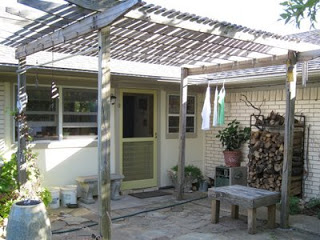
If you read about my studio re-model this summer, you may already know that I have a pretty small backyard. There is not a particularly good place for a clothesline. On special occasions I have been known to tie a rope up on the supports for the roof over the patio. I had a “special occasion” on Tuesday when I washed our pillows.

FYI — I washed the pillows because I realized they needed it. (Surely I am not the only person who doesn’t think to wash the bed pillows regularly.) Two of the pillows were filled with polyester and two with down. I washed them all, two at a time. I didn’t have tennis balls to put in the dryer with them, so I used 2 small wooden blocks. Boy, did that make a racket! They got mostly dry in the dryer, but needed more – forcing a “special occasion” clothesline outside.

Then I realized that I should really have a permanent clothesline. It’s the green thing to do. And clothes hung outside smell great! But where would I put it? Duh! I hang my clothes on hangers, on rods, to dry. I didn’t need a clothes line so much as I needed a clothes pole! 

I figured I could put up conduit (a pipe that electrical wires are put through) on the same patio roof supports from which I suspend my “special occasion” clotheslines. I bought two pieces of 3/4″ conduit and some U-shaped hardware to hold them onto the posts. I cut the pipes to the correct length and hung the pipes myself. Honestly it wasn’t hard at all. I spent less than $15 and it only took 1 1/2 hours.

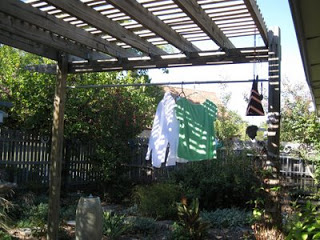
You can see the clothes hanging on the pole on the far side of the patio. I put up two clothespoles, on opposite sides of the patio. 


I moved the clothes to the other side to take this photo. I figure I’ll want to keep our clothes out of the sun and I’ll use whichever side is in the shade.

As I sat back and admired my handiwork I got to wondering why it took me so long to come up with this solution. I wish I knew! We’ve been in this house for 14 years!!! Dang! Then I thought, OK, blog about it. So here you go – I hope this is helpful to some of you.

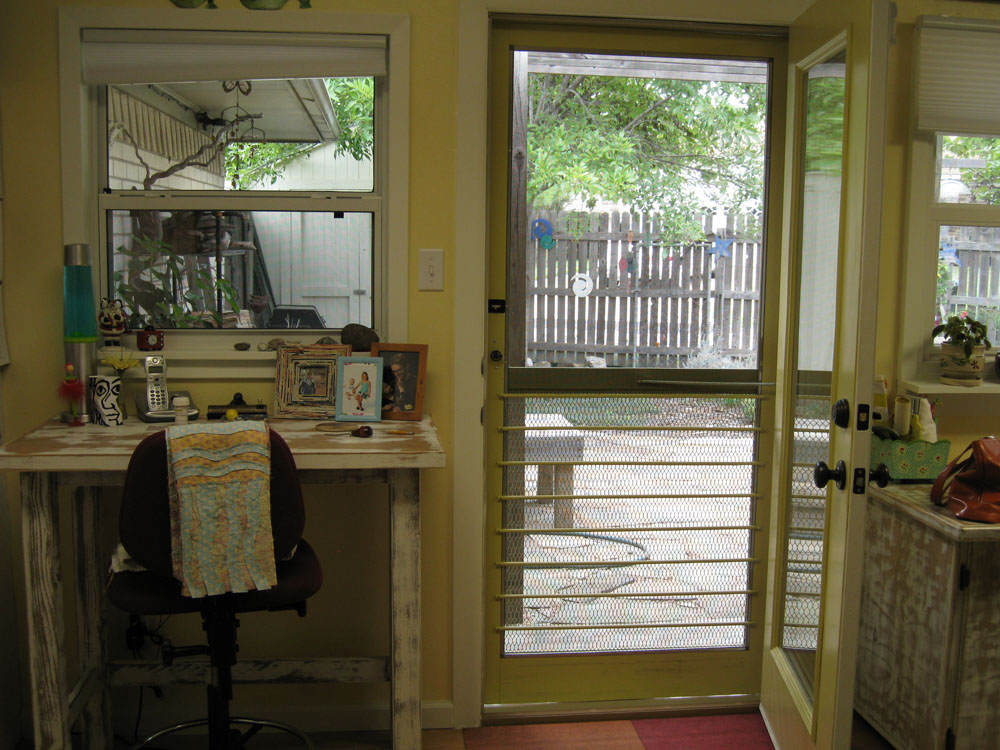
My screen door is up!

I painted my screen door and the dowels on Thursday. I like the design of this door – you can take out the whole screen part which makes painting a lot easier. 


Steve had some time today, Sunday, to hang the door. Things like this always take more time than they should. The door was a little too big for the space so we spent time planing and sanding. Well, Steve mostly did that and I held the door while he did it. I drilled out the ends of the dowels and Steve screwed them to the door. I have tendonitis in my elbow which makes using a screwdriver harder so I was happy that he volunteered to do it!


And here you can see the door in place. The dowels are on the inside of the door. They are spaced 4″ apart and I think that will keep the cats from destroying the screen. There’s a big piece of wire mesh on the outside bottom half that will protect the screen on that side. I got the spring on and pulls the door shut with a resounding thwack!