Seven Starry Sisters…

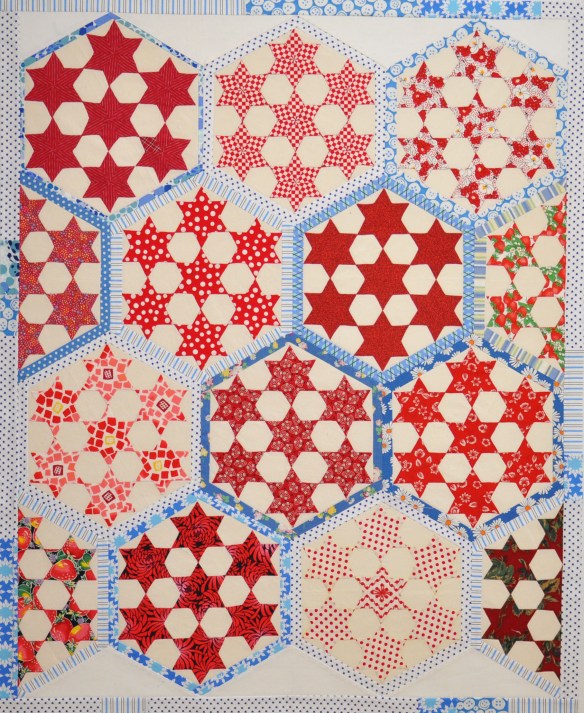
If you receive my newsletter, you have already seen this quilt and read at least part of the story behind it. (FYI: I posted the Seven Starry Sisters ePattern today.)
7Sisters-18

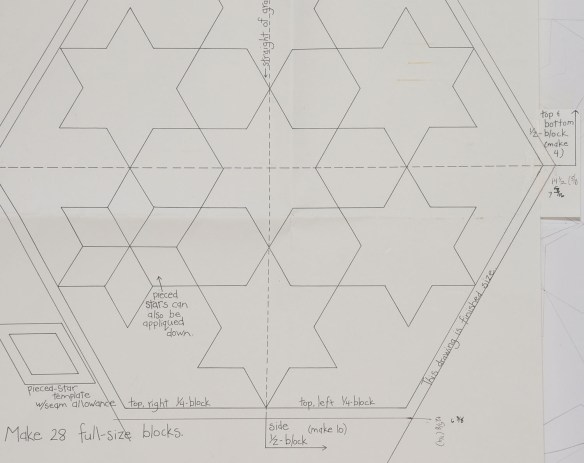
I started this quilt in the early days of Piece O’ Cake… back in the 1990s. In fact, it was so long ago that I drew the pattern by hand!
7Sis-Drawing

My Mom wanted to make a quilt and she offered to applique blocks. I gathered fabric, made the overlay and templates and she got started. And, as sometimes happens, years passed by :-). Every now and then she’d sew on the blocks and then move on to something else that interested her more.

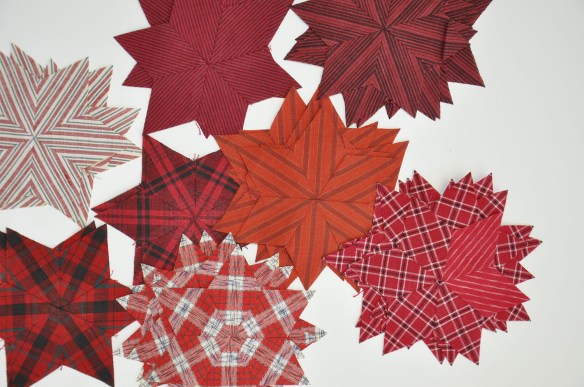
When Mom moved to Texas a few years ago, she gave me the blocks. Most of them were finished, but some were not. Interestingly, she hadn’t appliqued the pieced stars.
7Sis-PiecedStars

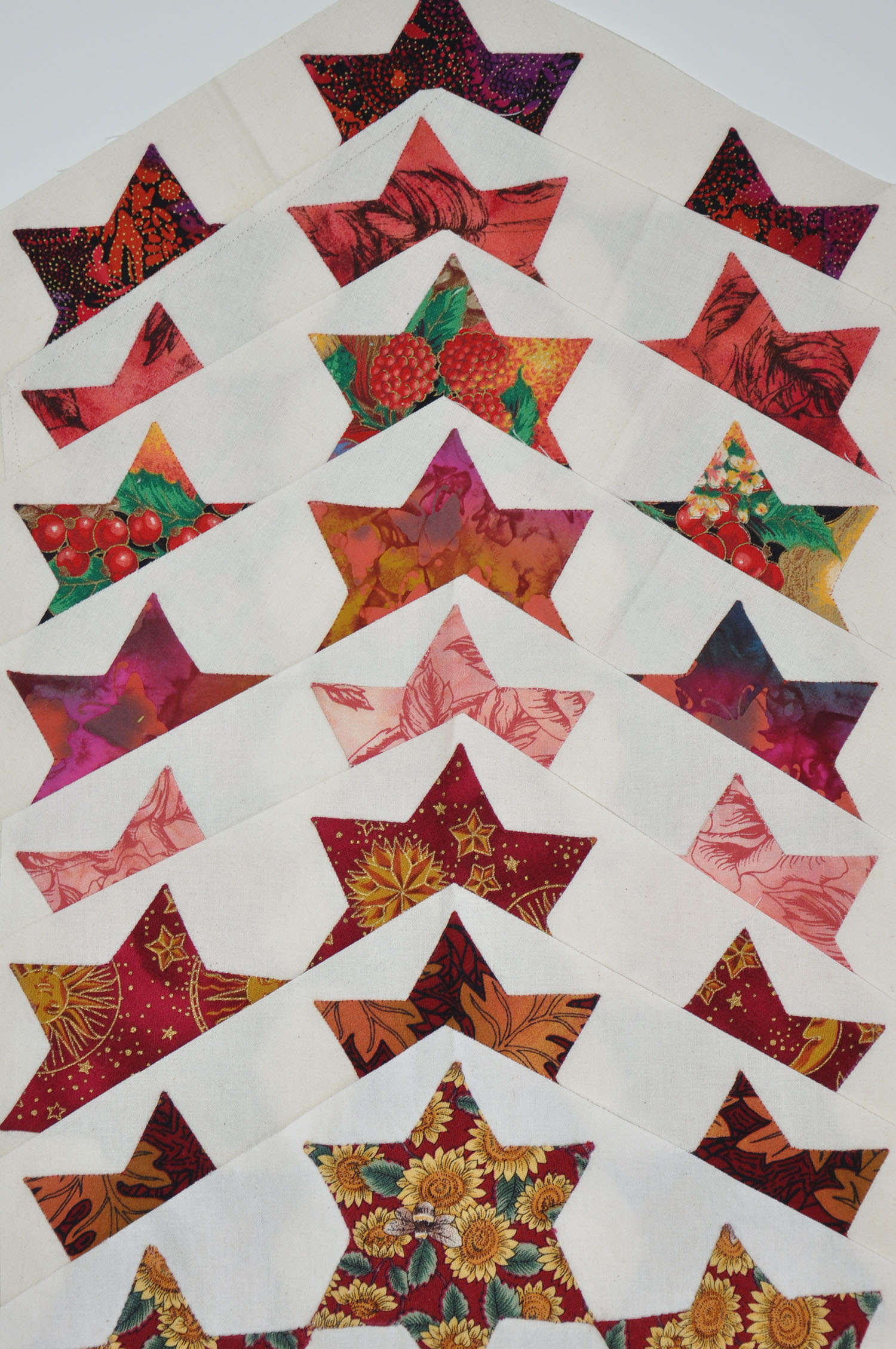
My tastes in color and fabric have changed over the years which is not at all surprising. I chose the clearest red and white blocks for the quilt I made and set these aside…
7Sis-QuietStars

And these two blocks have also been set aside. Honestly, I’m not sure what I was thinking when I chose these fabrics!

7Sis-BrightStars

The Seven Sisters is a traditional quilt pattern based on legends that relate to a distinctive star cluster, the Pleiades. The traditional quilt block can be pieced, although it’s a complicated block. There are probably English paper pieces that you can use to hand piece it. I have always thought that it is an easier block to applique.

I cut my blocks in a non-traditional way, with star points hitting the edges of the hexagon on all sides. I added sashing because these blocks were not all exactly the same size, but that turned out to be a blessing in disguise. The sashing adds a terrific spark of color and sets this quilt apart.

I’m sure that I chose blue for my sashing because I found the blocks on the 4th of July. But If I had run across them at Christmas, I might have used green sashing and this quilt would be different but still great fun. Click here if you’d like more info on the Downloadable ePattern.

And, in case you were wondering, Mom was very happy to see this quilt! In fact, the top is now in her living room, waiting for me to find a little time to get it quilted!

7Sisters-18


Always looking…

I am learning to really appreciate the camera in my iPhone. It is usually with me and so I can stop and take quick pics even on my morning walk. Use your imagination and these salvias could instead be green-tipped purple trees in a Dr. Seuss landscape!

PurpSalvia-GreenTips-2

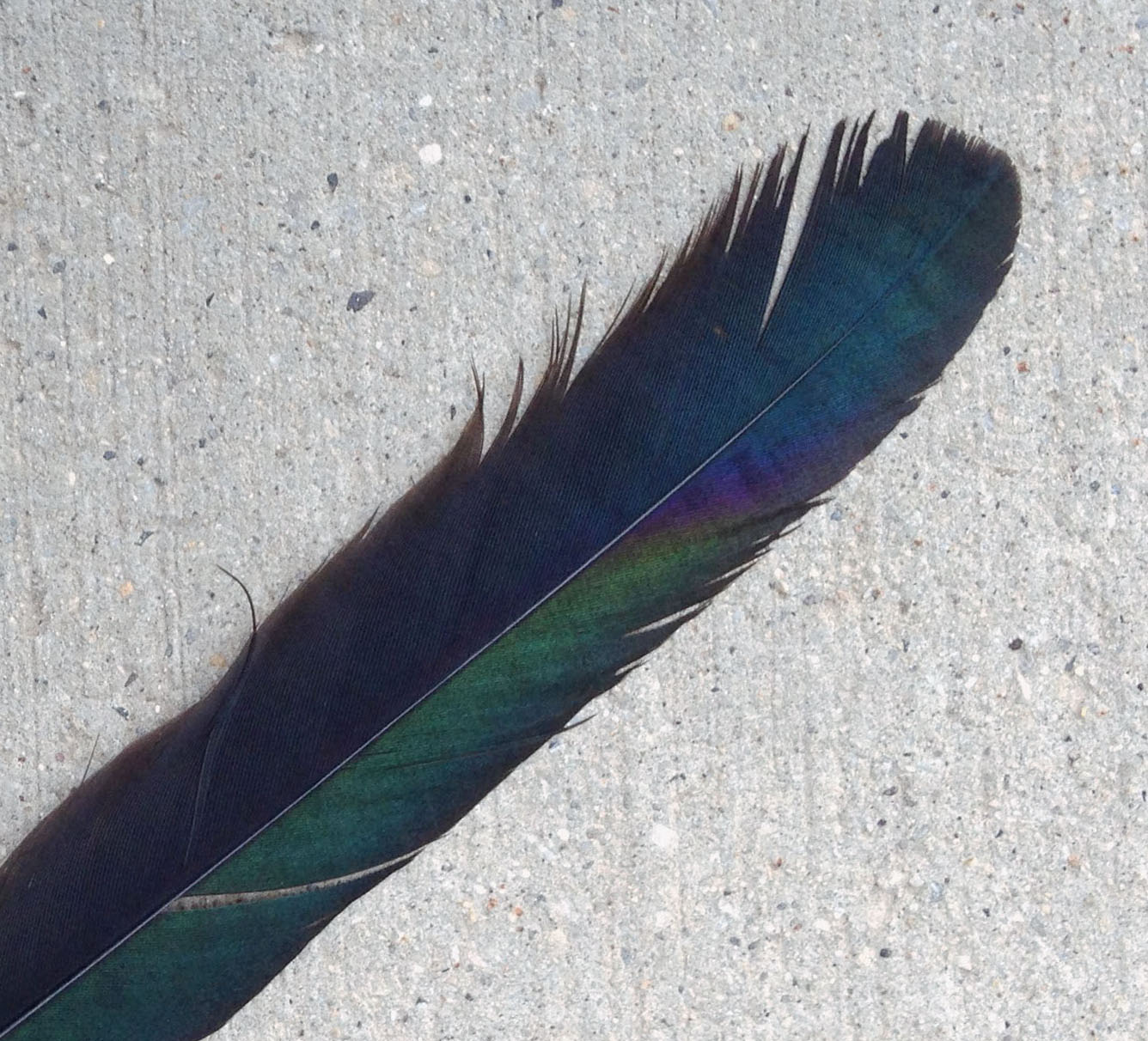
Wouldn’t the colors in this feather, used with the grays in the concrete, be perfect in a quilt?

Feather-MidwayUT-2

On the same morning walk, I noticed this water meter cover. You can’t really tell from the photo, but it was tall, the center part stuck up several inches, which is unusual. I love the mix of colors and textures. It struck me that the bright turquoise on the worn iron cover is the same as the turquoise in my shoes.

WaterMeter-MidwayUT

There are just too many cool things that a person can take a picture of!


A new quilt show!

I just returned from Midway, UT, where the very first Small Town Quilt Show – In a big way! was held. Midway is a lovely place; it is only 10 minutes from Park Cities if that helps you to get a fix on it. The event was held at the Zermatt Resort and it’s a place I would happily return to.

I didn’t take pictures of the usual quilt show things because I was too busy either teaching, or shopping, to do that. There was, however, one vendor who had some really fun things made from wool. Yes, I could make these coasters but it was so much nicer to buy them!

woolcoasters

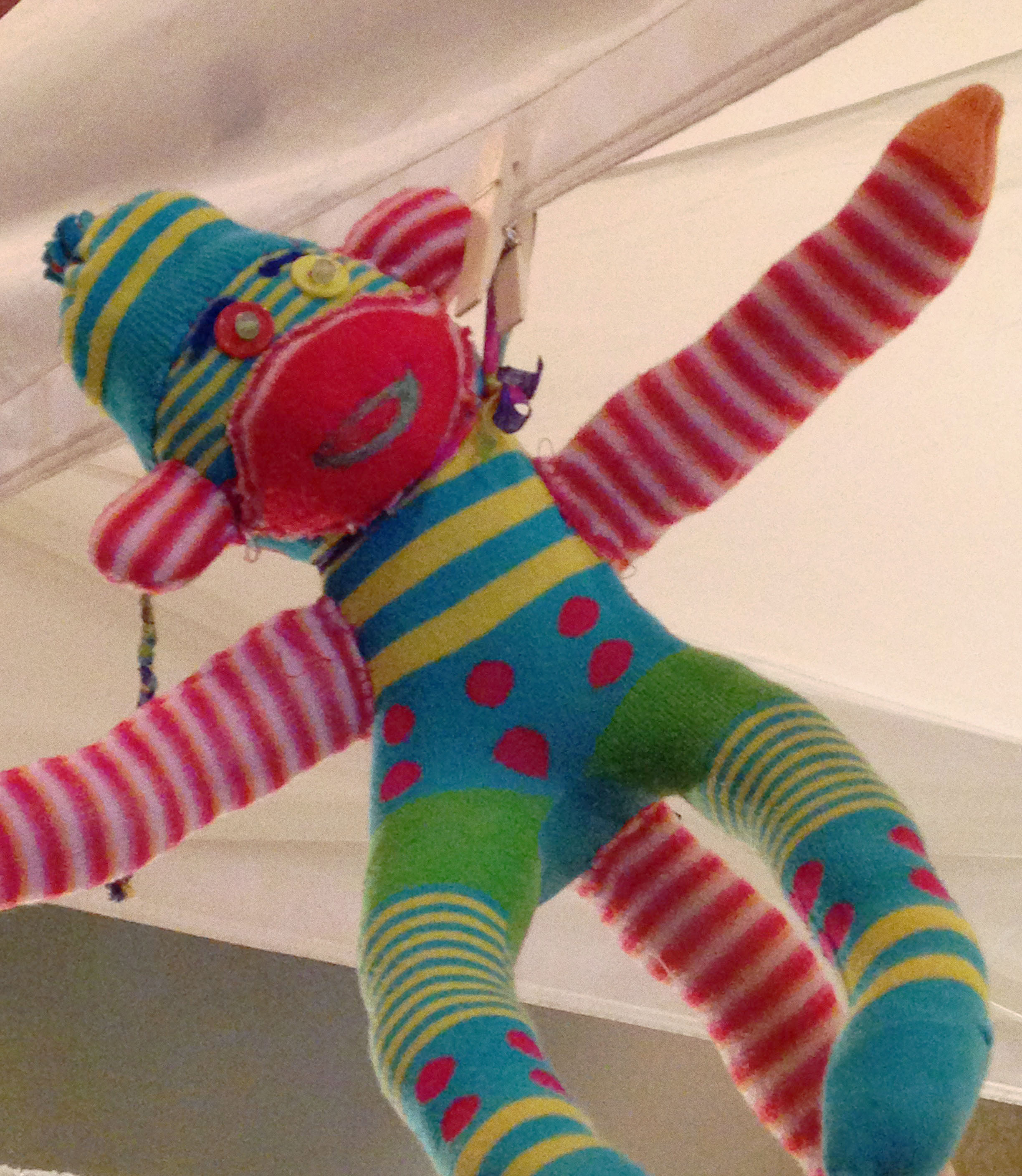
There were some exceedingly cute sock monkeys hanging on the front of the booth (and I wasn’t the only one who thought so). As it turns out they were made by Andrew, the grandson of the lady in charge. Did I get her name? Sigh, I did not. However, the receipt is from Winnie Press. This is Andrew’s very first sock monkey, made when he was 8 or 9…

AndrewsSockMonkey-01 copy copy

He follows his own monkey-making muse, rather than a strict pattern…

AndrewsSockMonkey-02 copy

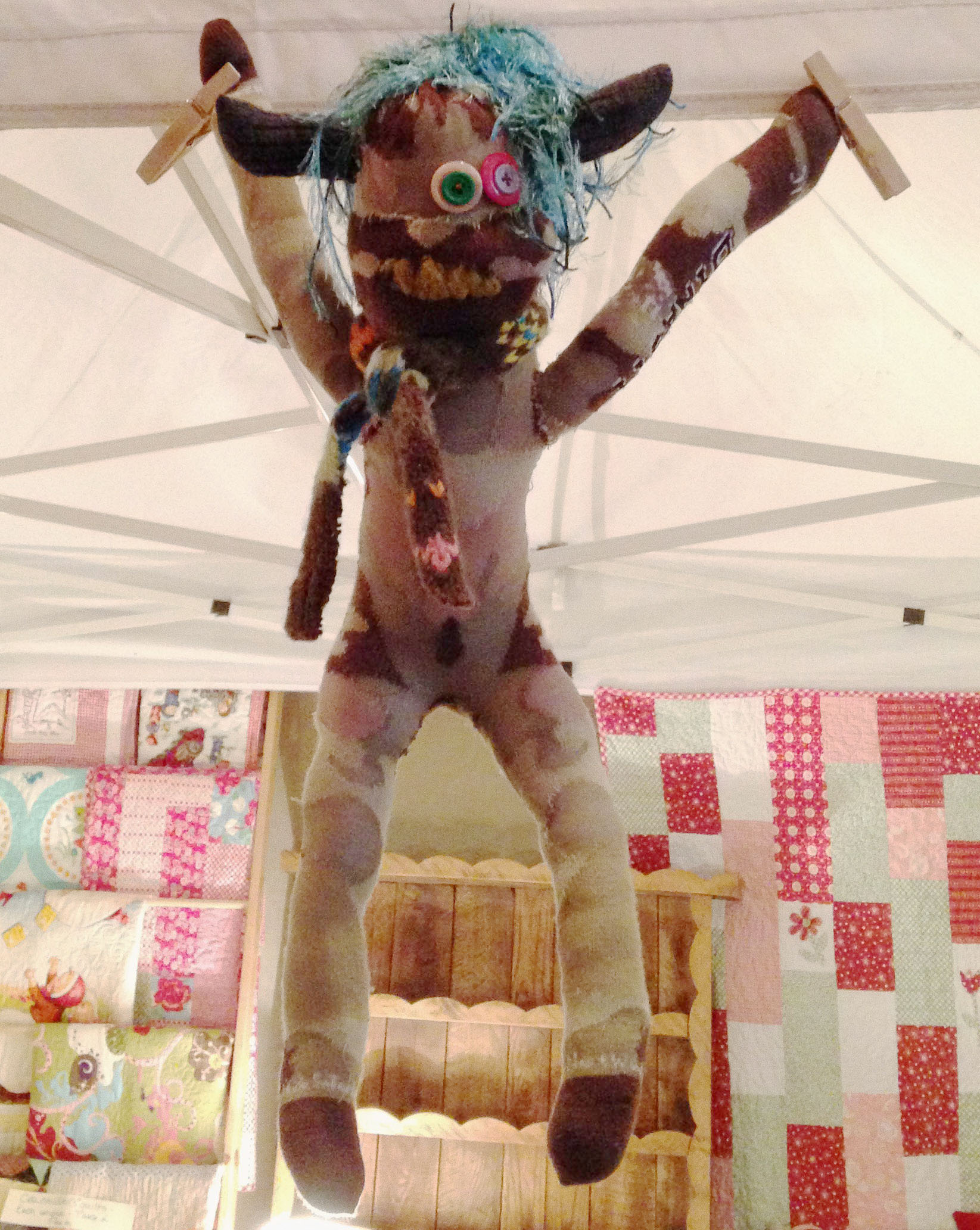
The monster was my favorite :-).

AndrewsSockMonkey-03 copy

Andrew is older by a couple of years or so now, and still making monkeys. Honestly, he could go into business… there were a lot of us who would have happily bought one of his creations. Instead, I bought a kit for Jack. He’s 6, and probably a bit young for this. Or not!


Pixelate it!

An image on your screen is actually made up of lots and lots of little tiny squares, each one with its own color (a pixel). We don’t see the little squares unless the image is enlarged to the point where it is no longer smooth.

Counted cross-stitched images are created by sewing x-shaped stitches, in specific colors, inside little squares that are formed by the weave of the base cloth. The images are ‘pixelated’ so it makes sense that there is a free tool for cross-stitchers to make a pixelated chart of any image.

Even if you are not a cross-stitcher, this is a cool tool. In fact, it was a quilter in my class last week who shared the site with me (thank you, Lucy!). She is making a quilted portrait of her granddaughter from little squares of fabric that she is coloring with the help of the chart she made on My Photo Stitch.

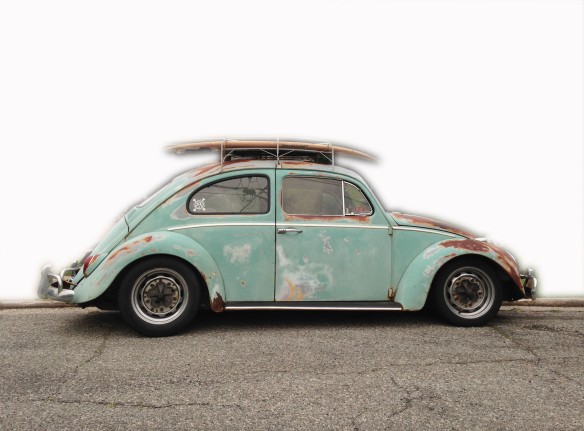
Here’s how it works: Go to myphotostitch.com and click the try it free button. I used the VW Bug image from last week’s blog post…

VWBug-SurfBoard-2

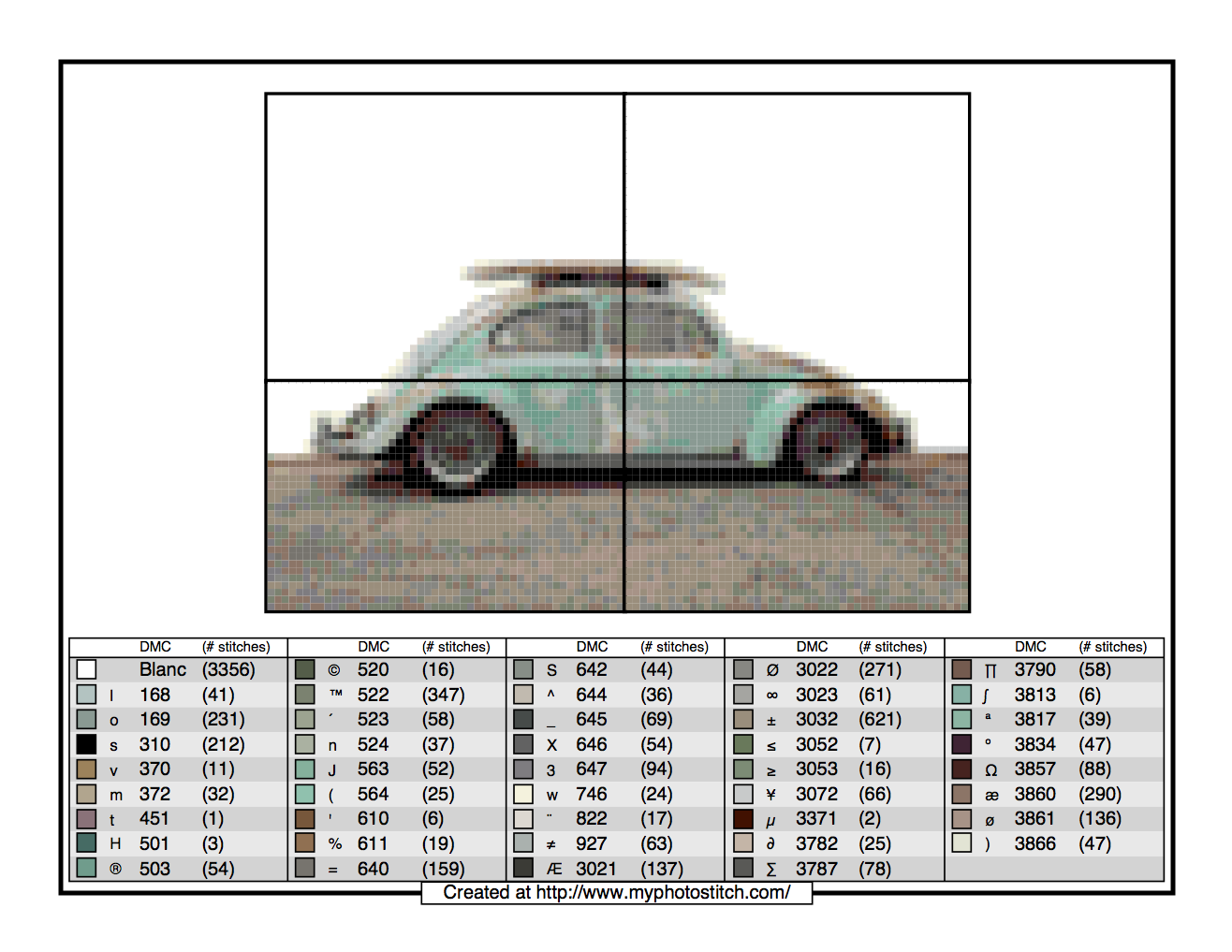
Myphotostitch.com generated the following pattern and thread chart.

Screen Shot 2014-06-20 at 1.27.03 PM

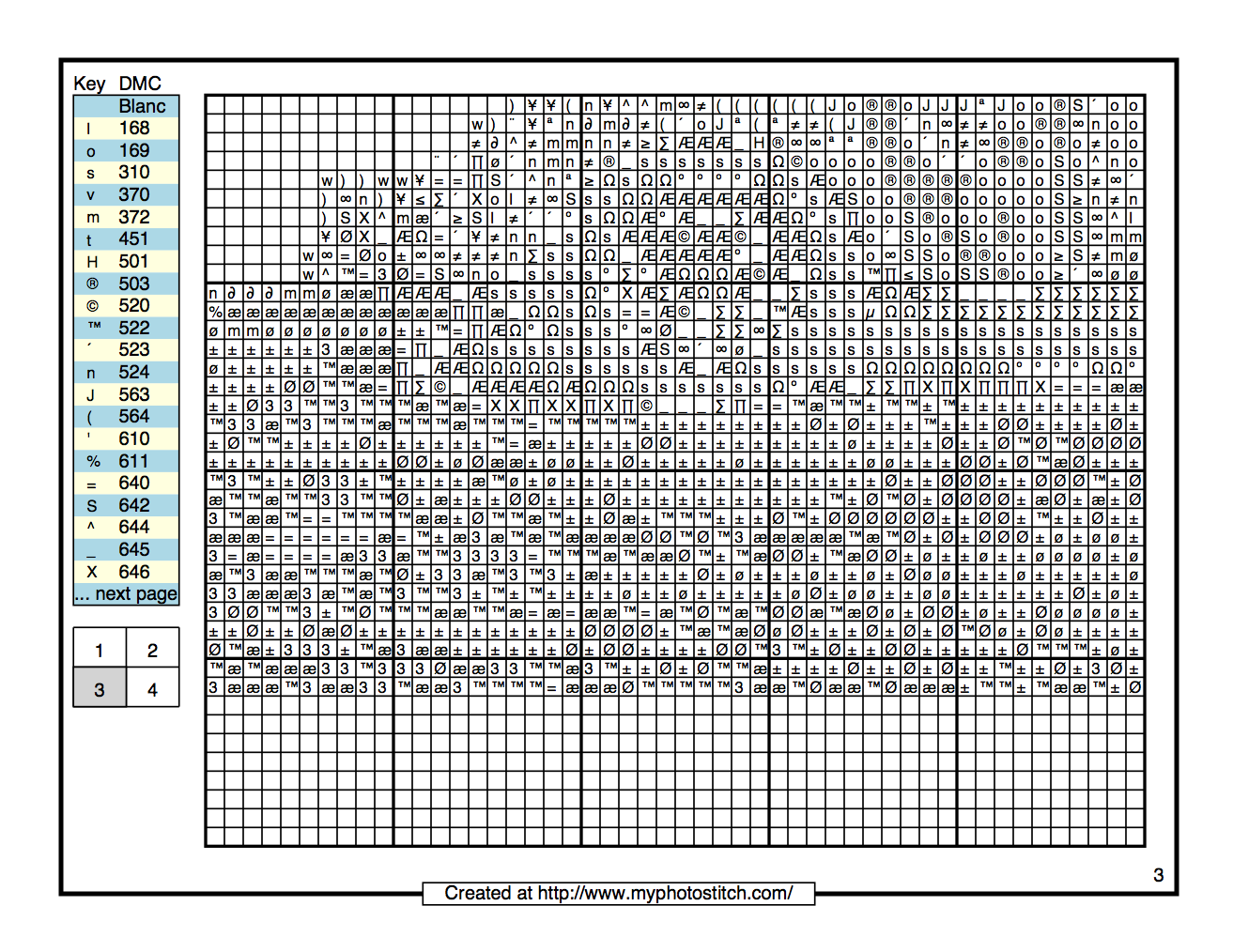
This is one of the pages with 1/4 of the chart, showing where each color goes.

Screen Shot 2014-06-20 at 1.29.48 PM

It’s always nice to find another tool for the toolbox :-).


If only it were this easy to go places…

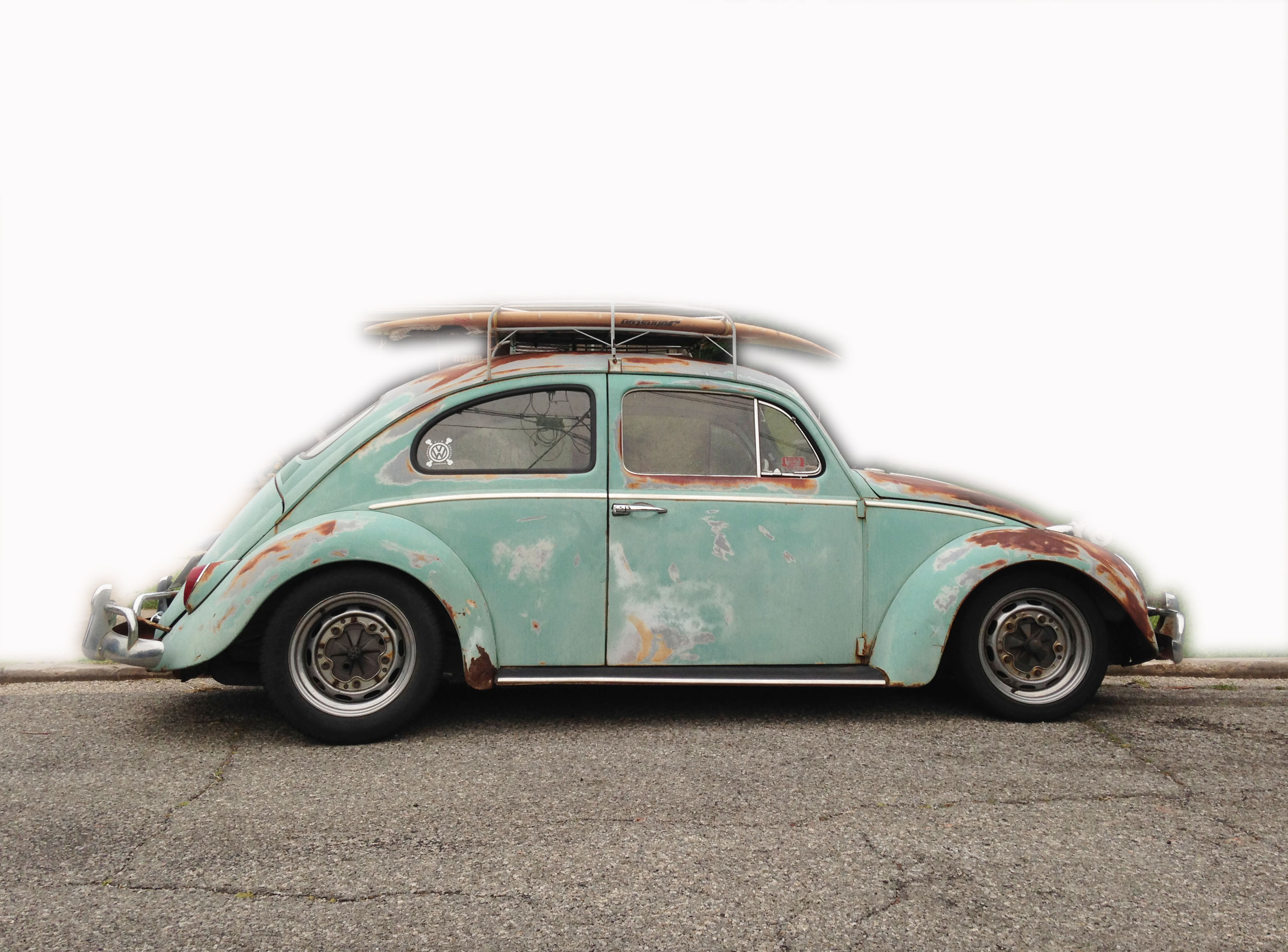
As I was driving home from my morning walk the other morning, I spotted this well-worn VW Bug parked on the street, with a surfboard strapped to its roof! This is not a common sight in land-locked Sherman, TX.

VWBug-SurfBoard


It looked so out of place that I decided to fix it with Photoshop. First I made the background go away. I sort of like the look of it floating on the white background. It’s easy to imagine it being in a snowstorm, except that the pavement is dry.

VWBug-SurfBoard-2

But the bug w/surfboard needs to be by the ocean…

VWBug-SurfBoard-4

I tried parking it at more than one beach because, by this time, I was just playing…

VWBug-SurfBoard-3

I’m resisting to urge to put it in more locales. Seriously, I need to get some work done :-).


Maybe I could paint that!

Perspective is a technique whereby an artist implies distance on a 2-dimensional surface. This idea did not exist before the Renaissance.

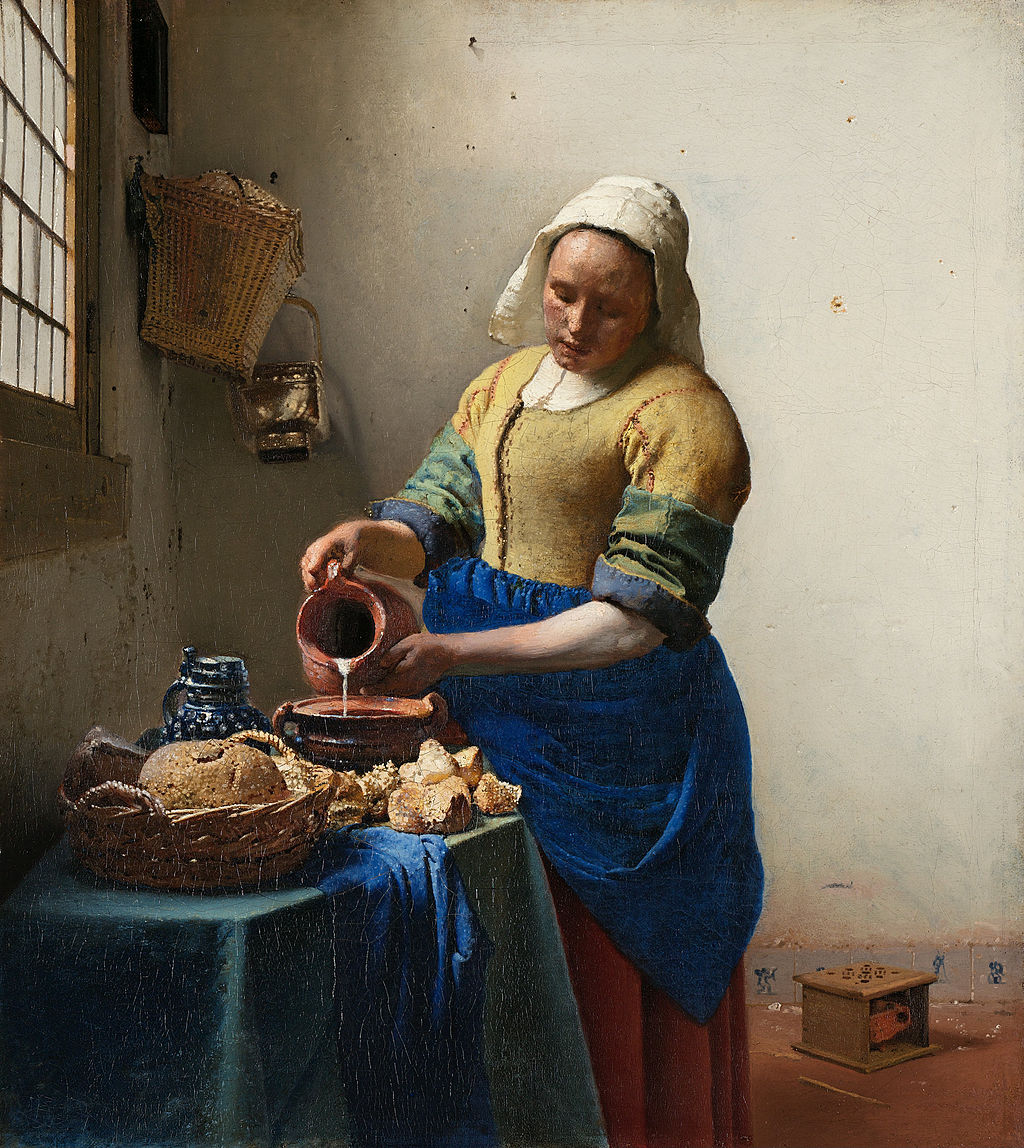
Johannes Vermeer (1632 – 1675) went way beyond getting the perspective right in his paintings. The man was a practically a human camera—painting the image he saw nearly perfectly on canvas as you can see in his painting, The Milkmaid (1658). How on earth did he do that?

1024px-Johannes_Vermeer_-_Het_melkmeisje_-_Google_Art_Project

Tim Jennison has figured out how Vermeer could have done it. I think that you will enjoy the 10-15 minutes you will spend reading this story. All I can say is that, no matter what, I’m impressed by both Vermeer and Tim Jennison.

Some artists might use the best technology available to them to help them in their art. And it’s good to be reminded that if they do use that technology (the way great artists in the past may have used the best technology of their day), it’s not cheating. That’s a happy thought in our very tech-heavy world.

Here’s a trailer for the documentary, produced by Penn and Teller, that shows Mr. Jennison’s journey. I’m definitely going to have to watch the film.